
The Institute at the Ahoy MINT Festival 2025

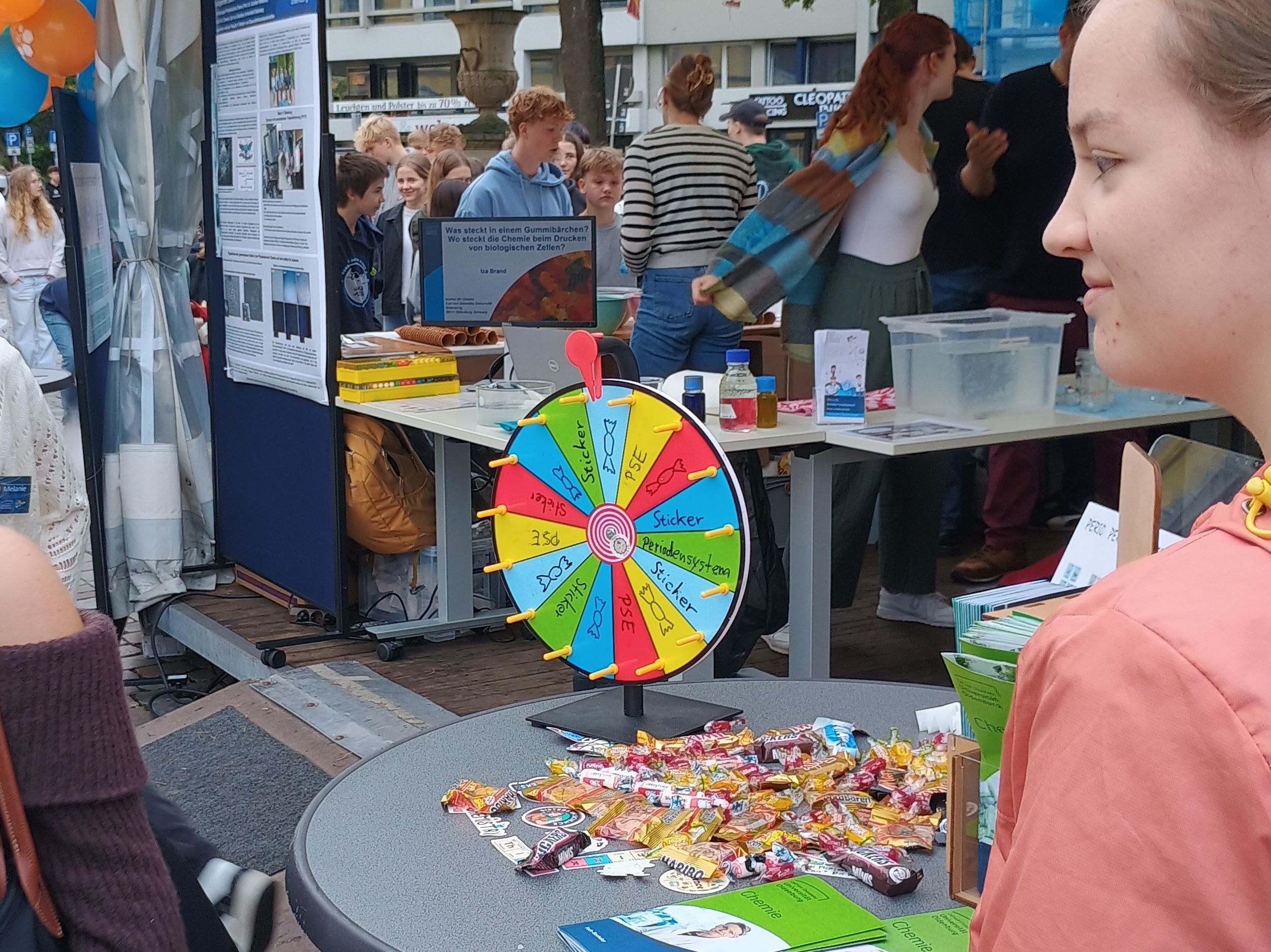

The Institute at the Ahoy MINT Festival 2025
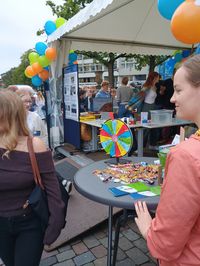
The Ahoy MINT Festival took place in Oldenburg on Friday, 19 September. More than 40 hands-on activities and lectures invited children and families to experience maths, computer science, science and technology up close and playfully.
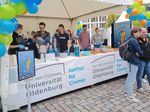
The Institute of Chemistry took part with the following activities:
3D printing in the nanoscale and chemistry
Karuna Aurel Kanes and Simon Sprengel, members of Prof Dr Dmitry Momotenko's working group, gave a family lecture entitled "3D printing in the nanoscale and chemistry" and addressed the following topics:
Everyone knows what 3D printing is. But did you know? Chemistry and 3D printing go hand in hand? Chemists can use a 3D printer to print tiny structures out of metal that are so small you can't see them with the naked eye! The short presentation at the Schlaues Haus explained how 3D printing works at a size up to 5000 times smaller than your hair and what this has to do with chemistry.
Butter with the fish: Application of biomaterials in the 3D bioprinting process

Bioprinting is an additive manufacturing technology in which material arrangements are usually produced in layers. The development of additive manufacturing was only made possible relatively recently by the advancement of computer-aided design tools, which opened new doors in terms of flexibility in shapes and materials and enabled a high degree of customisation and fast, virtually waste-free on-demand production. What sets bioprinting apart from other forms of additive manufacturing is the ability to integrate biomolecules and cells into structures using four bioprinting techniques: Extraction, ink-jet, laser-assisted and stereolithographic printing. Printing cells requires the collaboration of experts from the fields of biology, medicine, chemistry, physics and engineering.
At the University of Oldenburg, a new printing technique called pneumatic conveying printing has been developed and it has been proven that cells can be printed and multiply in our newly printed material. In order to print cells and give them a stable, defined shape, chemical "packaging material" is required. This is called a hydrogel. Hydrogels have a perforated structure with long sticky arms that hold the cells together. Water and nutrients can easily reach the cells, ensuring that they stay alive and can multiply. The production of solutions with cells and molecules that form hydrogels is one of the tasks of chemists (bioformulation). Spectroscopic and microscopic methods are also used to visualise the structure of the printed material, which is invisible to the human eye, and to track its changes through cell growth.
In this experiment, a fish is printed from alginate hydrogel. The focus is on moulding the newly printed material.
It serves to familiarise students with various properties and structures, to build a molecular model and to produce their own hydrogel.
Butter bei den Fische: Anwendung der Biomaterialien im 3D Biodrucken-Verfahren prepared and held by PD Dr Izabella Brand, member of the research group of Prof. Dr Gunther Wittstock.
TOPKO - Peat-free, climate-friendly plant substrates made from hydrochar and pyrolysis charcoal
Conventional potting soils and other garden substrates usually contain peat, which is extracted from bogs. However, peat extraction releases large amounts of CO₂ and thus contributes to climate change. In order to protect peatlands, their biodiversity and the climate, researchers led by Prof Dr Michael Wark, Professor of Technical Chemistry at the Institute of Chemistry at the University of Oldenburg, are currently developing biochar and hydrochar from green waste and other waste biomass to replace peat in the future.
The overarching goal of the TOPKO project is to produce growing media for horticulture from mixtures of compost and charcoal.
Two types of charcoal are used in the project: Hydrochar from the hydrothermal carbonisation (HTC) process and biochar from the pyrolysis process. Both types of charcoal are mixed individually or together with compost in different ratios. These growing media are used in growth trials with different plant varieties to test their suitability as a substrate in tree nurseries and beyond. The focus of the products is on regionality and climate friendliness. Regionally produced green composts are used; the charcoal is made from agricultural residues or from growth from landscape conservation.
The project uses life cycle assessments to evaluate sustainability in relation to the carbon cycle. Socio-economic analyses are carried out with the aim of reflecting the reaction of potential customers to the alternatives developed and determining the market opportunities.
"TOPKO - Peat-free climate-friendly plant substrates from hydro and pyrolysis coals", presentation of the research project by Ben Henke (doctoral candidate) and Dr Michael Röhrdanz (project coordinator), both members of Prof Dr Michael Wark's working group.
Substances, spaces and forces in experiments
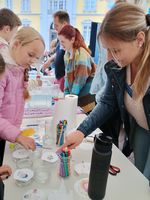
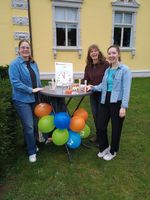
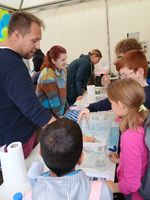
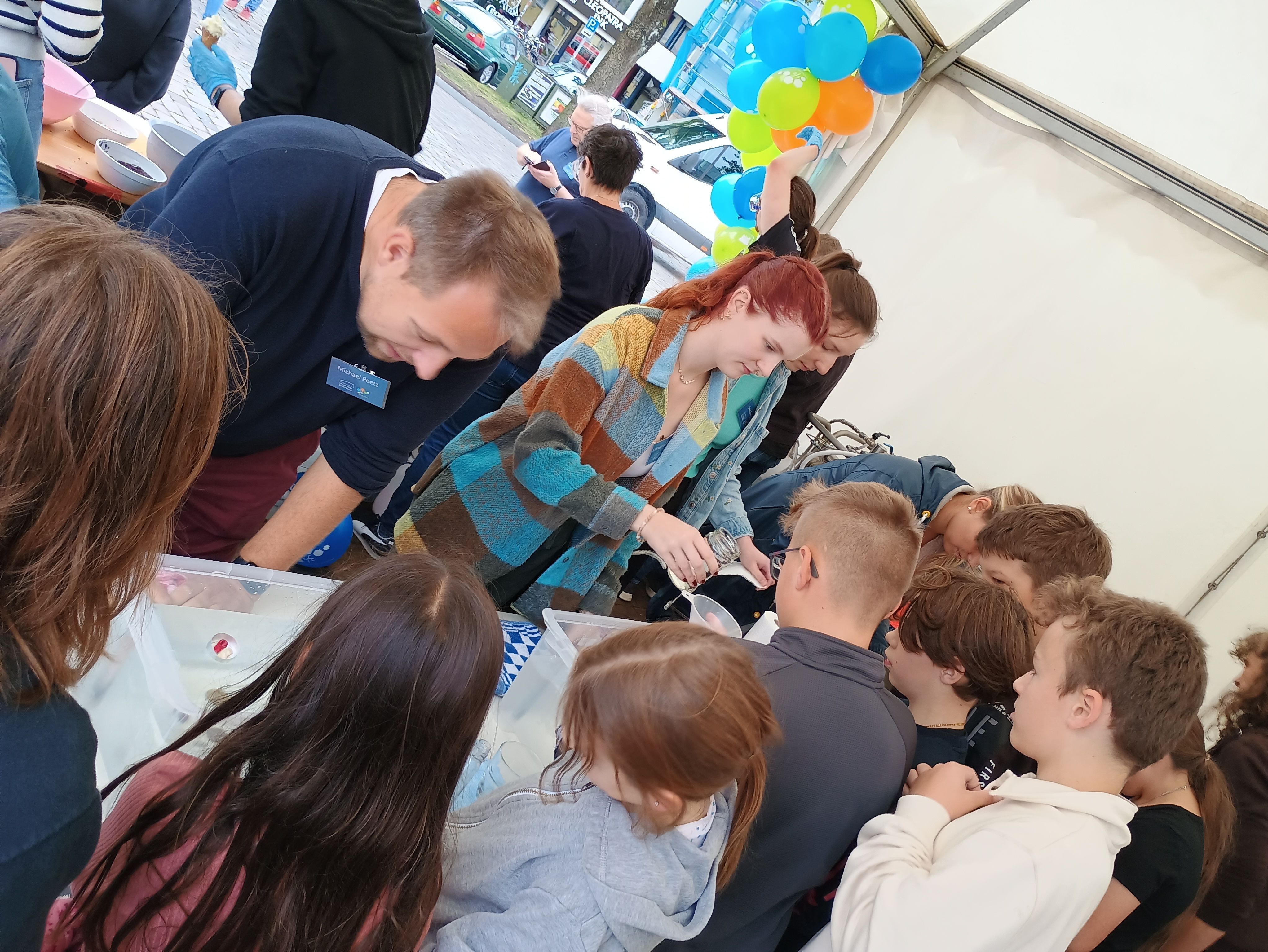
Whether in a laboratory, on a moor or anywhere else in the world, the same principle applies: substances have properties, and they react with one another in certain ways. At the chemistry stand for young and old alike, the basic properties of gases and liquids, as well as their interactions, are explored. A number of hands-on experiments provide an introduction to scientific questions that reveal connections which are invisible at first glance.
The centre is on exploring the behaviour of air in different situations. Whether it’s making gummy bears go diving or transferring air underwater, the observations show that air is not nothing, but a substance that has properties just like other substances – even if these aren’t immediately visible. The‘funnel bottle’and the‘magic trick with the filled water glass’open up further perspectives on the relationship between gases, liquids and the forces acting upon them.
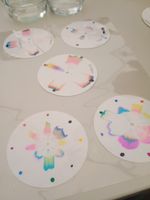
At the paper chromatography station, participants learn that substances are not always what they seem: are all green pens really green? Using simple methods, they can get to the bottom of this question and gain insights into the composition of seemingly homogeneous colour mixtures.
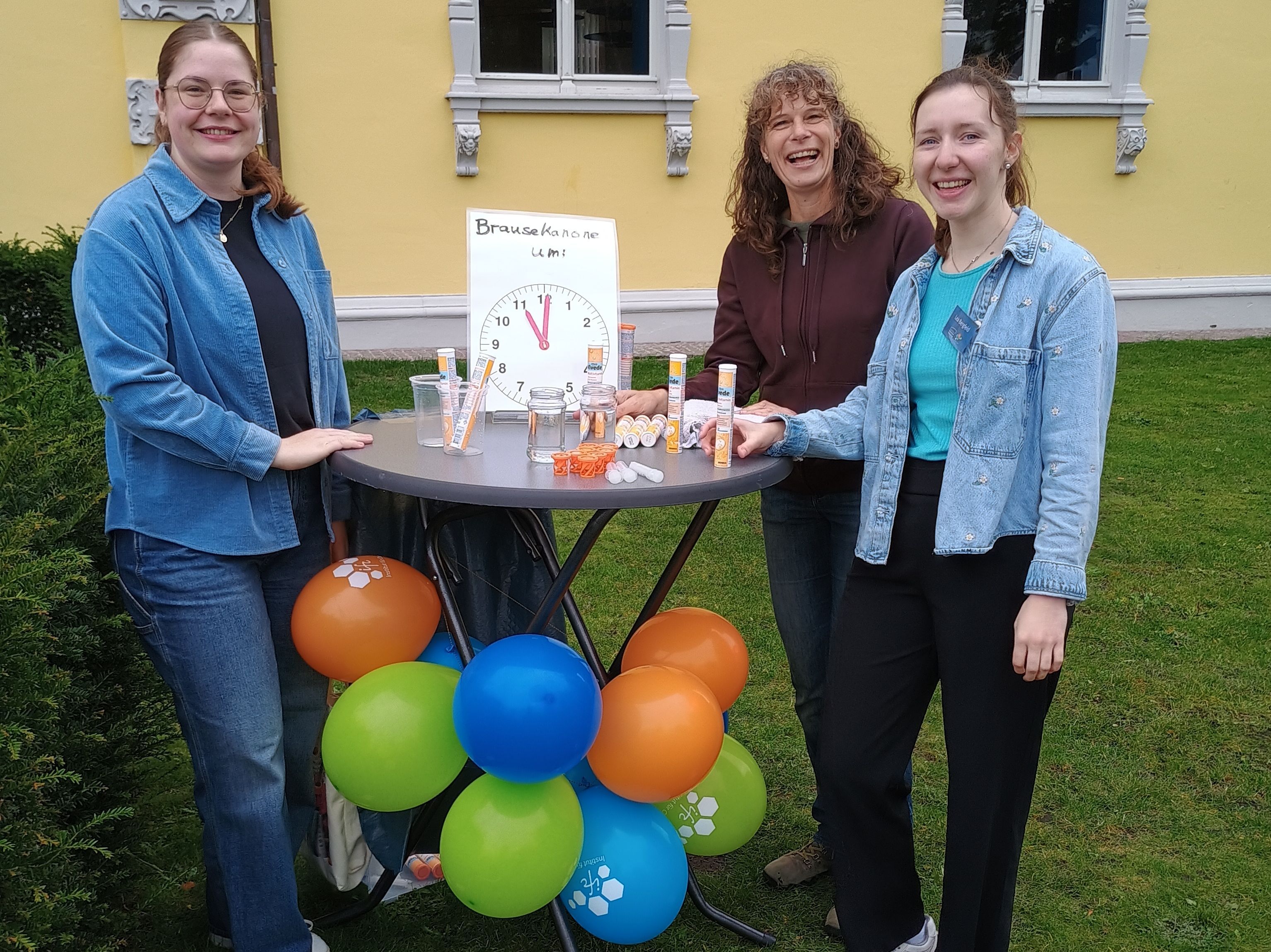
Finally, the fizzy rocket offers the opportunity to make the concept of kinetic energy tangible through chemical reactions, using very simple means and, once again, the interplay of substances, spaces and forces.
The experiments encourage an inquisitive, questioning and experimental approach, and through independent observation and hypothesis-forming, scientific ways of thinking become tangible and accessible.
Substances, spaces and forces in the experiment: Hands-on activities prepared and led by members of Prof. Dr Timm Wilke’s research group.
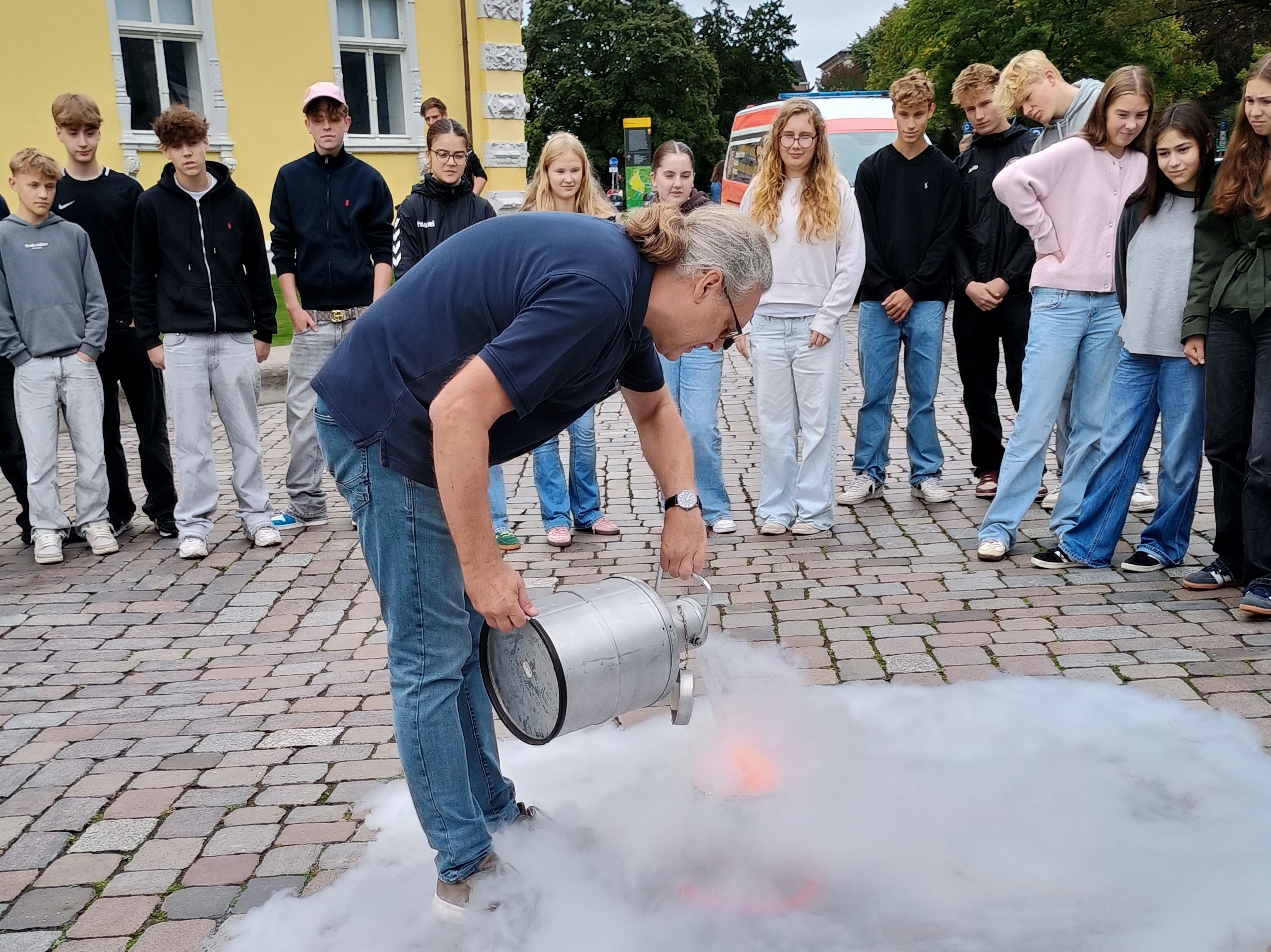
Nitrogen ice cream
You’ll need:
milk, sugar, flavouring powder, ice cream cones and liquid nitrogen
The ingredients and materials – all familiar, aren’t they? Even nitrogen is all around us in the air (it makes up more than 70 per cent of our air).
The catch is this: in the air, nitrogen is a gas, not a liquid. So we do need members of Prof. Dr Jens Christoffers’ research group to explain and carry out the experiment.
Procedure:
1. Mix the milk, sugar and flavouring powder.
2. Add the liquid nitrogen to the mixture, stirring constantly with a hand mixer.
3. As soon as the mixture takes on a creamy consistency, the experiment is complete.
Explanation:
The nitrogen, at -196°C, rapidly cools the ice cream mixture. This rapid cooling, combined with constant stirring, causes small ice crystals to form, giving the mixture a creamy texture. The mist that rises is condensed moisture from the air.
Bonus tip:
The end product of the experiment is safe to eat; the nitrogen (which has now evaporated) is completely harmless.
Nitrogen ice cream: An experiment by the research group led by Prof. Dr Jens Christoffers.
Bits and bytes instead of Bunsen burners: nanocosmos - but tangible!
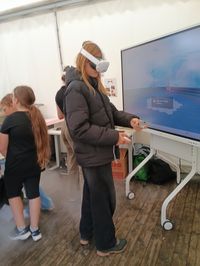
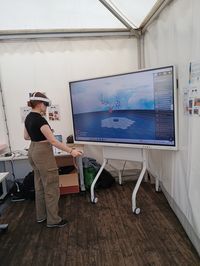
This initiative aims to make the world of atoms and molecules – which is often perceived as abstract – tangible in the truest sense of the word.
Molecule Collectible Cards: Each card features a specific molecule, showing its structure, molecular formula, molar mass, a brief description and a fun fact. The interesting part is on the back: a QR code that can be scanned with a smartphone or tablet brings the molecule to life on the screen. The web application enables a three-dimensional view directly in the browser and uses augmented reality (AR) to make the molecule appear in the room.
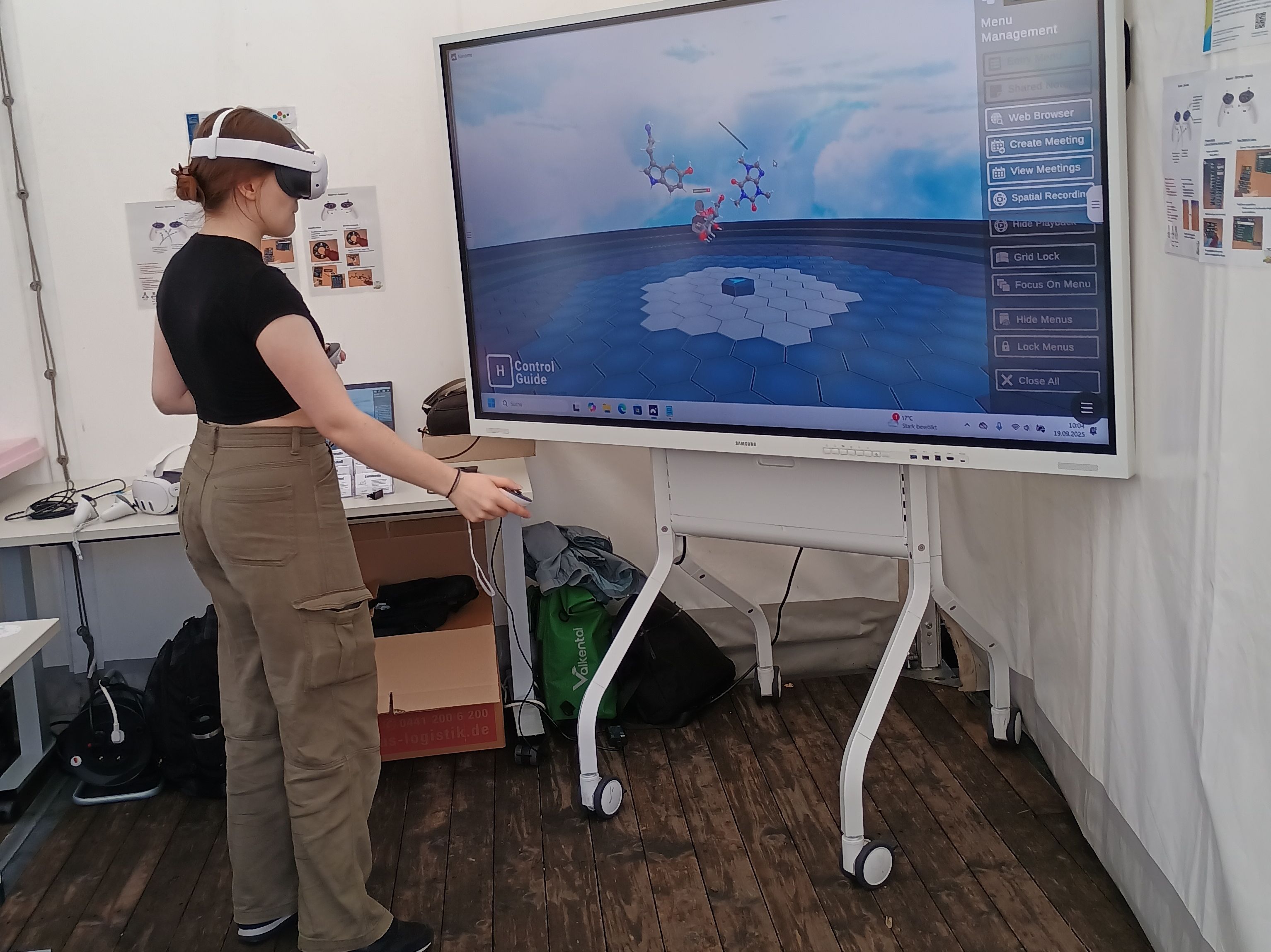
An even deeper immersion in the subject matter is made possible by two pairs of VR headsets. The headsets are equipped with the ‘Nanome’ software, which allows users to interact with various molecules within a shared virtual space. Small molecules or complex structures such as proteins can not only be viewed; they can also be rotated, scaled and even modified using the integrated molecule builder. Digital tools allow bond lengths and angles to be measured precisely or charge densities to be visualised. In addition, the integrated molecular construction kit offers the opportunity to design your own molecules. To ensure that the audience can also share in this experience, the action from the virtual world is transmitted live onto a projection screen.
‘Bits and Bytes Instead of Bunsen Burners’ is an initiative by Prof. Dr Thorsten Klüner’s research group, which uses AR to bring the nanocosmos to life.

Norddeutscher Rundfunk (NDR) reports on the festival like this: AHOI-MINT.
A post on the Instagram channel of the C.v.O. University of Oldenburg: Ahoi-MINT.
More about the Ahoi-Mint-Festival: here.
More news from the Institute of Chemistry: News archive.