
Navigation [?, g oderor Access-Key 1]
Access-Key 1
Access-Key 8
Access-Key 2
Access-Key 4
Access-Key 6
Access-Key 7
Access-Key 9
Info und Anleitung Info and instruction
Embed -Suche einbinden search (Mit der Aktivierung der Google-Suche bestätigen Sie, dass Sie mit der Einbindung und der dazu erforderlichen Datenübermittlung an Google einverstanden sind.) (By activating Google Search, you confirm that you agree to the integration and the necessary data transfer to Google.)
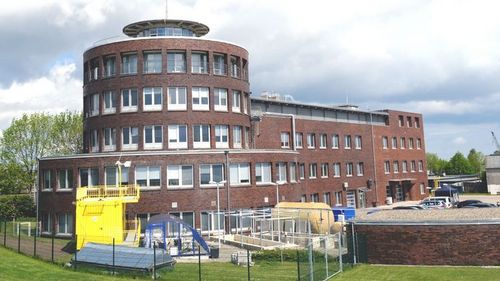
Part of the university is located directly at the Jade Bay in Wilhelmshaven: the Institute of Chemistry and Biology of the Marine Environment (ICBM)…
When oil is released into the sea, it is not always the result of an oil spill. There are naturally occurring hydrocarbon seeps on the seafloor where…
A study of 29 European lakes has found that some naturally-occurring lake bacteria grow faster and more efficiently on the remains of plastic bags…
Was die menschliche Haut vor UV-Strahlen schützt, könnte für Lebewesen im Wasser negative Folgen haben. Ein Projekt unter der Leitung des…
For the first time since whaling was banned, a team of researchers and filmmakers has documented large groups of fin whales in the Southern Ocean. The…
Data from cold water corals point to changes in the global ocean circulation system during the last glacial period, an international team led by…
The ICBM is taking part at the Night of Science in Wilhelmshaven! On 24 June 2022, eleven scientific institutions and associations will present…
Dr Sinikka Lennartz has been appointed Junior Professor of Biogeochemical Ocean Modelling at the Institute for Chemistry and Biology of the Marine…
Flies, mosquitoes, dust and even microplastics – spider webs capture whatever travels through the air. ICBM scientists have now for the first time…
Prof. Dr. Ulrike Feudel, Hochschullehrerin für Theoretische Physik mit dem Schwerpunkt „Komplexe Systeme“ am ICBM, hat die…
This page contains automatically translated content.