
Learning to deal with freedom
Learning to deal with freedom
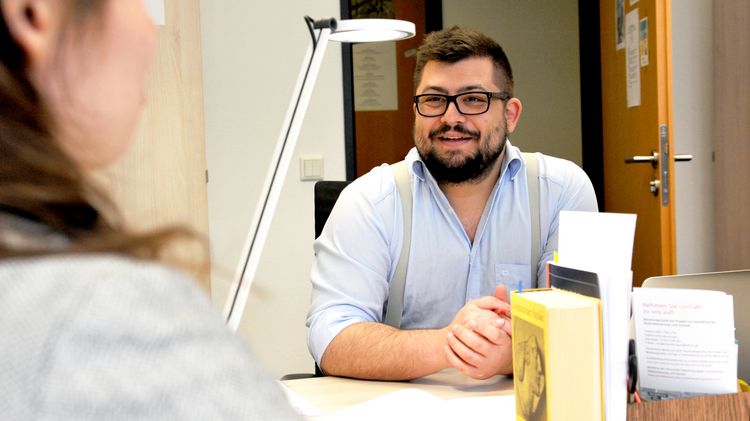
Alexander Max Bauer is a PhD student in philosophy. He is a research associate in the DFG research group ‘Equity of Needs and Distribution Procedures’, in which the University of Oldenburg is involved.
“I know the 3GO from every perspective – as a participant in the courses on offer, but also as a representative of PhD students on the Executive Board. There, for example, I am involved in programme planning, gather feedback from other PhD students and bring this to our Executive Board meetings.
This feedback shows that the 3GO provides important support for many doctoral candidates. For independent PhD candidates, for instance, programmes that teach skills such as self-organisation or time management play a major role. If you are not part of a structured doctoral programme, the Graduate School also connects you with other doctoral candidates.
In an independent PhD programme, such as the one I’m on, you learn to be very self-reliant. I have a great deal of freedom, but I also have to organise most things myself – from my working hours and financing to my research question. During the pandemic, it’s even harder to cope with this freedom. The connections and structures that would otherwise provide a sense of stability are unravelling. I do communicate with my supervisor, Prof. Dr Mark Siebel, every week, and I’m fortunate to be involved in a third-party-funded project, which keeps me in lively contact with other participants. But, for example, since March 2020 – the start of the pandemic – I’ve only been on the campus a few times in total. For me, the high degree of independence wasn’t a disadvantage, but I know that not everyone is coping well with the current situation.
For me personally, the writing support programme was very beneficial. It’s a scheme that brings doctoral candidates together with undergraduates to help them with their essays or dissertations. We PhD students were coached beforehand and learnt, for example, conversation techniques and problem-solving models. Personally, I found it incredibly rewarding to step into this mentoring role, to solve problems together and to see how one can provide genuine support. Even during the pandemic, from my own desk, via the internet.”