
Prof Ulrich Teubner develops time diagnostics for ultrafast free-electron laser at DESY
Prof Ulrich Teubner develops time diagnostics for ultrafast free-electron laser at DESY
Prof Ulrich Teubner develops time diagnostics for ultrafast free-electron laser at DESY
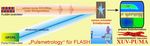
Oldenburg. The Intensive Laser Pulses research group led by Prof. Dr. habil. Ulrich Teubner (an external research group at the IfP) will, in collaboration with DESY in Hamburg, develop and build the time-resolved diagnostics for the FLASH free-electron laser (FEL) located in Hamburg. The BMBF is supporting this project with funding of €435,000 (grant reference 05K16ME1).
Since 2005, ultra-short, intense XUV pulses have been generated at the world’s first FEL in the extreme ultraviolet (XUV) range. These can be used, for example, to ‘film’ chemical or biological reactions, as well as extremely rapid changes in crystal structure or phase transitions on a femtosecond scale (10⁻¹⁵ seconds). The applications and fields of research are as diverse as they are fascinating. For example, with unprecedented spatial and temporal resolution, it is possible to observe and optimise structural changes in molecules or combustion processes, or even electron transport in solar cells. Even changes in the arrangement of individual atoms can be resolved spatially and temporally in this way.
As part of the research group, which over the next three years will be working on the development of the so-called XUV-PUMA (pulse duration measurement apparatus for extremely short XUV flashes), the team from Hamburg is joined by two doctoral candidates and research associates from the working group, as well as students from both Engineering Physics degree programmes. In addition to the development of the XUV-PUMA itself, fundamental research also forms part of the project. This includes, for example, the investigation of ultrafast ionisation and, in particular, the relevant transport effects (e.g. electron diffusion). Another component is the investigation of the ultrafast evolution of the dielectric function during the interaction of FEL radiation with matter. In particular, these investigations will contribute to a deeper understanding of the FEL–matter interaction, especially the dynamics on the femtosecond timescale.