

OSIG
OSIG
Mission Statement
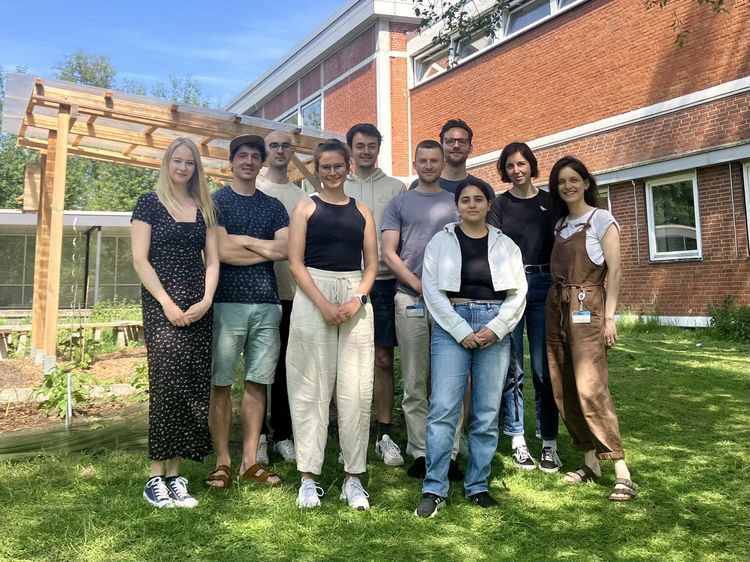
The Open Science Interest Group (OSIG) of the Psychology Department identifies as a learning community and grass-roots movement initiated by scientific staff and students. It is open to anyone interested in improving their skills in making science transparent and reproducible. The OSIG aims at facilitating the discourse about OS practices in the department. Since following these principles can be demanding, time costly, and complicated at first, the OSIG was also established to bundle experience and knowledge and create a space in which researchers can support and strive towards more transparent research.
In addition to providing a platform for exchange, the interest group actively develops ideas concerning the integration of open science techniques in the Department. Small groups of interested members are then formed to implement these ideas. Inclusivity is very important to us, hence there are no prerequisites for active involvement. Our principle is that everyone can join and contribute as much as they like and is feasible for them. The OSIG is represented by its task force including members of all labs.
The goals of the OSIG, therefore, include:
- Supporting each other and encouraging the use of OS principles in our own research.
- Providing a platform to work on OS related tasks that are important to the involved members. The study group can, for instance, be utilised to identify collaborators and document efforts.
- Collecting, exchanging, and discussing OS related information. Results should be made accessible for interested researchers in the department by sharing documents and organising information events.
- Spreading information, e.g., about upcoming webinars/talks.
How to get involved
Would you like to get involved? Resources and projects are coordinated via a Stud.IP study group. Important information and announcements are also sent around to all members of this group. If you are associated with the University of Oldenburg (student or staff) you can send a membership request here and we will approve you as soon as possible.
We have biweekly meetings (Tuesdays 11-12 a.m. on uneven calendar weeks) that are open to everyone interested. You can join via the study group.
If you have further questions, please do not hesitate to contact our members via the study group or the mailing list or add your name to Openscience-Psychology mailing list to stay up to date with OS-related news and events.
Achievements
Some of the goals that were already achieved include
- The OSIG won the first UGO-Open-Science-Award (2023)! We are still over the moon and thank the Universitätsgesellschaft Oldenburg for this great award.
- Initiation of biweekly meetings of the interest group that can be attended by everyone to discuss current projects.
- Organisation of open science colloquium talks concerning, e.g., registered reports, data sharing, code sharing, power calculations. The series of talks is ongoing, so stay tuned for upcoming events.
- Application for a grant to finance the implementation of a preregistration tool for master theses
- Initiation of the OSIG Commitment to Research Transparency
1st issue: 04/22
Hello, dear Open Science friends in Oldenburg (and beyond),
We are delighted to announce that we are launching a newsletter. From now on, every two months, you will receive updates on what has been happening at the OSIG, upcoming events, general open science news and more. In this first issue, we will include a brief overview of what the OSIG has been working on so far.
Please feel free to share this newsletter and, as always, you’re welcome to join our online fortnightly meetings (Tuesdays, 11 am–12 noon on odd-numbered calendar weeks: next meeting on 26 April), which are open to everyone.
OSIG Recap
- As part of the Open Science Series organised by the Psychological Colloquium, you can attend talks on open science three times a semester. So far, we have organised the following talks:
- Open Science: What have we achieved, where do we go? (Prof. Dr Felix Schönbrodt, LMU)
- Open Access publishing and funding opportunities at the University of Oldenburg (Kim Braun, BIS UOL)
- Experiences with Registered Reports: An Update (Jill von Conta, UOL)
- Open Code (Sarah Blum and Arnd Meiser, UOL)
- Pre-registration & Data Sharing (Dr Stephanie Rosemann, Georgetown University)
- Introduction to the DFG Core Facility Grant (Dr Tina Schmitt, UOL)
- Introducing the OSIG (Nadine Jacobsen, UOL)
- Registered reports (Jill von Conta, UOL)
- The Department of Psychology now has an open science website, introducing the OSIG and TORS, and also showcasing our publications that follow open science principles (yes, open access is enough!). To have your research listed, please send the reference to
- Together with TORS, we have joined the Network of Open Science Initiatives, which serves as the central platform for the Network of (German-speaking) Open Science Initiatives
- We have set up a Department Twitter account @psychOLogyOL. Mareike Daeglau (re-)tweets interesting articles and news relating to our department. To have your research featured, please send her your tweet (or a draft of a potential tweet if you do not have an account yourself).
- Via our mailing list , you can send and receive information about upcoming events. If you are receiving this email, you have already signed up :)
- With the newsletter you are reading right now, you can keep up to date with the latest work of the OSIG
- Use this overview of expertise within our department (study group access required) to find out who has experience with specific methods or topics and would be willing to help you. If you are willing to help others, please add to the list.
We have also been involved in a number of projects that have not yet been successful but are still ongoing. For example, we were involved in applying for funding to enable students to pre-register their Master’s theses internally, or to hire a student assistant to assess whether and how open science principles could be further integrated into the Neurocognitive Psychology degree programme. We will keep you updated on our progress.
Upcoming events
- Open Science Series, summer term 2022, Psychological Colloquium, Thursdays 16:15–17:45
- 9 June: Dr Tina Lonsdorf, UKE Hamburg. Details to be announced
- Other dates to be announced
- 2 May 2022, 10.15–11.45, online: introductory Git workshop by Paul Maanen (PhD student, Neuropsychology Lab) for department members here. Please let us know here if you plan to attend.
- 23 September 2022: one-day workshop on Bayesian Statistics by Prof. Dr Daniel Schad. The workshop is primarily aimed at interested Master’s students, but places may also be filled by research staff. Details to be announced
External events:
- 1 September 2022: One-day Netherlands National Open Science Festival at Vrije Universiteit, Amsterdam; registration free of charge (https://opensciencefestival.nl/)
- 27 October 2022: OS NovaTalk; Prof. Dr F. Miedema, University of Utrecht: The Transition to Open Science – why and how
For updates on events, please refer to the Department of Open Science website.
Open Science News
- 17 March 2022: DFG signed an action plan to support the infrastructure for diamond open access publishing (https://www.dfg.de/foerderung/info_wissenschaft/2022/info_wissenschaft_22_26/index.html)
This newsletter is sent to you by the Open Science interest group of the Department of Psychology at the University of Oldenburg (https://uol.de/psychologie/open-science/osig). Would you like to get involved? Resources and projects are coordinated via a Stud.IP study group. Important information and announcements are also circulated to all members of this group. If you are affiliated with the University of Oldenburg (as a student or member of staff), you can submit a membership request here and we will approve your membership as soon as possible.
If you have any further questions, please do not hesitate to contact our members via the study group or the mailing list , or subscribe to the Openscience-Psychology mailing list (https://mailman.uni-oldenburg.de/)mailman/listinfo/openscience-psychology).
2nd issue: 06/22
Hello, dear Open Science friends in Oldenburg (and beyond),
welcome to the second issue of our newsletter. In this issue, we’ll be providing a brief recap of the last two months. The main focus of our work has been on data sharing and protection issues within the community and our Department.
Please feel free to share this newsletter and, as always, you’re welcome to join our online fortnightly meetings (Tuesdays 11 am–12 noon on odd-numbered calendar weeks: next meeting tomorrow, 21 June), which are open to everyone. Previous issues of the newsletter can be found on the OSIG website.
Recap of the last two months
- We continued the Open Science Seriesof the Psychological Colloquium with thefollowing talks:
- 2 May: Multiverse analyses in cognitive neuroscience – The METEOR project (Prof. Dr Andrea Hildebrandt, UOL)
- 9 June: Opening Pandora’s box: Practices, problems, prospects and perspectives of data sharing in Psychology (Dr Tina Lonsdorf, UKE Hamburg)
- Tina was kind enough to share her slides and you can find a brief summary of the post-talk discussion here.
- We approached our university’s data protection officer (Lars Galow) with a list of questions regarding data protection issues in data sharing. If you are part of our study group, you can find his answers here. In summary, he provided us with the following information:
- Data protection regulations do not apply to anonymised data (behavioural data without identifiers is considered anonymised; for brain data, this is not yet clear). Therefore, anonymised data can theoretically be shared without the participant’s explicit consent (however, from an ethical point of view, it is highly recommended to seek the participant’s consent!)
- To encourage the use of version control for code, we organisedan introductory Git workshop led by Paul Maanen (PhD student at the Neuropsychology Lab) for department memberson 2 May. Please find the material here.
- Together with Prof. Andrea Hildebrand and Dr Kerstin Bleichner, we applied for funding from “Innovation Plus” to enable students to pre-register their Master’s theses internally. Unfortunately, this application was unsuccessful, but we will reapply for the next funding round (2023/24).
Although we learnt a great deal about data sharing in our field, we are not yet satisfied: we are currently examining the available code-sharing guidelines in greater detail. We are also working on a comprehensive mind map that brings together information on the ethical and legal aspects of data sharing in our field. We will keep you updated on our progress.
We would like to express our heartfelt gratitude to all the speakers and experts who shared their knowledge with us!
Upcoming events
- Open Science Series summer term 2022, Psychological Colloquium, Thursdays 16:15–17:45
- 21 July: TBA
External events:
- 1 September 2022: One-day Netherlands National Open Science Festival at Vrije Universiteit, Amsterdam; free registration (opensciencefestival.nl)
- 27 October 2022: OS NovaTalk; Prof. Dr F. Miedema, University of Utrecht: The Transition to Open Science – why and how
For updates on events, please refer to the Department of Open Science website.
Open Science News
- OpenPlato, a free e-learning platform that brings together quality-assured learning resources on the topic of open science was launched on 1 June! Find out more here.
This newsletter is sent to you by the Open Science interest group of the Department of Psychology at the University of Oldenburg (https://uol.de/psychologie/open-science/osig). Would you like to get involved? Resources and projects are coordinated via a Stud.IP study group. Important information and announcements are also circulated to all members of this group. If you are affiliated with the University of Oldenburg (as a student or member of staff), you can submit a membership request here and we will approve your membership as soon as possible.
If you have any further questions, please do not hesitate to contact our members via the study group or the mailing list , or add your name to the Openscience-Psychology mailing list (https://mailman.uni-oldenburg.de/)mailman/listinfo/openscience-psychology).
3rd issue: 10/22
Hello, dear Open Science friends in Oldenburg (and beyond),
we hope you enjoyed your semester break and would like to extend a warm welcome to everyone who has joined the Department since our last issue.
Please feel free to share this newsletter and, as always, you’re welcome to join our online fortnightly meetings (Tuesdays 11 am–12 noon on odd-numbered calendar weeks: next meeting on 25 October), which are open to everyone. Previous issues of the newsletter can be found on the OSIG website.
A recap of the past few months
- We continued the Open Science Series of the Psychological Colloquium with a video and discussion of a talk by Prof Simine Vazire (University of Melbourne, Australia) “Towards a More Self-Correcting Science”.
- The series will continue with internal talks in the next summer term. If you cannot wait until then, please note that at the psychology colloquium on 27 October at 6.00 pm, there will be a HWK Nova lecture on the topic of “Transition to Open Science: Why and How.” by Prof. Dr Frank Miedema, Professor of Immunology at the University Medical Centre Utrecht, Utrecht University. You can join online here.
- Bayesian workshop: In September, Prof. Daniel Schad (HMU Potsdam) visited us in Oldenburg to give a talk on Bayesian statistics and workflows.
- For further information, please take a look at his paper Towards a principled Bayesian workflow in cognitive science
- R scripts and data for the workshop can be found here: https://osf.io/y354c/ and https://osf.io/b2vx9/

- Over the past year, we have been working on a way to give researchers in our Department the opportunity to openly demonstrate their support for research transparency. We are proud (and a little relieved) to say that our department’s version of the commitment to research transparency is now online. Thanks again to everyone who took part in the process! If you would like your name added to the list of signatories, please send an email to .
- Please note that we have adapted the original version of the statement, which means that our version does not include a badge that you can display on your own website. If you have the time and energy to create a badge that can be added to our statement, please feel free to do so. If you would also like to sign the original commitment (which includes the right to use the official badge), we encourage you to do so!
- If you manage your own university website, you can link the statement to your profile to raise the profile of the OSIG Commitment and show that you are a signatory by following these steps:
- Stud.IP -> Profile -> Personal Details -> More Details
- Go to the box labelled ‘Research interest’ and add: ‘Signatory of the OSIG Commitment to research transparency’
- Highlight “OSIG Commitment to research transparency”
- Click on ‘Link’ (or press Ctrl+K)
- Paste the following URL into the URL box: https://uol.de/psychologie/open-science/osig/osig-commitment-to-research-transparency
- Click “Accept”
- The information will be updated overnight
- You can also add other items (e.g. CV, publications, etc.) to your university web page
Action rerequired!
- As the practical project is coming up, we would like to take this opportunity to share a paper by Schönbrodt et al. (2022) with you regarding OS-based guidelines on what can be covered in a practical project. We hope you enjoy reading it and perhaps find some inspiration.
- Over the coming months, our department will be welcoming lots of new students and PhD candidates. This might be a great time to consider joining our list of expertise within our department (study group access required) if you haven’t already done so. Also, if you’ve learnt something new, please update the list. For anyone who hasn’t used the list yet: the list contains information on Department members and the software, programmes and fields in which they feel confident enough to offer support. So if you’re looking for someone with expertise, have a look at the list.
Open Science News
- Tweet on the issue: During his talk on the current state of psychology at the 2022 DGPs congress, the former president of the DGPs, Prof Markus Bühner, highlighted the need to further enhance our efforts to practise open and reproducible science.

We couldn’t agree more! :)
This newsletter is sent to you by the Open Science interest group of the Department of Psychology at the University of Oldenburg (https://uol.de/psychologie/open-science/osig). Would you like to get involved? Resources and projects are coordinated via a Stud.IP study group. Important information and announcements are also circulated to all members of this group. If you are affiliated with the University of Oldenburg (as a student or member of staff), you can submit a membership request here and we will approve your membership as soon as possible.
If you have any further questions, please do not hesitate to contact our members via the study group or the mailing list , or add your name to the Openscience-Psychology mailing list (https://mailman.uni-oldenburg.de/mailman/listinfo/openscience-psychology).
4th issue: 02/23
Hello, dear Open Science friends in Oldenburg (and beyond),
we hope you’re enjoying the semester break and have had a wonderful start to the new year!
Please feel free to share this newsletter and, as always, you’re welcome to join our hybrid fortnightly meetings (Tuesdays 11 am–12 noon on odd-numbered calendar weeks in the study group and A7-0-36: next meeting on 28 February), which are open to everyone. Previous issues of the newsletter can be found on the OSIG website.
A recap of the past few months
- The start of the year was a time for reflection and planning ahead for us. Thank you to everyone (29 people!) who completed our questionnaire at the start of the year. We’ve really gained some great insights, are delighted with the positive feedback, and are committed to working on improving the areas you constructively criticised. Some of our personal highlights from the questionnaire were:
- 100 per cent of those who completed the questionnaire this year are aware of OSIG, which is 20 per cent more than last year! We’re delighted to have increased our reach and don’t want to hear anything about so-called‘selection bias’;)
- 20 out of 22 people who are aware of this newsletter actually at least skim through it, which is, of course, music to our ears!
- We also reviewed the goals we set ourselves a year ago and are proud to report that we have achieved most of them! Some of the goals we were able to achieve are …
- Increasing our reach by launching this newsletter and introducing the OSIG to new students
- Organising ourselves more effectively internally
- ... whilst other goals will be carried over to our ‘to-achieve-in-2023’ list:
- Build momentum on certain projects by recruiting new members
- Continue to facilitate communication across labs
- We are also placing a special focus on the creation of an ethical and fair code of conduct for participants that can be implemented in future studies and easily accessed. As this has proved more difficult than expected, we are still working on this and welcome any help or input.
- We are pleased to be able to tell you that we are also currently exploring new topics for OS-related workshops and external talks for the summer term (taking into account some of the great ideas you provided in the OSIG evaluation – thank you very much!). We’ll keep you updated on how things are going. If you can’t wait until then, we recommend this excellent series of lectures on OS-related topics organised by the ZPID.
Action rerequired!
- We are currently looking for new members to join the OSIG. If you’re interested in joining us or simply want to get to know us and find out about our projects with no obligation, pplease join us at our on-boarding meeting on 28 March from 11 to 12 o’clock in A7-0-36. We’ll be presenting our current projects, answering any questions you might have, having a chat, and perhaps even providing some snacks ;) We’d be delighted to see anyone interested there! If you plan to attend, please let us know here.
- P.S.: We are aware that the meeting is scheduled during the semester break and school holidays in Lower Saxony. If this causes you any inconvenience, please let us know, and we’ll find a solution.
- To all new members of the Department: Have you considered signing our commitment to research transparency? If you’d like to add your name to the list, please contact . Please do not hesitate to contact us if you have any questions.
- From the OSIG evaluation , we also learnt that some people in the Department would like more support regarding open science practices. We would like to emphasise that you can contact us at any time and we will try to help or refer you. There is also a list of experts within the Department which includes details of people who can help you with specific problems or topics.
Open Science News
- At the United Nations’ 3rd Annual Open Science Conference, NASA announced that 2023 would be the YEAR OF OPEN SCIENCE. Could this be a sign for you to declare your own personal year of open science? We’d be delighted to support you if you’d like us to!

This newsletter is sent to you by the Open Science interest group of the Department of Psychology at the University of Oldenburg (https://uol.de/psychologie/open-science/osig). Would you like to get involved? Resources and projects are coordinated via a Stud.IP study group. Important information and announcements are also circulated to all members of this group. If you are affiliated with the University of Oldenburg (as a student or member of staff), you can submit a membership request here and we will approve your membership as soon as possible.
If you have any further questions, please do not hesitate to contact our members via the study group or the mailing list , or add your name to the Openscience-Psychology mailing list (https://mailman.uni-oldenburg.de/mailman/listinfo/openscience-psychology).
5th issue: 06/23
Hello, dear Open Science friends in Oldenburg (and beyond),
we hope you’re enjoying the warm weather and that it’s giving you energy for the final weeks of the term!
Please feel free to share this newsletter and, as always, you’re welcome to join our hybrid fortnightly meetings (Tuesdays 11 am–12 noon on odd-numbered calendar weeks in the study group and A7-0-36: next meeting on 4 July), which are open to everyone. Previous issues of the newsletter can be found on the OSIG website.
A recap of the last few months
- First things first: After three years, our beloved founder Nadine Jacobsen (centre) stepped down from her role as coordinatorof the OSIG. Fortunately, Cassie Short (left) and Melanie Klapprott (right) agreed to take over her role in April and have been doing a fantastic job so far. A classic scene featuring both a smile and a cup of tear... Either way, a huge thank you to all three of them!

- In March, we organised an onboarding session to recruit new members. The event was a success: we had some snacks, got to meet new people and even managed to persuade some of them to join. But that doesn’t mean the onboarding period is over... Please get in touch if you’re interested in joining too!
- Would you like to share your data but aren’t sure how or where? We’d like to remind you of the data-sharing guidelines, which can be found in our StudIP group. Alongside other useful links and documents, it contains a comprehensive, self-created flowchart with informationrmation on all the steps involved in data sharing.
- Over the past few months, we have revived a number of projects that had been dormant. We are currently working on code-sharing guidelines and have also explored the hot topic of AI-assisted code generation. We will let you know when we have something to ppresent.
- We also continued the Open Science Series of the Psychological Colloquium with two very interesting talks on reproducibility in neuroimaging research.
- On 4th May 2023, Rotem Botvinik-Nezer, PhD (Dartmouth College, Hanover, USA) presented her paper Variability in the analysis of a single neuroimaging dataset by many teams in a talk entitled The effect of analytical choices on fMRI findings and what we can do about it.
- On a related note, Jochem Rieger presented his paper entitled ‘Open and reproducible neuroimaging: From study inception to publication’ on 8th June 2023.
- We would like to thank both speakers for their inspiring and interesting research and presentations, and if you missed them, we highly recommend reading the articles!
Action rerequired!
- Take part in Cassie’s survey:
Cassie has launched a project aimed at addressing the ongoing concerns of Early Career Researchers (ECRs) – from Master’s students to postdocs – regarding their personal adoption of open science practices. Despite the availability of a range of guidanceon the implementation of open science practices, recent evidence suggests that ECRs may continue to experience concerns or uncertainty about their personal application of these practices, which may act as a barrier to engagement.
This project collects information from ECRs on their awareness of available guidance, the reasons behind their ongoing concerns, and their views on how these concerns might be addressed for eight open science practices: (1) pre-registration, (2) open-access publication , (3) open data, (4) open code, (5) open peer review, (6) multiverse analysis, (7) FAIR Principles for Data Management, and (8) publication of preprints.
The information will be collated and the proposed solutions will be assessed for feasibility by more experienced researchers (with the assistance of the OSIG Task Force). The intended outcome is an article that clearly sets out early-career researchers’ (ECRs) perspectives on personal engagementin open science practices, co-authored by OSIG members and those survey respondents who wish to contribute as co-authors. We hope this will serve as a useful resource for ECRs and their supervisors, and help to foster greater engagement in open science practices.
If you would like to share your perspective as an ECR, please complete the survey by the end of July: https://cassieoldenburg.limesurvey.net/442212
If you have any questions about the project, please contact Cassie at
Summer special: Open Science conferences
- Some of our members (or colleagues from the Department) have attended various conferences, speaking on topics related to Open Science.
- Cassie Short was a panellist at the Metascience 2023 Conference. She spoke about ‘The Promise and Pitfalls of Multiverse Analysis: A Moderated Discussion’.
- At PuG 2023, Merle Marek was a panellist and spoke about her experiences with registered reports as a PhD student.


- Some conference contributions from the Department to look forward to:
- Jochem Rieger and Aaron Reer are part of the organising team for an educational course on the implementation of open and reproducible neuroimaging at the OHBM Annual Meeting in Montréal
- Cassie Short, Daniel Kristanto and Nadine Jacobsen are attending the SIPS (Society for Improving Psychological Science) 2023 in Padua: Cassie will be hosting a hackathon session to gather and evaluate Early Career Researchers’ (ECRs) concerns regarding their personal implementation of open science practices. Daniel will lead an unconference on designing multiverse analyses in cognitive network neuroscience, and Nadine will give a lightning talk on multiverse analyses to assess the impact of pre-processing choices on neurophysiological results. You can find a detailed programme here. Most of the events will be streamed, so you can also join online.
- Cassie will host a webinar session on Multiverse Analyses as part of the Meta-Research Methods Summer School Series organised by the Berlin Institute of Health (BIH) at Charité. The webinar will take place on 3rd July at 5.00 pm, and the recording will be uploaded to YouTube shortly afterwards.
We’re delighted to see that OS topics are so prominent in our Department and that people are sharing their knowledge. :) We hope everyone has a great time at their conferences (whether or not they’re presenting on OS-related topics)!
... and also a good recovery period afterwards...
Open Science News
- Nadine attended a hybrid symposium on education and reproducibility on 11th May 2023, organised by the German Reproducibility Network. You can find (almost) all the speakers’ slides available for download here.
- Can’t get enough? Register now for the Virtual Open Science Conference which will take place from 27thto 29th June 2023
This newsletter is sent to you by the Open Science interest group of the Department of Psychology at the University of Oldenburg (https://uol.de/psychologie/open-science/osig). Would you like to get involved? Resources and projects are coordinated via a Stud.IP study group. Important information and announcements are also circulated to all members of this group. If you are affiliated with the University of Oldenburg (as a student or member of staff), you can submit a membership request here and we will approve your membership as soon as possible.
If you have any further questions, please do not hesitate to contact our members via the study group or the mailing list , or add your name to the Openscience-Psychology mailing list (https://mailman.uni-oldenburg.de/)mailman/listinfo/openscience-psychology).
6th issue: 10/23
Hello, dear Open Science friends in Oldenburg (and beyond),
we hope you enjoyed your semester break and we’d like to extend a warm welcome to everyone who has joined the Department since our last issue.
Please feel free to share this newsletter and, as always, you’re welcome to join our hybrid fortnightly meetings (Tuesdays 11 am–12 noon on odd-numbered calendar weeks in the study group and A7-0-36: next meeting on 24 October), which are open to everyone. Previous issues of the newsletter can be found on the OSIG website.
A recap of the past few months
- As a step towards preparing a department-wide OBC-informed data-sharing consent form, Melanie Klapprott and Aaron Reer requested at the Department Council meeting on 6 September that all labs currently having an open data consent form share it with OSIG. Are there any lab heroes with a consent form? OSIG would love to see it! We hope to present our progress on this matter at an upcoming Department Council meeting.
- Andrea Hildebrandt, Daniel Kristanto and Cassie Short delivered a full-day workshop on “Multiverse Analysis in R” at the DPPD conference in Salzburg last month. Participants learnt about the theoretical and statistical foundations of multiverse analysis and took part in a hands-on workshop in R using the Multiverse package, and were introduced to multiverse analysis in Python using the Boba package. We were delighted to see so many early-career researchers enthusiastic about applying multiverse analysis to their own research. Smiling faces all round! If you would like to access the materials used in this workshop, please email Cassie:

- Aaron Reer and Jochem Rieger, together with international researchers as part of the Device Centre for Open and Reproducible Neuroscience, delivered a workshop on open science practices and tools throughout the data lifecycle at the OBHM conference. This educational workshop aimed to lower the barrier to entry for researchers to work more transparently and reproducibly. This was achieved by presenting a variety of open science practices and tools, alongside advice on how to integrate these into the workflow, and covered all stages of the research data lifecycle, from the inception of a study to the dissemination of results. This workshop was based on an internationally collaborative publication.
- Aaron Reer and Jochem Rieger led a workshop on open and reproducible MEG and MEGqc – a standardised and automated quality control workflow for MEG BIDS data – at the UOL MEG Symposium. The workshop comprised a lecture and a hands-on session for participants. Aaron is also preparing to present this tool at the MEG-UKI conference later this month. You can find the MEGqc and related documentation by clicking on the links embedded in the text.
- Cassie Short met with Julika Mimkes, the leader of the Open Science Group at the University of Göttingen, to exchange ideas on open science initiatives, at the departmental and university levels. The OSIG is looking forward to discussing the possible implementation of these initiatives at our next meeting. Thanks, Julika!
- We believe that learning about Open Science should be part of the curriculum. Aaron Reer will give our students an introduction to open science on 17 November as part of the Practical Project seminar.
Action rerequired!
Hey there, early-career researchers! Cassie Short, together with collaborators from the SIPS conference and the OSIG, is creating a student- and early-career researcher-led guide on overcoming barriers to open science practices, and we would be very grateful to hear your views.
We are gathering the views of early-career researchers – ranging from Master’s students to postdoctoral researchers up to six years post-PhD – on what they would find most helpful in addressing their concerns about implementing open science practices.
If you are at any stage within this career range, we would be very grateful if you could spare 30 minutes to complete the online survey: https://umfragen.uni-oldenburg.de/index.php?r=survey/index&sid=385644&lang=en
All responses will be anonymised. If you have any questions about the project, please contact Cassie:
Open Science News
- It’s a Deal! Following failed negotiations in 2018, in September DEAL and Elsevier finally concluded an open access agreement for Germany promoting open access to articles published by Elsevier.
- Simine Vazire, a leading figure in the open science movement within psychology, has been announced as the incoming Editor-in-Chief of Psychological Science, with effect from 1 January 2024. We wish Simine a wonderful start!
- Can’t get enough? You might be interested in attending the AIMOS Conference virtually! The Association for Interdisciplinary Metaresearch & Open Science (AIMOS) Conference takes place from 21–23 November and virtual attendance is free! There will be many interesting sessions such as ‘The secret to getting metaresearch done’, ‘Open data’, and ‘How to find phenomena in the midst of the replication crisis’. You can find the programme here and register here.
- The Interest Group for Open and Reproducible Science (IGOR) has published ARIADNE – an online navigator of scientific resources designed to facilitate transparent and reproducible research across the 10 steps of the research process. You can find more information here and read the preprint here.
Wishing you a wonderful start to the term!
This newsletter is sent to you by the Open Science interest group of the Department of Psychology at the University of Oldenburg (https://uol.de/psychologie/open-science/osig). Would you like to get involved? Resources and projects are coordinated via a Stud.IP study group. Important information and announcements are also circulated to all members of this group. If you are affiliated with the University of Oldenburg (as a student or member of staff), you can submit a membership request here and we will approve your membership as soon as possible.
If you have any further questions, please do not hesitate to contact our members via the study group or the mailing list , or subscribe to the Openscience-Psychology mailing list (https://mailman.uni-oldenburg.de/)mailman/listinfo/openscience-psychology).
7th issue: 02/24
Hello, dear Open Science friends in Oldenburg (and beyond),
we hope you’re enjoying the semester break and we’d like to extend a warm welcome to everyone who has joined the Department since our last issue.
Please feel free to share this newsletter and, as always, you’re welcome to join our hybrid fortnightly meetings (Tuesdays 11 am–12 noon on odd-numbered calendar weeks in the study group and A7-0-36: next meeting on 27 February), which are open to everyone. Previous issues of the newsletter can be found on the OSIG website.
A recap of the last few months
Since our last newsletter, we’ve been hard at work on prizes and applications.
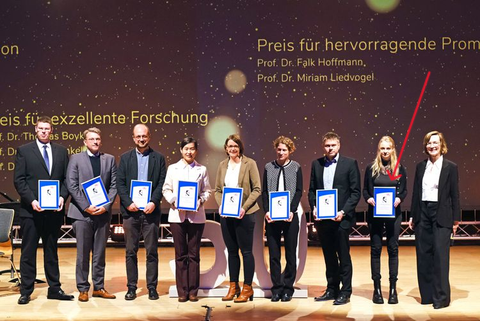
- First things first: OSIG won the Open Science Prize awarded by the Universitätsgesellschaft Oldenburg (UGO)! We’re still over the moon and hope to put the prize money (€1,000!!!) to good use, spending it mainly on snacks and drinks at workshops and perhaps on future speakers.
- To be honest, we’ve probably got a bit hooked on the thrill: we’ve also applied to give a lightning talk at the Year of Open Science conference 2024 organised by the Centre for Open Science, which was *drumroll* accepted!! Cassie Short will present our talk titled“Creating momentum with limited resources: how small initiatives can advance the open science movement”between 20:30 and 21:30 CET on Friday, 22 March. The virtual conference is free of charge, so please do feel free to join us (and all the other talks). If you still need a bit more encouragement to join us, here is the abstract of the talk:
The field of psychology has been particularly affected by the replication crisis, and it is clear that measures must be taken to improve the credibility and reputation of the discipline. These measures should be large-scale and international in scope, but their accessibility and understanding by the scientific community should be actively promoted. Local initiatives can make a significant contribution to integrating open science principles into curricula and scientific work. Based on this idea, the Open Science Interest Group (OSIG) acts as a support structure for academic staff and is dedicated to promoting transparent, credible, reproducible and accessible research within the Department of Psychology at the University of Oldenburg and, where possible, beyond. The group was established without external funding by PhD students and post-docs, with the primary aim of facilitating the exchange and preservation of knowledge regarding open science principles and practices amongst students and researchers. As our approaches are easily transferable to other scientific working groups, we wish to share our experiences, discuss potential obstacles and exchange ideas with other grassroots initiatives. Through our lightning talk, we aim to provide a framework and, hopefully, encourage interested researchers to launch a grassroots movement with the aim of advancing open science.
- And since we seem to be on a roll, TORS and OSIG jointly applied for a DGPS prize for quality assurance in psychology (“Preis zur Qualitätssicherung in der Psychologie 2024”) in February. So far, our nomination has been received, but we haven’t heard back yet. Please keep your fingers crossed for us; we’ll let you know how it turns out – good news or bad.
- The practical project (PP) seminar for the winter term 2023/24 has now finished, but in November, some seminar tutors invited Aaron to talk about Open Science principles and how they can be applied in the PP. We’re looking forward to seeing whether any OS principles made it into the students’ projects at the symposium in April!
- We are still working on implementing a department-wide informed consent form that facilitates easy data sharing. Aaron therefore prepared a presentation on the Open Brain Consent for the department’s council in December. At the moment, we are working out the next steps and will keep you updated.
Action rerequired!
- On 22 March from 9–17 (A07 0-031), there will be a workshop on Docker, organised by us, TORS and the RTG, and led by Michael Ernst (Goethe University Frankfurt) and Aaron Reer (TORS). You can still sign up here until 23 February, and if you decide to join at short notice after that date, please contact . There’ll be coffee and snacks (thanks again @UGO for the prize ;) )!
- So what is the workshop about? It’s essentially all about improving the reproducibility of your code. Docker is a great tool for creating consistent, reproducible environments for scientific experiments and analyses. Researchers can package their code, dependencies and settings into Docker containers, ensuring that others can reproduce their work exactly, regardless of the computing environment. You can find a provisional (and optimistic) schedule for the workshop here.
- The list of publications from the Department that apply open science principles from 2023 is still quite short (compared to previous years). Can we work on that? Please send an email to if you are aware of any publications that adhere to any of the following principles: open access, open data, pre-registration, pre-registration plus analysis plan, and/or open materials. An open-access article without supporting data or materials is sufficient to be added to the list. In your email, please include the full citation of the paper and the principles that were followed.
- The start of the new year means it’s time for us to take a moment to reflect on our work and our outreach. Over the coming weeks, we will therefore be circulating another annual evaluation questionnaire in which we ask for your opinions, suggestions and feedback. We would really appreciate any input you are willing to give us. Hopefully, it will help us improve :)
Open Science News
- Department news: We’ve switched from teaching ‘Presentation’ to ‘Open Source PsychoPy’ :)
To all students currently sitting their exams: Good luck – we believe in you!! To everyone else: Have a wonderful and, hopefully, relaxing semester break!
This newsletter is sent to you by the Open Science interest group of the Department of Psychology at the University of Oldenburg (https://uol.de/psychologie/open-science/osig). Would you like to get involved? Resources and projects are coordinated via a Stud.IP study group. Important information and announcements are also circulated to all members of this group. If you are affiliated with the University of Oldenburg (as a student or member of staff), you can submit a membership request here and we will approve your membership as soon as possible.
If you have any further questions, please do not hesitate to contact our members via the study group or the mailing list , or add your name to the Openscience-Psychology mailing list (https://mailman.uni-oldenburg.de/)mailman/listinfo/openscience-psychology).
8th issue: 06/24
Hello, dear Open Science friends in Oldenburg (and beyond),
We hope you’re all making the most of your resources for the final weeks of the term.
Please feel free to share this newsletter and, as always, you’re welcome to join our hybrid fortnightly meetings (Tuesdays 11 am–12 noon on odd-numbered calendar weeks in the study group and A7-0-36: next meeting on 2 July), which are open to everyone. Previous issues of the newsletter can be found on the OSIG website.
A recap of the past few months
- This year, our annual evaluation questionnaire was sent out in March, and 20 people responded (50% Master’s students, 20% PhD students and 30% others). We’re delighted that so many students took part, and we’ve gathered some interesting ideas for future workshops.
- March was a busy month for us. Cassie Short represented our group at the Centre for Open Science (COS) conference on the Year of Open Science 2023. We hope to have raised awareness of the impact that grassroots initiatives like ours can have, and we also learnt about other interesting projects.

- On the same day, in collaboration with the TORS device centre and the RTG Neuromodulation, we organised the workshop ‘Software Containers in Neuroscience’. The workshop focused on virtualisation techniques, in particular Docker. We learnt about powerful tools for sharing reproducible workflows to promote good scientific practice and collaborative research. We would like to thank Michael Ernst (University of Frankfurt) and Aaron Reer (TORS, University of Oldenburg) for sharing their expertise with us!

- On 16 May, we continued the Open Science series with a talk by Julius Welzel (University of Kiel), a former student on our Master’s programme. His presentation was titled“What is the Brain Imaging Data Structure (BIDS) and why should you know about it?”. Incidentally, Julius won the IGOR prize for open and reproducible science at the Psychology and Gehirn conference 2024 just two weeks after visiting us. We are very proud of an alumnus like Julius and hope he continues with his important work!
- On 21 May, we finally held our second onboarding meeting. It seems to have been a success, as we now have our first member from the Amba lab (Welcome, Wolf!), our very first member from the Department of Medical Physics and Acoustics (Division of Communication Acoustics – welcome, Till!), and a new student member (Welcome, Dilan!). We’re delighted to have you on board :)
- If you missed it but would still like to get involved or get to know us, please don’t hesitate to get in touch!

- The Enter Award, which will be presented for the first time in July 2024, is regarded as the premier prize for open access. It is intended to recognise the commitment to making research freely accessible, as well as to promote an open and collaborative culture of education, research and learning in Germany. In collaboration with TORS, we have submitted an application for the Enter Award in the ‘competence transfer’ category.
- In March, Andrea and Cassie (PMuS) delivered a lecture and ran a workshop on Multiverse Analysis and Pre-registration at the Open Science Centre at Ludwig-Maximilians University Munich. And in June, Cassie, together with collaborators from Ludwig Maximilian University of Munich and the Leibniz Institute for Psychology and Open Science, hosted a workshop on ‘Preregistering the Multiverse’ at the Society for Open Science’s online conference 2024
Action rerequired!
- You are all more than welcome to join our upcoming Open Science Series. Max Frank (LMU) will be visiting us in Oldenburg on 4 July to talk about“The good, the bad and the ugly of open science”. We know it’s the last session of the term, but we’re convinced that Max’s talk will give us something to think about during the semester breakk.
Open Science News
- Since our last newsletter, our university has appointed a new Open Science coordinator. Melanie Klapprott met Ina Bosma and told her about our initiative and our projects. They agreed to collaborate closely in future. We wish her all the best in her ‘new’ role and look forward to working together.
- In February, Springer Nature published a press release announcing that “All journal articles will now feature a Code Availability section, and authors will be encouraged to share code publicly, using permanent identifiers, and to cite any code they have used.” . It may only be a small step, but perhaps it will motivate you to publish your code in your new project as well?
- You really enjoy reading our newsletter, but sometimes still wonder how Open Science affects society as a whole? We understand… We’ve found some interesting reading for the summer: Cole and colleagues published a preprint on “The societal impact of Open Science – a scoping review”
This newsletter is sent to you by the Open Science interest group of the Department of Psychology at the University of Oldenburg (https://uol.de/psychologie/open-science/osig). Would you like to get involved? Resources and projects are coordinated via a Stud.IP study group. Important information and announcements are also circulated to all members of this group. If you are affiliated with the University of Oldenburg (as a student or member of staff), you can submit a membership request here and we will approve your membership as soon as possible.
If you have any further questions, please do not hesitate to contact our members via the study group or the mailing list , or add your name to the Openscience-Psychology mailing list (https://mailman.uni-oldenburg.de/mailman/listinfo/openscience-psychology).
9th issue: 10/24
Hello, dear Open Science friends in Oldenburg (and beyond),
Please feel free to share this newsletter and, as always, you’re welcome to join our hybrid fortnightly meetings (Tuesdays 11 am–12 noon on odd-numbered calendar weeks in the study group and A7-0-36: next meeting on 5 November), which are open to everyone. Previous issues of the newsletter can be found on the OSIG website.
A recap of the last few months
- Although we enjoyed a well-deserved summer break at OSIG, we didn’t let things come to a standstill! Marc, Aaron, Daniel and Amir have been hard at work creating a support sheet that explores how artificial intelligence (AI) can streamline your coding process. As code sharing becomes standard practice in research publications, well-documented and efficient code is more crucial than ever. The support sheet delves into how AI can help improve coding practices, whilst also discussing its limitations. Let us know what you think!
- We’re thrilled to share a sneak peek with you! Over the summer, some of our members have been brainstorming an exciting idea for spring 2025: an Open Science conference right here in our Department. It will be a fantastic opportunity to learn more about open science, network with like-minded individuals, and connect over our shared passion. And if that doesn’t sound great enough already, there’ll be biscuits too! Stay tuned for updates, and keep an eye on our emails and newsletters – we may be looking for contributors soon. We can’t wait; can you?
Action required!
- Have you heard about the EEGMany Analysts project? Find out more here. This initiative aims to test the replicability of brain-behaviour associations in EEG research and was launched by the University of Hamburg. Exciting news—some of our Department members are contributing their own analysis pipelines! We’re eagerly awaiting the results and will share updates as they come in.
Upcoming events
- Ina Bosma, the Open Science coordinator at our university, will be joining our next OSIG meeting on 5 November. We’re excited to meet her in person and discuss her insights on open science. If you’d like to connect with her and the community, feel free to join us at our usual meeting time, 11 am in room A7-36.
- This year, we will be offering two sessions as part of the Practical Project Seminar series. On 18 November, Melanie and Merle will lead an interactive session on pre-registration, providing hands-on guidance on enhancing research transparency. Then, on 9 December, Micha will explore the essentials of version control with Git, equipping participants with practical skills for managing and sharing code effectively.
This newsletter is sent to you by the Open Science interest group of the Department of Psychology at the University of Oldenburg (https://uol.de/psychologie/open-science/osig). Would you like to get involved? Resources and projects are coordinated via a Stud.IP study group. Important information and announcements are also circulated to all members of this group. If you are affiliated with the University of Oldenburg (as a student or member of staff), you can submit a membership request here and we will approve your membership as soon as possible.
If you have any further questions, please do not hesitate to contact our members via the study group or the mailing list or add your name to the Openscience-Psychology mailing list (https://mailman.uni-oldenburg.de/mailman/listinfo/openscience-psychology).
10th issue: 02/25
Hello, dear Open Science friends in Oldenburg (and beyond),
Please feel free to share this newsletter and, as always, you’re welcome to join our hybrid fortnightly meetings (Tuesdays 11 am–12 noon on odd-numbered calendar weeks in the study group and A7-0-36: next meeting on 25 February), which are open to everyone. Previous issues of the newsletter can be found on the OSIG website.
A recap of the last few months
- Although some time has passed, we didn’t want to keep this from you: in July, we had the pleasure of hosting Maximilian Frank, an open science enthusiast from LMU Munich, as part of our Open Science Colloquium series. He shared valuable insights into open science practices, highlighting efforts by universities and funding bodies to enhance transparency and reproducibility in research. Plenty to think about – and inspiration for the future!
- The replication crisis was also a hot topic in our Practical Project Seminar series during the winter term! Melanie and Merle gave a seminar on pre-registration, emphasising how researchers can predefine their study plans before data collection and analysis to enhance transparency. Micha also gave a practical tutorial on Git for version control, demonstrating how it helps track different versions of research documents (including code!) and fosters collaboration.
- We’ve been keeping you updated on our department’s work in multiverse analysis—here’s a round-up of our most recent activities:
- Cassie, Daniel, Micha, Carsten and Andrea recently published a preprint setting out multidisciplinary guidelines on how to conduct a multiverse analysis (paper). This paper not only walks you through the steps but also details the tools available and the challenges involved. Definitely worth a read!
- Cassie and Daniel ran a hands-on workshop on multiverse analysis at the METAREP conference in Munich last October. According to them, the session was dynamic and thought-provoking—participants from various research backgrounds engaged in a lively debate, with some advocating for multiverse analysis whilst others raised critical concerns. The key takeaway? Multiverse analysis is a powerful tool, but it requires careful implementation and thoughtful interpretation.
- Furthermore, Cassie also delivered a Fellow Lecture at the HWK on multiverse analysis in empirical research.
Upcoming events
Remember how we mentioned the idea of an Open Science Conference in our last newsletter? We’ve been busy in the meantime and are now excited to share more details:
Thanks to the generous support from Hearing4All and RTG Neuromodulation, OSIG is organising the first-ever UOL Open Science Conference. The aim is to bring together researchers from across the university to share strategies, discuss challenges and explore cross-disciplinary collaborations in open science.Save the Date: Friday, 18 July 2025, from 9 am to 5 pm
Venue: University of Oldenburg (UOL)
What to Expect:- Eight individual talks
- Two panel discussions:
1. Open Science Practices Across Disciplines
2. Managing the Time Commitment Required for Open Science Practices - One keynote lecture
- A poster session featuring internal and external contributors
We are currently finalising the list of speakers and panellists and plan to share the full programme by the end of March.
Poster submissions open in April
We invite poster abstracts in two categories:- Research on open science
Research implementing open science practices
All UOL staff and students are welcome to submit.
Participation is free, with tea and coffee breaks provided. Registration details will be shared in May. Stay tuned for more updates!- Exciting news—OSIG is joining the ReproducibiliTEA network ! Sumbul will be coordinating our very own ReproducibiliTEA journal clubs, facilitating engaging discussions on reproducibility, open science and research practices. Thanks to Cassie, who submitted the application, we’ll even soon be featured on the official ReproducibiliTEA website.
Open Science News
- Did you know that there are currently plans to set up a Peer Community In (PCI)-Psychology platform ? PCI offers a community-driven peer review process and enables free Open Access publication in affiliated journals—an innovative step forward from the traditional publishing system. Whilst tailored PCI communities already exist for various scientific disciplines, psychology does not yet have its own platform. However, efforts are underway to establish one in 2025: the platform is scheduled to begin publishing this summer. The editorial guidelines for PCI-P are currently being drafted. Further details on PCI Registered Reports can be found here, and slides on the PCI-Psychology initiative—including details on how to become a recommender (equivalent to an action editor)—can be accessed here ( sorry, in German only :( )
It’s still early in the year, which means some of you may be deciding which conferences to attend. To help you out, we’ve put together a list of upcoming conferences related to open science that you might want to check out:
- Metascience Conference | London, 30 June – 2 July
One of the largest gatherings in metascience, this conference brings together researchers and stakeholders working to improve research systems and practices. Excitingly, Cassie and Daniel have submitted a talk—fingers crossed that their submission gets accepted! - Freiburg Open Science Conference | Freiburg, 15–16 May
This conference features key figures in open science, including Daniel Lakens. If you’re interested in cutting-edge discussions on open science reform, this one’s well worth considering! - Responsible Research in Action | Berlin, 22–25 September 2025
This unique unconference is entirely participant-driven, designed to foster informal exchanges and stimulating discussions. If this sounds like your sort of event, keep an eye out—registration for regular attendees opens at the end of April! - SIPS 2025 (Society for the Improvement of Psychological Science) | Budapest, 25–27 June
A dynamic conference offering a variety of contribution formats, including workshops, hackathons, unconferences, lightning talks and roundtables.
Bear in mind that submission deadlines for some conferences have passed, but you can still attend as a regular participant—or use this list to plan ahead for next year’s conferences!
- Metascience Conference | London, 30 June – 2 July
OSIG Team Changes & New Beginnings
- A heartfelt thank you to Marc and Aaron for their incredible contributions to OSIG over the past few years! Whilst they are moving on to new adventures, we have no doubt they will continue to make an impact in open science. We wish them both every success in their future endeavours! At the same time, we’re delighted to welcome Karel ( ANCP, TORS) to OSIG—we hope you enjoy your time with us!
- Open science thrives on collaboration, and for this edition, Merle has been working alongside Daniel as the newsletter team! Keep an eye out for future editions from him—let’s see if you spot a fresh new touch!
This newsletter is sent to you by the Open Science interest group of the Department of Psychology at the University of Oldenburg (https://uol.de/psychologie/open-science/osig). Would you like to get involved? Resources and projects are coordinated via a Stud.IP study group. Important information and announcements are also circulated to all members of this group. If you are affiliated with the University of Oldenburg (as a student or member of staff), you can submit a membership request here and we will approve your membership as soon as possible.
If you have any further questions, please do not hesitate to contact our members via the study group or the mailing list or add your name to the Openscience-Psychology mailing list (https://mailman.uni-oldenburg.de/mailman/listinfo/openscience-psychology).