

Die Ökosysteme in Küsten- und Schelfmeeren fächerübergreifend zu erforschen: Mit diesem Ziel gründete die Universität 1987 das Institut für Chemie und Biologie des Meeres (ICBM). Längst sind seine Wissenschaftler auf allen Weltmeeren unterwegs. Jetzt feiert das Institut sein 25-jähriges Jubiläum.
Oldenburger Kulturzentrum PFL: Über 200 Gäste aus Wissenschaft und Politik kamen, um das 25-jährige Jubiläum des Forschungsinstituts zu feiern. Unter den Ehrengästen: Niedersachsens Wissenschaftsministerin Prof. Dr. Johanna Wanka und Prof. Dr. Karin Lochte, Direktorin des Alfred-Wegener-Instituts für Polar- und Meeresforschung in der Helmholtz-Gemeinschaft (AWI), die bei der Feier die Ehrendoktorwürde der Fakultät V Mathematik und Naturwissenschaften verliehen bekam.
„Das ICBM als einziges universitäres Institut für Meeresforschung in Niedersachsen genießt einen hervorragenden Ruf – weit über die Landesgrenzen hinaus“, erklärte die Wissenschaftsminsterin vor den Jubiläumsgästen.Die Universität Oldenburg habe mit der Gründung des interdisziplinären Meeresforschungsinstituts eine außerordentliche Weitsicht bewiesen. Universitätspräsidentin Prof. Dr. Babette Simon ergänzte: „Die Meeresforschung ist ein zentraler Forschungsschwerpunkt der Universität Oldenburg mit nationaler und internationaler Ausstrahlung. Gerade durch die Verbindung von Forschung und Lehre kommt der Universität eine Schlüsselstellung bei der Nachwuchsgenerierung und -qualifizierung zu.“
16 Forschergruppen mit 100 Wissenschaftlern
Die Forschungsaktivitäten des ICBM sind breit gefächert. Sie umfassen sowohl mathematisch-naturwissenschaftliche Grundlagenforschung als auch die angewandte Umweltforschung in marinen Öko- und Klimasystemen. Auch die Entwicklung mariner Technologien gehört zu dem Aufgabenspektrum. Aktuell arbeiten im ICBM insgesamt 16 Forschergruppen mit etwa 100 WissenschaftlerInnen.
„Es ist uns in den letzten 25 Jahren gelungen, dem ICBM durch seinen interdisziplinären Ansatz ein bundesweit einmaliges Profil zu verleihen“, betonte ICBM-Direktor Prof. Dr. Jürgen Rullkötter. Zahlreiche Kooperationen und Forschungsprojekte, die nur durch das außerordentliche Engagement der Mitarbeiterinnen und Mitarbeiter möglich gewesen seien, stellten dies eindruckvoll unter Beweis.
Zu den Erfolgen der jüngeren Geschichte des Instituts zählt die Ansiedlung eines Sonderforschungsbereichs (SFB). 2009 genehmigte die Deutsche Forschungsgemeinschaft (DFG) den SFB „Ökologie, Physiologie und Molekularbiologie der Roseobacter-Gruppe: Aufbruch zu einem systembiologischen Verständnis einer global wichtigen Gruppe mariner Bakterien“. Bereits seit 2008 ist das ICBM durch die Max-Planck-Forschungsgruppen „Marine Geochemie“ und „Marine Isotopengeochemie“ eng mit dem Max-Planck-Institut für Marine Mikrobiologie in Bremen verbunden. Besonders enge Kooperationen bestehen auch mit dem Helmholtz-Zentrum Geesthacht, dem AWI in Bremerhaven und mit Senckenberg am Meer in Wilhelmshaven.
Dauermessstation als Wahrzeichen
In der 25-jährigen Geschichte des ICBM gehört auch die Integration des Forschungszentrums TERRAMARE in Wilhelmshaven zu den herausragenden Ereignissen. TERRAMARE hatte seit seiner Gründung 1990 Pionierarbeit bei der Zusammenführung der meeresforschenden Einrichtungen Niedersachsens und der Koordination gemeinsamer Forschungsprojekte geleistet. Neben der Fortführung dieser Arbeiten hat das ICBM nach der Integration 2008 den Forschungsstandort Wilhelmshaven deutlich gestärkt. Heute sind dort sechs Arbeitsgruppen angesiedelt. Sie forschen unter anderem zur Auswirkung der Meeresspiegel-, Umwelt- und Klimaänderungen auf die Küsten und deren Ökosysteme sowie zur Biodiversität und der Nahrungsnetzstruktur aquatischer Systeme. Auch künftig werde der Standort Wilhelmshaven für das ICBM eine große Rolle spielen, so Rullkötter. Geplant sei beispielsweise ein Zentrum für Meerestechnik.
Das bekannteste Forschungsinstrument des ICBM ist der gelbe Messpfahl südwestlich von Spiekeroog. Er dient dazu, permanent und bei jeder Wetterlage Daten zu erheben. Die Dauermessstation entstand 2002, nachdem die DFG die Forschergruppe „BioGeoChemie des Watts“ eingerichtet hatte. Als Oldenburg 2009 zu Deutschlands „Stadt der Wissenschaft“ gekürt wurde, avancierte der detailgetreue Nachbau des Messpfahls schnell zum Markenzeichen.
Und das bringt die Zukunft: Die deutsche Meeresforschung erhält ein neues Tiefseeforschungsschiff – und auch Oldenburger Wis-senschaftlerInnen werden es nutzen. Das ICBM begleitet den derzeitigen Bau der SONNE und wird Heimatinstitut des Forschungsschiffs. 2015 geht es zum ersten Mal auf die Reise, Haupteinsatzgebiete sind der Indische und der Pazifische Ozean. Bereits mehrere Fahrtanträge von ICBM-WissenschaftlerInnen wurden genehmigt.
Ehrendoktorwürde für Prof. Dr. Karin Lochte
Im Rahmen der Jubiläumsfeierlichkeit ist Prof. Dr. Karin Lochte, Direktorin des Alfred-Wegener-Instituts für Polar- und Meeresforschung in der Helmholtz-Gemeinschaft (AWI), die Ehrendoktorwürde der Fakultät V Mathematik und Naturwissenschaften verliehen worden. Lochte erhält die Auszeichnung für ihre herausragenden wissenschaftlichen Erfolge. So untersuchte sie die Rolle von Bakterien in Sedimenten sowie die Limitierung von Nährstoffen für das Wachstum von Diatomeen (Kieselalgen) im südlichen Ozean und im nährstoffarmen subtropischen Nordatlantik. Darüber hinaus erforschte sie die Reaktion von bodenlebenden Tiefseeorganismen auf Sedimentationsereignisse. Die Fakultät ehre mit Karin Lochte nicht nur eine hervorragende Wissenschaftlerin, sondern auch „eine unermüdliche Streiterin für die Weiterentwicklung und Qualitätsverbesserung der Meereswissenschaften“, heißt es in der Begründung.
Lochte ist seit 2007 Direktorin des AWI. Sie studierte Biologie, Chemie und Philosophie an der Universität Hannover, wo sie das erste Staatsexamen für das Höhere Lehramt ablegte. 1979 schloss sie am University College of North Wales in Bangor (UK) ihr Studium der Meeresbiologie mit dem Master of Science ab. Nach der Promotion 1984 kehrte Lochte nach Deutschland zurück und war als Postdoktorandin am damaligen Institut für Meereskunde an der Universität Kiel (heute GEOMAR) tätig. 1990 wechselte sie als Wissenschaftliche Angestellte an das AWI. Es folgte 1994 die Habilitation an der Universität Bremen. Ein Jahr später nahm die Wissenschaftlerin den Ruf auf die Professur für Biologische Meereskunde an der Universität Rostock an. Parallel dazu leitete sie die gleichnamige Sektion am Institut für Ostseeforschung Warnemünde. Bevor Lochte als Direktorin an das AWI zurückkehrte, war sie sieben Jahre lang Hochschullehrerin sowie Leiterin einer Forschungseinheit am damaligen Leibniz-Institut für Meereswissenschaften an der Universität Kiel (heute ebenfalls GEOMAR).
Die Biologin, die bislang an 16 großen Expeditionen teilnahm, ist Mitglied zahlreicher nationaler und internationaler Gremien. Von 2004 bis 2010 war sie Mitglied des Wissenschaftsrats. Lochte ist unter anderem Vorsitzende der Wissenschaftlichen Kommission Niedersachsen (WKN), Kuratorin der Bundesanstalt für Geowissenschaften und Rohstoffe sowie Vorsitzende des Konsortiums Deutsche Meeresforschung (KDM). Kürzlich ist sie zur Vizepräsidentin des Scientific Committee on Antarctic Research (SCAR) gewählt worden. Die internationale Wissenschaftsorganisation initiiert, fördert und koordiniert Forschungsprojekte in der Antarktis und berät politische Entscheidungsträger.
-
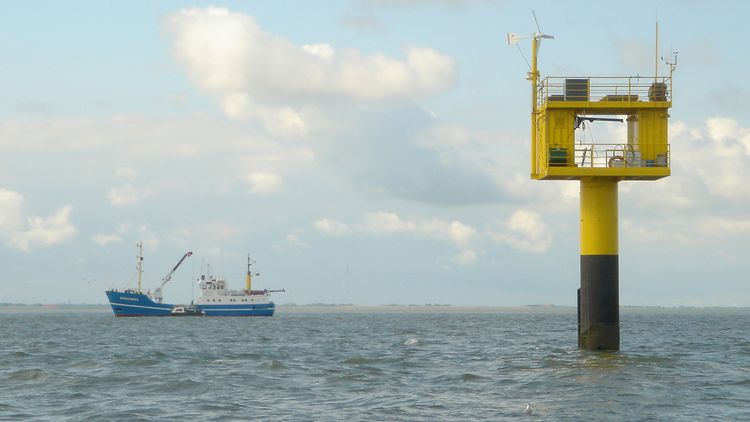
Das bekannteste Forschungsinstrument des ICBM: Die Dauermessstation südwestlich von Spiekeroog.
-
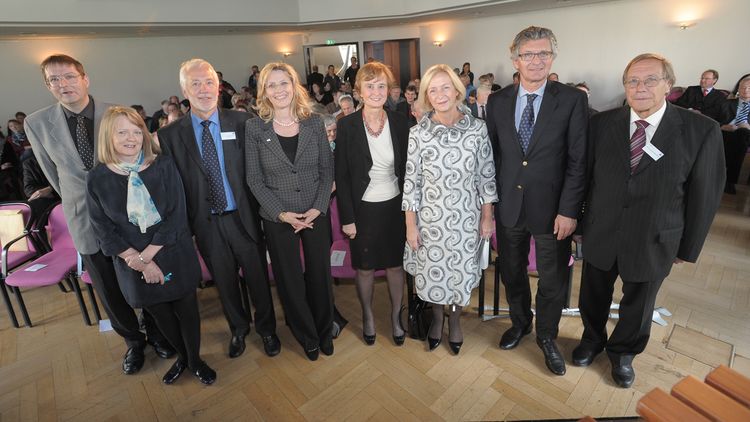
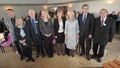
25-jähriges Jubiläum des ICBM (v.l.): Prof. Dr. Martin Holthaus, Dekan der Fakultät V Mathematik und Naturwissenschaften, Dr. Carol Turley, Plymouth Marine Laboratory (UK), Prof. Dr. Jürgen Rullkötter, Direktor des ICBM, Prof. Dr. Babette Simon, Präsidentin der Universität Oldenburg, Prof. Dr. Dr. h.c. Karin Lochte, Direktorin des Alfred-Wegener-Instituts Bremerhaven, Prof. Dr. Johanna Wanka, Niedersächsische Wissenschaftsministerin, Prof. Dr. Gerd Schwandner, Oldenburger Oberbürgermeister, Prof. Dr. Ulrich Kattmann, ehemaliger Direktor ICBM.
25 Jahre Oldenburger Meeresforschung
Topics
- Astronomy
- Biology
- Botanical garden
- Chemistry
- Computing Science
- Cooperations
- Covid
- Culture
- Dutch Studies
- Early Career
- Economics
- Educational Sciences
- Energy
- Energy Research
- Environmental Sciences
- Equal opportunities
- German Studies
- Graduate academy
- Health Services Research
- Higher Education Policy
- History
- Human Medicine
- International affairs
- Marine Sciences
- Material Culture
- Medical ethics
- Medical Physics and Acoustics
- Music
- Neuroscience
- People
- Philosophy
- Physics
- Presidential Board
- Psychology
- Research
- Slavic Studies
- Social Sciences
- Special Needs Education
- Sport Science
- Study Affairs
- Sustainability
- Teacher Education
- Theology
- Transfer
- University Medicine
- Ukraine
- Wind Physics