

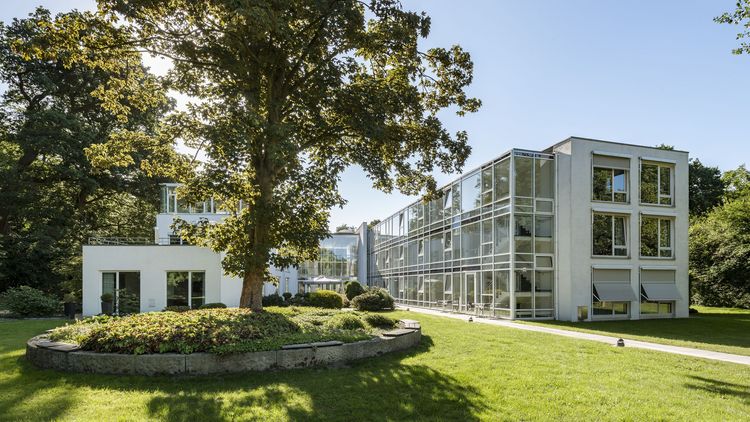
Seit 1997 fördert das Institute for Advanced Study Spitzenforschung im Nordwesten – und hat sich zu einem interdisziplinären Ort der Begegnung entwickelt. Ein Gastbeitrag von Bijan Kafi.
Auf den Tag genau 25 Jahre nach seiner Eröffnung feierten die Mitarbeiterinnen und Mitarbeiter des Hanse-Wissenschaftskollegs (HWK) in Delmenhorst am 13. Oktober mit mehr als 200 Gästen zweieinhalb Jahrzehnte erfolgreiche Forschungsförderung mit einem Jubiläumsempfang. 1997 als Gemeinschaftsprojekt der Länder Bremen und Niedersachsen sowie der Stadt Delmenhorst gegründet, ist das HWK seitdem zu einem wichtigen Teil der nordwestdeutschen Wissenschaftsregion geworden. Als so genanntes „Institute for Advanced Study“ folgt es dem Modell des gleichnamigen Instituts der Princeton University (USA) – und fördert individuelle Wissenschaftlerinnen und Wissenschaftler aus der ganzen Welt durch Fellowships.
„Als Ort des akademischen Liberalismus und Pluralismus gibt das HWK Wissenschaftlerinnen und Wissenschaftlern die Freiheit, rund zehn Monate lang ungestört an einem Projekt zu forschen – oft in Kooperation mit den Universitäten der Region“, erläutert die Rektorin des HWK, Kerstin Schill. Die Professorin für Neuroinformatik der Universität Bremen leitet die Wissenschaftseinrichtung seit 2018. Ziel der Tätigkeit des HWK ist es, die Forschungsschwerpunkte der Universitäten Oldenburg und Bremen zu stärken und die nordwestdeutschen Forschungseinrichtungen noch besser zu vernetzen.
Interdisziplinäre Begegnungen
Jedes Jahr finden rund 60 Fellows den Weg nach Delmenhorst. Das Alumni-Netzwerk des HWK umfasst nach 25 Jahren weltweit mehr als 700 Personen, darunter auch Nobelpreisträger. „Am HWK kommen herausragende Wissenschaftlerinnen und Wissenschaftler aus den Natur-, Geistes- und Gesellschaftswissenschaften zusammen, um von akademischen Verpflichtungen ungestört an ihren Projekten zu arbeiten. Sie begegnen hier Künstlerinnen und Künstlern und Autorinnen und Autoren mit wissenschaftlichem Interesse in einer Atmosphäre der geistigen Freiheit und Interdisziplinarität“, hebt HWK-Rektorin Kerstin Schill hervor.
Für viele der Fellows ist besonders die Möglichkeit attraktiv, mit Kolleginnen und Kollegen der an Energie- und Meeresforschung orientierten Institute der Universität Oldenburg zusammenzuarbeiten, etwa des Instituts für Chemie und Biologie des Meeres (ICBM) oder des Zentrums für Windenergieforschung ForWind. Seit einigen Jahren fördert das HWK zudem im Rahmen eines Postdoc-Programms auch Nachwuchswissenschaftlerinnen und -wissenschaftler aus Oldenburg und Bremen.
Akademisches Veranstaltungszentrum
Mit rund 120 Veranstaltungen im Jahr – vom kleinen Workshop bis zur internationalen Fachkonferenz – ist das Institut zudem ein zentrales akademisches Veranstaltungszentrum der Region. Zusätzlich organisiert das HWK ein öffentliches, populärwissenschaftliches Vortragsprogramm, das bisher rund 12.000 Personen aus einem großen Einzugsbereich angezogen hat. Die eingeladenen Wissenschaftlerinnen und Wissenschaftler berichten aus ihrer Forschung und treten mit dem Publikum ins Gespräch – häufig zu kontroversen Fragen, welche die Gesellschaft als Ganzes bewegen.
25 Jahre nach seiner Gründung steht das Hanse-Wissenschaftskolleg vor spannenden neuen Herausforderungen. Zukünftig möchte das Kolleg den Dialog mit der Öffentlichkeit noch ausweiten, indem es die gesellschaftlichen Rahmenbedingungen von Wissenschaft zum Thema macht, etwa Fragen zu Wissenschaftsqualität und -freiheit, zu den Konsequenzen fortschreitender Digitalisierung oder eines breiten Einsatzes künstlicher Intelligenz. Mit den neuen Arbeitsschwerpunkten Digitalisierung, Wissenschaftsqualität, Künstliche Intelligenz und einem breiten Digitalangebot sieht das HWK der Zukunft zuversichtlich entgegen.