


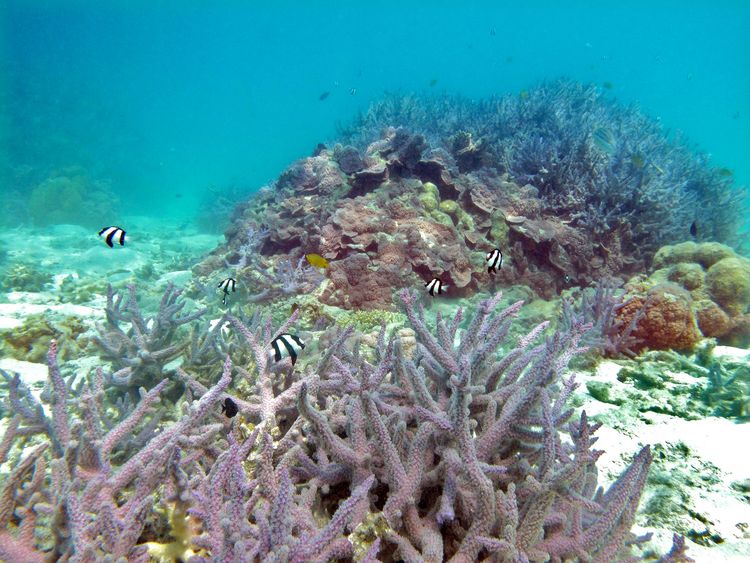
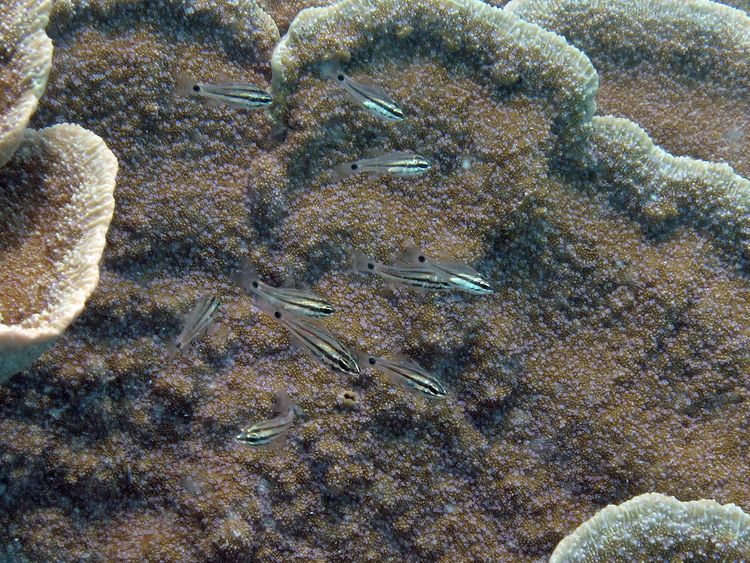
Die Larven der Korallenfische im Ozean sind millimetergroß. Und doch finden sie ihren Weg über Kilometer zurück in ihr Geburtsriff. Wie das möglich ist, hat die Oldenburger Biologin Gabriele Gerlach am australischen Great Barrier Reef untersucht.
In jedem australischen Sommer, von Dezember bis Februar, gehen sie auf Wanderschaft: die Larven der Korallenfische, millionenfach wenige Wochen zuvor im australischen Great Barrier Reef geschlüpft. Mit der Ebbe ins freie Wasser, das so genannte Pelagial gespült, beginnt ihre Reise.
Die Reise erinnert an die Wanderung von Lachsen, die zum Laichen wieder an den Fluss zurückkehren, in dem sie geboren wurden. Um die Orientierungsleistungen der Korallenfisch-Larven zu untersuchen, hat die Oldenburger Biologin Prof. Dr. Gabriele Gerlach kürzlich mehrere Wochen auf der Forschungsstation „One Tree Island“ am Great Barrier Reef verbracht.
Den Aufenthalt auf der Forschungsstation „One Tree Island“ am Great Barrier Reef hat das australische Wissenschaftsnetzwerk ANNiMS ermöglicht. Es hat Gerlach in Anerkennung ihrer Arbeiten über Korallenriffe, Migration und Orientierung von Fischen als Visiting Scholar 2012 ausgewählt. ANNiMS steht für Australisches Nationales Netzwerk für Marine Wissenschaft und ist ein Kooperationsprojekt der Universitäten in Townsville, Perth und auf der Insel Tasmanien.
Wie ist Navigation der Korallenriff-Fische zurück ins Heimatriff zu erklären?
„Die Überlebenschancen der Korallenfisch-Larven sind im offenen Ozean trotz aller Gefahren immer noch höher als im Riff oder in der Nähe von erwachsenen Fischen“, sagt Gerlach. Es sei aber immer noch ein ungelöstes Rätsel, wo genau die Larven sich aufhalten und wie weit sie sich vom Riff entfernen.
Je nach Art müssen sie aber nach einiger Zeit wieder ein Riff finden, denn im offenen Meer können die Winzlinge sich nicht weiter entwickeln. Lange glaubte man, es sei reiner Zufall, wohin die Strömungen und Stürme die Larven verdriften. Vor gut einem Jahrzehnt erschienen dann die ersten Berichte, dass viele Larven an das Riff ihrer Geburt zurückkehren. Seit dieser Zeit beschäftigt sich auch Gerlach mit dem Orientierungsverhalten von Korallenriff-Fischen. Denn ohne eine spezielle Sinnesleistung sei die Navigation zurück in die heimatlichen Gewässer nicht zu erklären, so die Wissenschaftlerin.
Um den Fischen auf die Spur zu kommen, nutzen australische WissenschaftlerInnen eine besondere Markierungsmethode: Sie setzen die Eier und frisch geschlüpften Larven für wenige Stunden einem Antibiotikum aus. Dadurch färbt sich der tägliche Wachstumsring in den Gehörknöchelchen grün. Die Heimkehrer können anhand ihrer Färbung leicht identifiziert werden.
Durch DNA Mikrosatellitenanalyse Herkunftspopulation der Larven bestimmt.
Die Wissenschaftler errechneten eine Rückkehrwahrscheinlichkeit von 35 bis 60 Prozent. Die Oldenburger Expertin für Biodiversität und Tierevolution Gerlach wählt eine andere Methode, um die Wanderungen der Fischlarven zu verfolgen: „Ähnlich wie Kriminalisten Täter durch DNA-Spuren identifizieren, lässt sich die DNA Mikrosatellitenanalyse nutzen, um die Herkunftspopulation der Larven zu bestimmen.“ Als Versuchstiere dienten Kardinalfische (Ostorhinchus doederleini).
Gerlachs Hypothese: Wenn die Larven an ihr Geburtsriff zurückkehren, dann müssten sie als erwachsene Fische auch genetisch von ihren Artgenossen an den benachbarten Riffen unterscheidbar sein. Bei ihren Untersuchungen in Australien konnte die Biologin genau das nachweisen: Innerhalb eines Riffs sind die Fische nah miteinander verwandt, die Artgenossen in Nachbarriffen unterscheiden sich genetisch.
Forscherin fand heraus: Larven haben Geruchssinn.
Die Frage bleibt: Wie finden die nur wenige Millimeter großen Fischlarven, die sich oft Kilometer weit entfernen, zurück zu ihrem Geburtsriff? Bereits 2007 hatte Gerlach in einer Aufsehen erregenden Publikation in der renommierten amerikanischen Fachzeitschrift PNAS (Proceedings of the National Academy of Sciences) eine erste Antwort gegeben.
Zusammen mit dem australischen Meeresbiologen Michael J. Kingsford von der James Cook University in Townsville und dem amerikanischen Wissenschaftler Jelle Atema von der Boston University fand sie heraus, dass die Larven über einen Geruchsinn verfügen, der ihnen bei der Navigation im Meereswasser hilft.
„Wenn sie nach der für ihre Art typischen dreiwöchigen Wanderung im offenen Ozean wieder auf dem Heimweg sind, zeigen die Larven eine Geruchspräferenz für ihr Geburtsriff. Das Wasser, das bei Ebbe aus der Lagune der Riffe fließt, trägt demnach Riff-typische Geruchsmerkmale“, erläutert Gerlach.
Larven riechen Duft „ihres” Riffs.
In einer Versuchsanordnung präsentierten die WissenschaftlerInnen jungen Fischen Wasser von fünf nebeneinander liegenden Riffen des Great Barrier Reefs. „Die Larven bevorzugten das Wasser aus ihrer genetisch bestimmten Heimatlagune gegenüber Wasserproben von anderen Riffen. Sie rochen den spezifischen ‚Duft’ ihres Riffs und schwammen zielgerichtet darauf zu“, so die Wissenschaftlerin.
Allerdings reiche diese olfaktorische Erklärung nicht aus. Der Geruch der Riffe kann sich im Ozean nicht beliebig weit ausbreiten. Wenn die Larven von den Strömungen kilometerweit abgetrieben werden, kann ihnen ihr Geruchssinn irgendwann nicht mehr den Weg weisen.
Wie funktioniert dann die Orientierung der Fische über große Strecken hinweg? Die Frage ist noch unbeantwortet. Gerlach versucht, das Rätsel zu lösen – zusammen mit dem Oldenburger Biologen und Experten für Zugvogelnavigation, Prof. Dr. Henrik Mouritsen. Die beiden Oldenburger Forscher fragen sich: Sind bei Fischen ähnliche Mechanismen am Werk wie bei der Langstreckennavigation von Zugvögeln?
Dieser Artikel erscheint - zusammen mit einem Interview mit Gabriele Gerlach - auch in der Juliausgabe der Hochschulzeitung UNI-INFO.