
Oldenburg philosopher Tilo Wesche is concerned with the rights of nature. In this interview, he talks about the ownership of natural resources, a failed understanding of sustainability - and a river in New Zealand that points the way out.
What is nature?
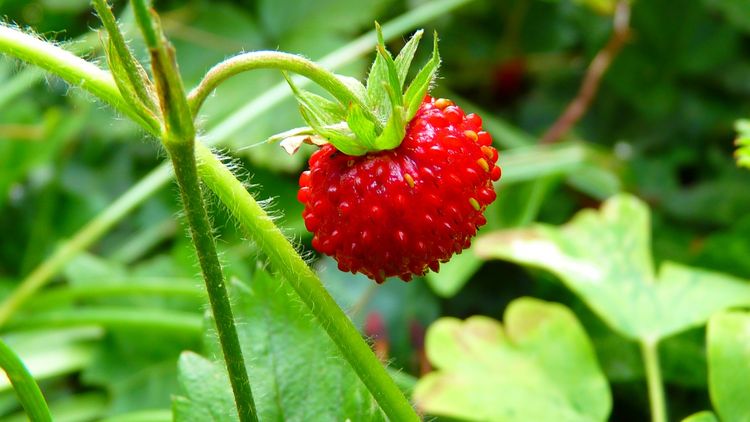
For me, nature is three things. Firstly, nature is everything that is not man-made. In other words, everything that produces itself - in contrast to artefacts, such as a table that I make. Secondly, it is nature that I can perceive, be it through taste, the flavour of strawberries, be it through the beauty of a landscape or warmth and cold. And thirdly, and this is very important to me, nature is something that deserves protection. And how do we explain this right to protection? I would say that nature has rights that protect it.
How does nature get these rights, who does nature belong to?
In many traditions, there is the idea that nature does not belong to humans, but to the gods or God. In any case, it is something that does not belong to humans, something that we cannot simply use, transfer and utilise as we please. This is a very sensible view of nature, but under the conditions of modern societies it is very difficult to uphold these legal claims of nature on the basis of certainties of faith.
If this view of nature were a general conviction, then at least we wouldn't live by it.
Exactly. However, there are several examples in legal practice around the world where courts or legislators have decided, and where it has also been incorporated into the constitution, that nature has rights. That it is a legal subject and therefore has rights that are intended to protect it from harm. One example is the Whanganui River in New Zealand, the subject of an old dispute between the Maori and the New Zealand government: the Maori said that the river belongs to the gods and no one else - the government said that the river, like any other asset, is something that can be transferred into property. The judges then made the Solomonic decision that the river belongs to itself. So it is capable of being owned, so the government got it right, but the river doesn't belong to the people, so the Maori got it right. And it is a very good example of nature being the owner of its resources.
And you share this position, which is now represented in some legal systems or in case law? Is that something that humanity as a whole should embrace?
I am in favour of that. That the idea that nature belongs to itself is, in a sense, a translation of the old religious concept of nature into modern societies. The problem is how to justify this. You have to justify the validity of rights and not just assert them, and that's where I see myself as a philosopher and try to pursue this.
And how can nature enforce these rights?
These are rights that are perceived as representative. In our current understanding of the law, it is not unusual for us to exercise the rights of children, for example, on a representative basis. Through state institutions, but also civil society actors. And this can easily be transferred to the advocacy of the rights of nature.
You once wrote that "duties of sustainability arise from the logic of property". Can you explain this in more detail?
First of all, there are two approaches to sustainability. One view considers nature to be worth protecting because of human interests. In other words, that we should protect nature for the sake of future generations - or because environmental pollution directly affects our health. To a certain extent, these are demands that we place on nature from the outside. Experience shows that this understanding of sustainability has basically achieved very little or nothing at all, because ultimately sustainability is always subordinated to people's immediate interests. In my view, the only way out is not to subordinate nature to human interests, but to recognise nature as a legal subject in its own right, with its own rights.
And this brings us to the logic of property as a basis?
In fact, we should look at the idea of property itself if we are looking for reasons for the rights of nature, especially property rights to its resources. Above all, property rights protect property and ensure that nobody is allowed to infringe on other people's property. If we humans have ownership of the proceeds of our labour, for example - because I have produced something, I have a right to at least a share of the proceeds of my labour, according to the conventional wisdom - then the same should apply to nature. Because nature also contributes to the creation of value, rights to ownership - at least in part - of these yields should follow.
How could this share benefit nature? I'm thinking of raw materials, for example - how can nature benefit from their processing? Is it possible to convert this, so to speak?
You have to think of value creation as joint labour. Natural goods are only valuable at all because they serve to satisfy needs. Most of these goods are not directly valuable, but only through their processing. And these are two factors that people contribute to increasing value. Nature contributes to value creation through its materiality alone - through the fact that there are certain materials, that there are natural cycles; these are all contributions to value creation. That is why ecosystem services must also be regarded as the property of nature, which is worth protecting as property. We must not violate it, because nature does not belong to us, but to itself. This ownership gives rise to sustainability obligations. This would mean that we are allowed to use nature, utilise it and trade with it - but only under the condition of sustainability, for example a balanced ecological footprint.
This would give nature conservation authorities, for example, a completely different role and significance when it comes to monitoring and enforcing this.
If companies only had access to natural resources under the condition of a balanced environmental footprint, this would of course be easier for regenerative goods. For example, farms would have to operate in such a way that animals and land could regenerate. It would be more difficult with non-renewable raw materials such as crude oil. It would have to be said that these raw materials can only be used if a corresponding amount is invested in researching and using alternatives. And all of this arises solely from the idea of ownership. We don't need to invoke any gods or complicated, very indirect obligations towards future generations. If we consider what ownership actually means when we claim it for ourselves, then it follows that we can no longer deny these rights to nature.
Interview: Deike Stolz