


Auftakt für das Innovationsquartier Oldenburg: Indem IQON die Oldenburger Informatikforschung bündelt, soll um die Alte Fleiwa ein dynamisches Areal für kooperative Erforschung und Entwicklung innovativer Prototypen, Produkte und Geschäftsmodelle entstehen.
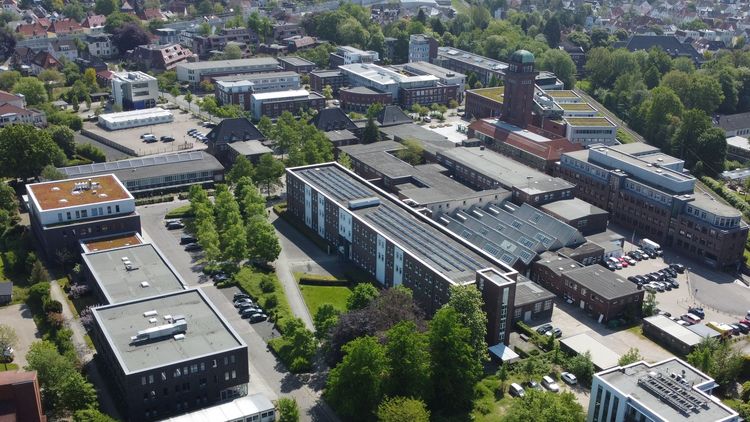
Ein Quartier im Wandel – vor 100 Jahren gegründet, seit anderthalb Jahrzehnten neu belebt und nun mit einer großen Vision auf dem Weg in die Zukunft: Das ist die Alte Fleiwa in Oldenburg. Beim Quartierstag 100 Jahre nach dem Richtfest der prägenden ehemaligen, einst größten europäischen Fleischwarenfabrik stellte sich das Viertel Interessierten auch als Standort des zukünftigen Innovationsquartiers Oldenburg (IQON) vor. Dieses wird künftig vier Einrichtungen aus der Spitzenforschung bei der Entwicklung neuer Technologien in einem einzigartigen Vorhaben zusammenführen: das OFFIS – Institut für Informatik, das Department für Informatik der Universität Oldenburg, das Institut Systems Engineering für zukünftige Mobilität des Deutschen Zentrums für Luft- und Raumfahrt (DLR) sowie das Deutsche Forschungszentrum für Künstliche Intelligenz (DFKI).
Im Rahmen eines Programms mit „virtueller Grundsteinlegung“ und Podiumsgespräch präsentierten die Partner ihre Pläne. Das Projekt, das der Bund und das Land Niedersachsen mit rund 63 Millionen Euro fördern, gehört zu den derzeit größten Bauvorhaben in der Informatikforschung bundesweit.
Ziel von IQON ist es, ein neues Maß an Zusammenarbeit zwischen Wissenschaft, Wirtschaft und Gesellschaft zu etablieren, um die digitale Transformation voranzutreiben. Nach dem Prinzip der sogenannten „Co-Innovation“ sollen dabei Innovationsprozesse in puncto Informationstechnologien und Digitalisierung nicht länger isoliert, sondern offen und kollaborativ gestaltet werden. Es geht um innovative Prototypen, Produkte und Geschäftsmodelle – von Künstlicher Intelligenz bis hin zu unabhängigen Energieversorgungskonzepten.
„Der Grundstein für das Innovationsquartier Oldenburg ist gelegt – und damit ein weiterer Meilenstein für Oldenburg: Hier wird Digitalität mutig und nach vorne gedacht“, so Niedersachsens Wissenschaftsminister Falko Mohrs. „Im IQON treffen mit OFFIS, der Universität Oldenburg, dem DLR und dem DFKI herausragende Forschungsinstitute aufeinander, die Synergien zwischen Forschung, Lehre und der Wirtschaft schaffen. Der besondere Mehrwert des Innovationsquartiers entsteht durch den übergeordneten Transfergedanken. Wo Universitäten und Forschungseinrichtungen eng mit Unternehmen zusammenarbeiten, wo Raum für Co-Innovationsflächen geschaffen wird, entsteht wirkliche Wertschöpfung: durch den Wechsel der Perspektive, die Verknüpfung von Wissen und idealerweise die unmittelbare Anwendbarkeit in der Praxis.“
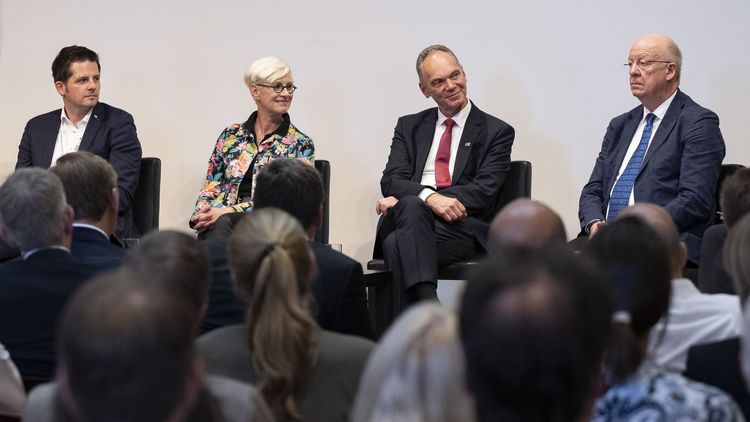
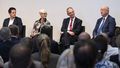
„Der Wissenschaftsstandort Oldenburg hat sich in den vergangenen Jahren hervorragend weiterentwickelt. Mit dem Innovationsquartier Oldenburg heben wir ein zusätzliches Potenzial: Hier sollen Forschende und Praxisakteure voneinander profitieren können und starke neue Impulse für die gesamte Region setzen“, unterstrich Universitätspräsident Prof. Dr. Ralph Bruder. Gemeinsam mit anderen Vertreterinnen und Vertretern aus Politik, Wirtschaft und Wissenschaft – unter ihnen der niedersächsische Wirtschaftsminister Olaf Lies – sprach er bei einer Podiumsdiskussion über die Erwartungen, die Wirtschaft und Wissenschaft an Co-Innovationen haben.
„Oldenburg hat bereits bewiesen, dass erfolgreiche Kooperationen zwischen Wissenschaft und Wirtschaft möglich sind. Mit IQON haben wir die Möglichkeit, diese Zusammenarbeit auf eine neue Ebene zu heben, gemeinsam Co-Innovationsmodelle zu entwickeln und umzusetzen“, ergänzte Prof. Dr. Sebastian Lehnhoff, Vorstandsvorsitzender im Informatikinstitut OFFIS und Professor für Energieinformatik an der Universität.
Bei der Finanzierung des Vorhabens übernimmt das Land Niedersachsen eine maßgebliche Rolle – bis zu 28 Millionen Euro wurden in Aussicht gestellt. Zusätzlich fließen Bundesmittel in Höhe von 35 Millionen Euro. Ein Teil der Förderung wird in die Neugestaltung und Erweiterung von Bestandsgebäuden investiert, um Infrastruktur, Technologie und Gestaltung des Quartiers auf die zukünftige Nutzung auszurichten. Der größere Teil ist für Neubauten vorgesehen, die die interdisziplinäre Zusammenarbeit mit Unternehmen an einem Ort in Co-Innovationsprojekten ermöglichen sollen. Praxisakteure aus dem IT-Netzwerk Oldenburg sowie Start-Ups bekommen so die Möglichkeit, sich im IQON anzusiedeln, um ihre Innovationen voranzutreiben.
„Gemeinsam schaffen wir ein Innovationszentrum, das nicht nur Exzellenz in der Fachwelt fördert, sondern auch Raum für offenen Dialog und Zusammenarbeit mit der Gesellschaft bietet", sagt Prof. Dr.-Ing. Axel Hahn, Direktor des DLR-Instituts Systems Engineering für zukünftige Mobilität. Den Nutzen für die Wirtschaft betont Prof. Dr. Antonio Krüger, CEO und wissenschaftlicher Direktor des DFKI: „Für Unternehmen, die unsere Forschung in die Anwendung bringen, stellen wir uns durch das IQON noch breiter und tiefer auf, das heißt, wir geben ihnen die Möglichkeit, mit nur einem Ansprechpartner gleich vier wissenschaftliche Einrichtungen zu erreichen, die alle ihre eigenen Stärken haben.“