


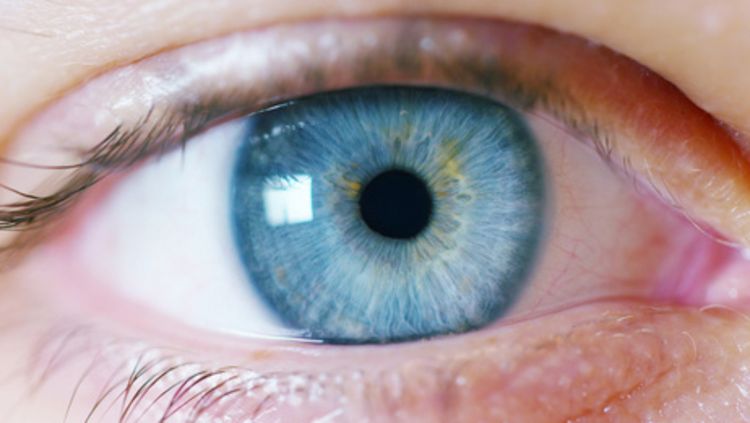

Einem Team um die Biochemiker Karl-Wilhelm Koch und Farina Vocke ist es gelungen, molekulare Grundlagen einer genetisch bedingten Netzhauterkrankung aufzuklären. Die Erkenntnisse könnten helfen, häufigere Formen von Netzhautdegenerationen besser zu verstehen.
Nicht mehr richtig scharf sehen, Probleme beim Lesen oder Schwierigkeiten, Bekannte auf der Straße zu erkennen: Gerade ältere Personen können an der sogenannten altersabhängigen Makula-Degeneration erkranken. Bei dieser Netzhauterkrankung ist die Stelle des schärfsten Sehens im Auge betroffen – die Makula, auch gelber Fleck genannt. Schreitet die Krankheit fort, ist das Gesichtsfeld zunehmend eingeschränkt, im schlimmsten Fall können Betroffene erblinden. Die Ursachen für diese Erkrankung sind jedoch komplex – verschiedene genetische und nicht-genetische Faktoren spielen hier zusammen – und die Behandlung ist nicht einfach.
Um den Ursachen dieser Erkrankung auf die Spur zu kommen, untersuchen Wissenschaftler auch Krankheiten mit ähnlichen Symptomen, wie beispielsweise die Makula-Dystrophie. „Die Symptome – vor allem der zunehmende Sehverlust des zentralen Gesichtsfelds – sind bei beiden Erkrankungen sehr ähnlich“, sagt Prof. Dr. Karl-Wilhelm Koch vom Department für Neurowissenschaften. Doch die Ursachen seien weniger komplex: „Die Erkrankung lässt sich auf eine sogenannte Punktmutation zurückführen, das heißt auf ein einzelnes verändertes Gen“, ergänzt der Biochemiker.
Gemeinsam mit seiner Doktorandin Farina Vocke und einem internationalen Team von Humangenetikern und Biophysikern aus Tübingen, Verona (Italien) und Philadelphia (USA) ist es Koch nun gelungen, das veränderte Gen dingfest zu machen und genauer zu untersuchen. Die Ergebnisse sind in der renommierten Fachzeitschrift Human Molecular Genetics erschienen.
Das Forscherteam untersuchte zunächst das Erbgut von betroffenen Patienten. Dabei gelang es ihnen, das mutierte Gen zu identifizieren, das ebenfalls bei Familien vorkommt, in denen die Erkrankung eindeutig vererbt wird. Das betroffene Gen enthält den Bauplan für ein Protein, das in den Zellen der Netzhaut vorkommt und hier wichtige Botenstoffe steuert.
Mit verschiedenen analytischen Methoden erstellten die Wissenschaftler anschließend einen sogenannten molekularen Fingerabdruck der Krankheit. Das heißt, sie untersuchten verschiedene Eigenschaften des fehlerhaften Proteins im Vergleich zur gesunden Variante und die Konsequenzen, die sich aus der Fehlfunktion ergeben. So wird unter anderem der lichtregulierte Botenstoff cyclo-GMP in den betroffenen Zellen unter physiologischen, also natürlichen Bedingungen deutlich mehr produziert. Dies stört die Zellfunktionen signifikant.
Die Forscher vermuten, dass solche Fehlfunktionen auf ähnliche Weise die altersbedingte Makula-Degeneration mitverursachen. Trotz der deutlich komplexeren Zusammenhänge könnten laut Koch die Ergebnisse helfen zu verstehen, wie diese Krankheit entsteht. Bisher haben Forscher zwar schon Erbgutveränderungen in mehr als 200 Genen gefunden, die Netzhauterkrankungen verursachen. „Nur in wenigen Fällen sind jedoch die genauen molekularen und zellulären Konsequenzen dieser Mutationen bekannt“, ergänzt der Biochemiker.