Startschuss für ein historisches Forschungsprojekt, das zu den größten Deutschlands zählt: Im Oldenburger Schloss ist am Mittwoch vor rund 130 Gästen aus Wissenschaft, Politik und Kultur das Akademienprojekt „Prize Papers“ eröffnet worden. Wissenschaftliche Leiterin des Langzeitprojekts, das kürzlich in das Akademienprogramm – Deutschlands größtes geisteswissenschaftliches Forschungsprogramm – aufgenommen wurde, ist Prof. Dr. Dagmar Freist, Historikerin an der Universität Oldenburg. Zu den Gästen der Feierstunde gehörten unter anderem hochrangige Vertreter der Kooperationspartner des Projekts, darunter der Vizepräsident und die Generalsekretärin der Akademie der Wissenschaften zu Göttingen, Prof. Dr. Jens Peter Laut und Dr. Angelika Schade, der Direktor des Deutschen Historischen Instituts London, Prof. Dr. Andreas Gestrich, sowie Jeff James, der Leiter der National Archives London, in denen die Papiere lagern. "Ein ganz besonderer Moment" „Der Start des Prize-Papers-Projekts ist ein ganz besonderer Moment – nicht nur für unsere hervorragenden Historikerinnen und Historiker, sondern für die gesamte Universität. Es erfüllt mich mit Stolz und Freude, dass das Projekt in das Akademienprogramm aufgenommen wurde“, sagte Universitätspräsident Prof. Dr. Dr. Hans Michael Piper anlässlich der Eröffnung. Jens Peter Laut, Vize-Präsident der Akademie der Wissenschaften zu Göttingen, in deren Trägerschaft das Projekt durchgeführt wird, ergänzte: „Auch die Göttinger Akademie kann sich glücklich schätzen, ein so ungewöhnliches und neuartiges Projekt unter ihre Fittiche nehmen zu können.“ Jeff James, Keeper and Chief Executive der National Archives London sagte: „Die National Archives sind bestrebt, ihre Bestände neuen Zielgruppen zugänglich zu machen – nicht nur im Vereinigten Königreich, sondern auch international. Dieses hoch spannende und ambitionierte Projekt in Kooperation mit der Universität Oldenburg wird uns helfen, viel mehr zu erreichen als wir es alleine könnten.” Die Feierstunde wurde durch ein musikalisches Rahmenprogramm abgerundet: Veronika Skuplik und Maria Carrasco spielten Sonaten von Jean-Lauren de Suffren, die in den Prize Papers überliefert wurden. Nientje Schwabe vom Oldenburgischen Staatstheater las ausgewählte Briefe aus dem Archivbestand. Ihr Vortrag warf bewegende Schlaglichter auf das Leben einzelner Frauen und Männer, die Europa in der Hoffnung auf ein besseres Leben verlassen hatten. Hunderttausende Dokumente aus Schiffskaperungen Die Prize Papers (deutsch: Prisenpapiere) umfassen Hunderttausende Briefe, Journale, Logbücher, Verwaltungsakten, Frachtlisten und weitere Dokumente aus der Zeit der Seekriege zwischen 1600 bis 1817. Der Bestand gilt als einzigartig in Vielfalt und Umfang. Zu Beginn des 20. Jahrhundert entdeckten Archivare die völlig unsortierten Dokumente, die nach Abschluss der mit den Seekriegen verbundenen Gerichtsprozesse im Tower of London eingelagert und dann vergessen worden waren. Ein systematisches Sichten und Sortieren des gesamten Bestands begann jedoch erst im Jahr 2012, als Freist und ihr Team im Rahmen eines europäischen Forschungsprojekts auf die Prize Papers stießen. In den kommenden 20 Jahren wird ein internationales Forscherteam die Prize Papers nun sortieren, digitalisieren und in einer Datenbank der Forschung und Öffentlichkeit zugänglich machen. „Diese einzigartige Überlieferung eines bislang nicht sortierten Archivguts bedeutet, dass bisher keine Dokumente aussortiert wurden“, erläutert Dagmar Freist. So seien Quellen erhalten geblieben, die sonst nicht überliefert seien – zum Beispiel zu Themen wie Sklaverei oder mit einem speziellen Fokus auf bestimmte soziale Gruppen wie Frauen, Kinder oder kaum schreibkundige Menschen. „Die Prize Papers werden uns neue Perspektiven auf unsere Geschichte und unsere Verantwortung in einer sich globalisierenden Welt eröffnen“, so Freist weiter. Das an der Universität Oldenburg angesiedelte und in Trägerschaft der Akademie zu Göttingen durchgeführte Forschungsprojekt hat ein Fördervolumen in Höhe von 9,7 Millionen Euro. Mehrere Kooperationspartner sind beteiligt: die National Archives London, das Deutsche Historische Institut London und die Verbundzentrale des Gemeinsamen Bibliotheksverbundes.
-
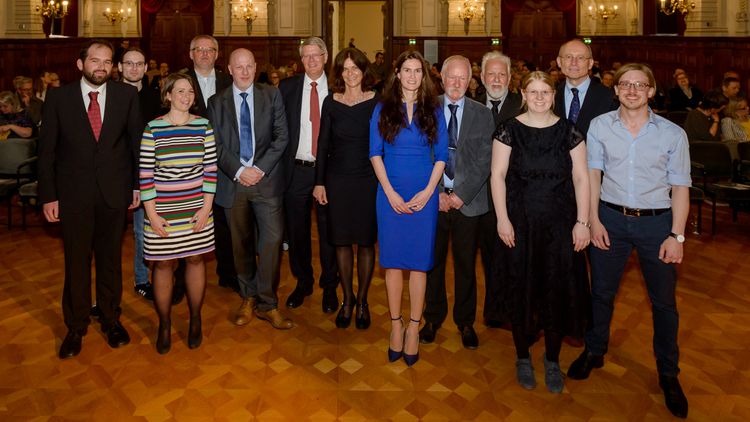
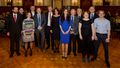
Nun können Sie durchstarten: Das Prize Papers Projektteam unter Leitung von Prof. Dr. Dagmar Freist (Mitte, im schwarzen Kleid) gemeinsam mit den Kooperationspartnern. Foto: Universität Oldenburg
Forschungsprojekt "Prize Papers" eröffnet
Topics
- Astronomy
- Biology
- Botanical garden
- Chemistry
- Computing Science
- Cooperations
- Covid
- Culture
- Dutch Studies
- Early Career
- Economics
- Educational Sciences
- Energy
- Energy Research
- Environmental Sciences
- Equal opportunities
- German Studies
- Graduate academy
- Health Services Research
- Higher Education Policy
- History
- Human Medicine
- International affairs
- Marine Sciences
- Material Culture
- Medical ethics
- Medical Physics and Acoustics
- Music
- Neuroscience
- People
- Philosophy
- Physics
- Presidential Board
- Psychology
- Research
- Slavic Studies
- Social Sciences
- Special Needs Education
- Sport Science
- Study Affairs
- Sustainability
- Teacher Education
- Theology
- Transfer
- University Medicine
- Ukraine
- Wind Physics