


Die Informatikerin Gözel Shakeri will den Online-Einkauf von Lebensmitteln nachhaltiger machen. Die Universität fördert ihre Forschung mit einem Ossietzky-Fellowship.
Sie kauft Kleidung und Möbel secondhand, isst fast ausschließlich vegan und reist in der Regel mit dem Zug: Nachhaltigkeit spielt im Leben der Informatikerin Dr. Gözel Shakeri eine große Rolle. Auch in ihrer Forschung: „Mein Ziel ist es, das Online-Shopping nachhaltiger zu machen“, berichtet sie. In ihrer Zeit als Postdoktorandin an der University of Glasgow in Schottland begann sie damit, eine Browsererweiterung für die Webseite einer britischen Supermarktkette zu entwickeln. Ihre Open-Source-Software Envirofy soll
zu nachhaltigerem Shoppen von Lebensmitteln ermutigen. Bereits die erste Version, die anzeigt, wie
nachhaltig Produkte sind, war ein Erfolg: „In einer experimentellen Studie habe ich festgestellt, dass sich
die CO2-Bilanz pro Einkauf bei den Probandinnen und Probanden um 14 Prozent verringerte“, erzählt sie.
2021 wechselte Shakeri an die Universität Oldenburg in die Arbeitsgruppe der Medieninformatikerin Prof. Dr. Susanne Boll. Im März hat sie ein „Carl von Ossietzky Young Researchers‘ Fellowship“ erhalten. Das universitätseigene Programm unterstützt hochqualifizierte Forschende zu Beginn ihrer Karriere. In ihrem Projekt DioniSOS (Digital Behaviour Interventions for Sustainable Online Shopping) will Shakeri während der kommenden drei Jahre die Wirkung von digitalen Verhaltensinterventionen auf den ökologischen Fußabdruck von Lebensmitteleinkäufen untersuchen.
Ihr Fachgebiet sind Mensch-Maschine-Interaktionen, also die Zusammenarbeit von Menschen mit Computern und anderen automatisierten Systemen. „Das Tolle an der Informatik ist, dass ich damit Dinge umsetzen kann, die mir wirklich wichtig sind“, sagt sie. Die Wissenschaftlerin hat sich auf nachhaltige Mensch-Maschine-Interaktionen spezialisiert, ein relativ neues Forschungsfeld.
Die Idee, ihr Fachwissen für nachhaltigeres Online-Shopping einzusetzen, kam ihr 2020 während der Pandemie. In Großbritannien, wo sie damals noch lebte, werden immerhin zehn Prozent der Nahrungsmittel online gekauft, und auch in Deutschland werden immer mehr Lebensmittel über das Internet verkauft. Das Potenzial für CO2-Einsparungen ist groß: Der gesamte Lebensmittelsektor ist einer Untersuchung der Vereinten Nationen zufolge für ein Drittel aller Treibhausgasemissionen verantwortlich. „Über das Verbraucherverhalten lassen sich die ökologischen Auswirkungen des Konsums schneller reduzieren als über einen langfristigen Systemwechsel zu nachhaltigeren Produktionsmethoden“, ist Shakeri überzeugt und beruft sich auf eine Studie aus dem Jahr 2018, der zufolge sich die Emissionen des Nahrungsmittelsektors durch vergleichsweise einfache Änderungen – etwa eine Umstellung auf eine regionale, vorwiegend pflanzenbasierte Kost – um die Hälfte reduzieren lassen.
Nachhaltiges Einkaufen soll Spaß machen
Dem stehen jedoch verschiedene Barrieren im Weg, berichtet Shakeri: Studien zeigten, dass viele Nutzerinnen und Nutzer zwar gerne umweltfreundliche Produkte kaufen würden, aber häufig nicht wüssten, welche das sind. Ein weiteres Problem: „Viele assoziieren Nachhaltigkeit mit Verzicht und nicht mit Genuss.“
Die erste Version ihrer Browser-Erweiterung schafft vor allem beim ersten Punkt Abhilfe: Die Software zeigt an, wie nachhaltig verschiedene Produkte sind, etwa durch Ampelfarben oder durch Sortierung der Produkte nach verursachten CO2-Emissionen. Envirofy berücksichtigt verschiedene Nachhaltigkeitsdimensionen, neben Treibhausgasemissionen etwa die Umweltauswirkungen von Anbau und Transport sowie soziale Standards. Die zugrundeliegenden Informationen stammen aus öffentlich zugänglichen, von Fachleuten geprüften Datenbanken.
In ihrem neuen Projekt will die Informatikerin nun weitere digitale Verhaltensinterventionen untersuchen. Dafür entwickelt sie ein Empfehlungssystem, das während des Online-Shoppings nachhaltigere Alternativen zu den von den Kunden gewählten Produkten anbietet. Das System soll den Konsumentinnen und Konsumenten die Möglichkeit geben, kreativ zu werden – etwa Empfehlungen oder auch Hintergrundwissen zu bestimmten Produkten zu posten, Filme oder GIFs hochzuladen. „Im Idealfall entsteht auf diese Weise ein Gemeinschaftsgefühl, das letztlich nachhaltigeres Einkaufen begünstigt“, erläutert sie.
Der Plan der Forscherin ist es, gemeinsam mit ihrem Team noch in diesem Jahr die neue Benutzeroberfläche zu designen und die nötigen Erweiterungen zu programmieren. Anfang kommenden Jahres sollen dann experimentelle Studien starten. Mit mehreren hundert Testpersonen will sie untersuchen, welche Interventionen am wirkungsvollsten sind und an welchem Punkt des Kaufvorgangs sie zum Einsatz kommen sollten. Ihr Ziel ist es, die Grundlage für eine Bewerbung um eine drittmittelgeförderte Nachwuchsgruppe zu legen.
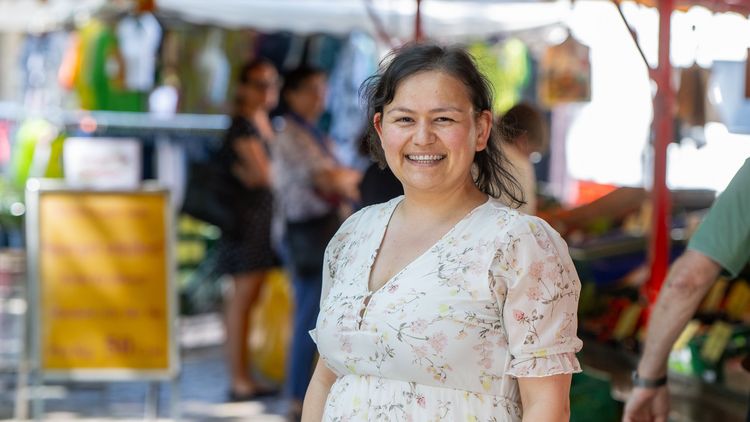
In Oldenburg hat sie sich nach einem etwas holprigen Start während der Pandemie inzwischen gut eingelebt. „Ich liebe die Radelkultur“, sagt die Forscherin, die aus dem wenig fahrradfreundlichen Frankfurt kommt. Um Lebensmittel einzukaufen, besucht sie nur selten einen Online-Shop – sondern lieber einen der Oldenburger Wochenmärkte.
Dieser Artikel ist zuerst in der Juli-Ausgabe der Universitätszeitung UNI INFO erschienen.