


Warmer water temperatures favour the growth of pathogenic bacteria in the sea. In the ENVICOPAS project, a Franco-German research team is investigating how climate change affects certain bacteria.
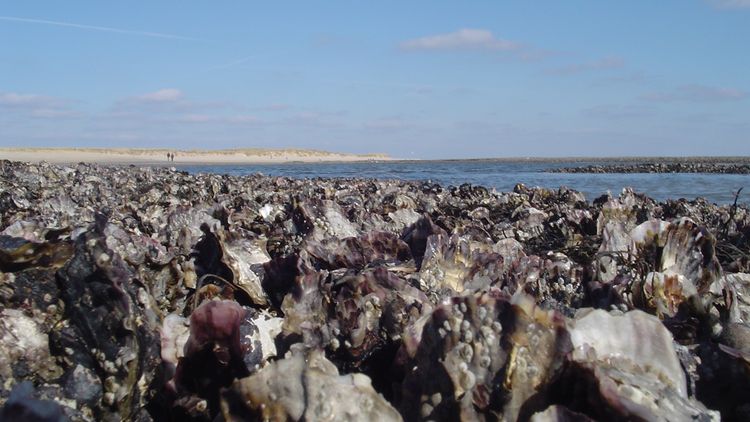
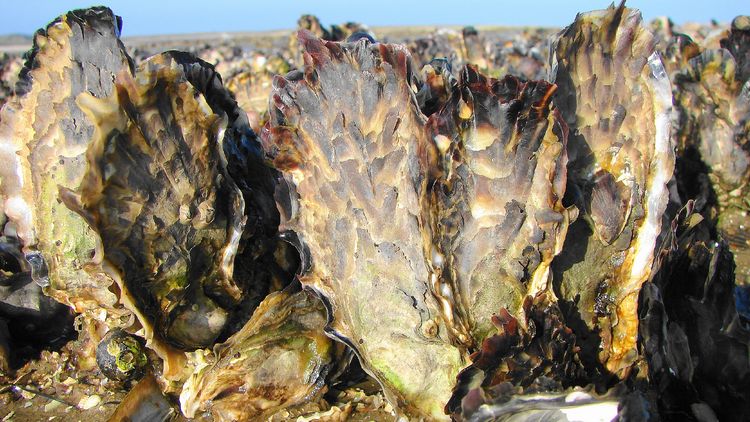
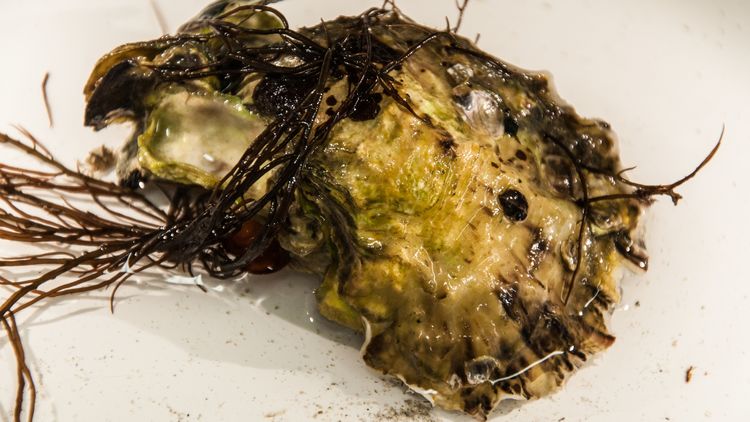
Oysters and humans have something in common: both can be made ill by bacteria of the Vibrio genus. The best-known member of the group is Vibrio cholerae - the cause of the severe diarrhoeal disease cholera. The species Vibrio vulnificus can infect open wounds and, in the worst case, cause life-threatening blood poisoning in people with a weakened immune system. Other species can cause serious food poisoning if infected seafood is eaten, while others can cause mild gastrointestinal upset if too much water is swallowed while swimming. And then there are Vibrio splendidus and Vibrio aesturianus: these strains, which are harmless to humans, infect oysters. On the French Atlantic coast in particular, they have led to several mass deaths among commercially farmed molluscs in recent years.
The vibrios become active at temperatures above 13 degrees
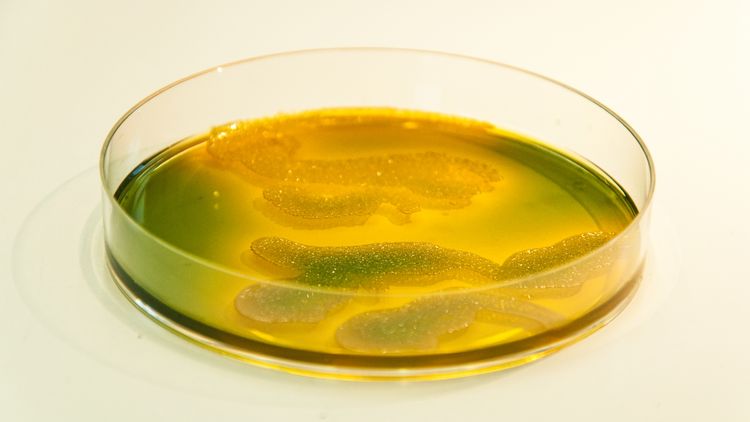
"Vibrions occur naturally in the sea," reports Prof Dr Ulrike Feudel from the Institute of Chemistry and Biology of the Marine Environment (ICBM). The microbes feel particularly at home in brackish water: some species prefer low salinity levels, such as in the Baltic Sea, the Elbe or Weser estuary, while others thrive better in higher salinity levels, such as those found in the Wadden Sea. The bacteria overwinter in the seabed and only become active again at a temperature of 13 degrees Celsius. The warmer the water, the more they multiply.
In the Franco-German project ENVICOPAS (Influence of environmental changes on pathogen systems in the coastal ocean), around 20 researchers led by Dr Gunnar Gerdts from the Alfred Wegener Institute - Helmholtz Centre for Polar and Marine Research (AWI) on Helgoland are investigating how the sometimes dangerous pathogens react to climate change. One part of the team describes the microbial communities that live in oysters, while others identify environmental conditions that also favour the outbreak of diseases in humans. "In our sub-project, we are developing models that predict the occurrence of pathogens in seawater," reports Feudel. The research project, which is funded by the German Research Foundation (DFG) and the French research organisation Agence nationale de la recherche (ANR), will run until 2019.
Cases of illness on the rise
PhD student Vanessa Schakau, who is part of Feudel's Theoretical Physics/Complex Systems working group, is investigating vibrio ions in the North Sea. Her research question is: Will the concentration of pathogens in seawater increase if water temperatures rise in the future? And will the germs become a problem in areas that were previously unaffected? This would be interesting for bathers as well as for the only German oyster farm off Sylt. Although pathogenic vibrios have already emerged there, the oysters have so far been spared mass mortality.
Wound infections caused by vibrios, on the other hand, have increased in Northern Europe in recent years, but are still very rare. A handful of people have fallen ill in the German Baltic Sea in recent years. Following a death in July 2018, the health authorities in Schleswig-Holstein and Mecklenburg-Western Pomerania warned that people with weakened immune defences should take care when swimming - especially if they have open wounds. Cases of the disease have also already occurred in the North Sea - in the Netherlands and the UK.
For her study, Vanessa Schakau simulated the growth of various Vibrio species in the North Sea as a function of water temperature, currents and salinity. Together with Feudel and ICBM researchers Dr Karsten Lettmann and Prof Dr Jörg-Olaf Wolff, she recently presented a comparison of the warm and humid summer of 2014 with the cooler summer of 2016 at the annual meeting of the European Geosciences Union in Vienna.
Ocean currents carry the germs with them
According to the model, the germ concentrations in 2014 were significantly higher overall than in 2016. In addition, those Vibrio species that are adapted to low and medium salinity levels proliferated strongly in the estuaries of the Elbe, Weser and Ems rivers. In contrast, the two species that prefer higher salinity levels were more prevalent in the Jade Bay, south of Cuxhaven and off the Schleswig-Holstein North Sea coast. In her simulation, Schakau also found that the large rivers can transport pathogenic vibrios far into the open North Sea - into areas whose salinity is actually too high for the germs. "The vibrios find optimal conditions in the Elbe estuary and could also be transported by the Elbe plume to bathing beaches on the North and East Frisian Islands or to the oyster beds off Sylt - even though these areas are outside their ecological niche," she reports.
This result explains a curious finding: specimens of the species Vibrio vulnificus appeared in 2010 in samples taken from a beach on Borkum - where the salt content is far above the values at which the species actually feels comfortable. Schakau's simulations confirm the theory that the germs could probably have travelled there with the water from the River Ems. The researcher will soon be able to test her model with data. "AWI researchers regularly take water samples on the Cuxhaven-Helgoland stretch, which are tested for vibrios," she reports. She then wants to realise her actual goal - and calculate how strongly the germs multiply when the water gets even warmer. According to climate models, water temperatures in the North Sea are expected to rise by 1.7 to 3.2 degrees Celsius by 2100.
The summer of 2018 has already provided a foretaste of warmer times: Normally, the North Sea doesn't get much warmer than 18 or 20 degrees Celsius in July and August. This summer it was 23 degrees.