
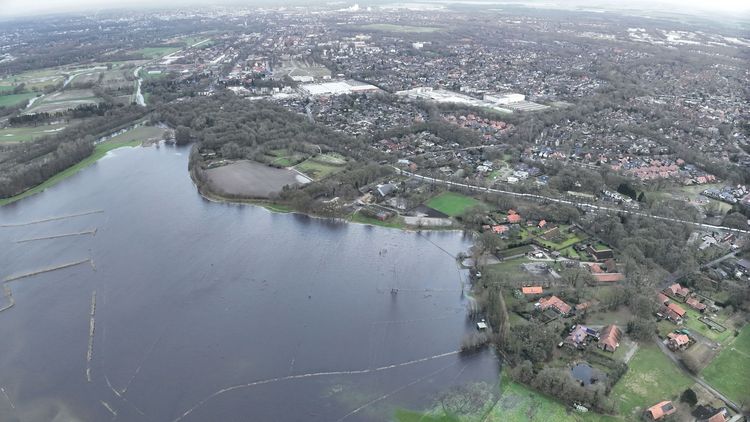
Um den Jahreswechsel waren Oldenburg und andere Teile Niedersachsens von Hochwasser betroffen. Geograph Ingo Mose über die Notwendigkeit, jetzt schnell zu handeln.
Die Hochwasser, die im Dezember an Ems, Hunte, Weser und anderen Flüssen Norddeutschlands aufgetreten sind, sind inzwischen weitgehend zurückgegangen. Die Dringlichkeit von Maßnahmen zum Schutz vor den zerstörerischen Kräften des Wassers ist deswegen aber nicht weniger groß. Im Gegenteil: Wie der Weltklimarat IPCC seit langem vorhersagt, werden Starkregen, Sturzfluten und Überschwemmungen weiter zunehmen. Was ist zu tun?
Mehr und mehr setzt sich die Überzeugung durch, dass technische Hochwasserschutzmaßnahmen wie die Begradigung von Flüssen und die Erhöhung von Deichen – seit Jahrhunderten geübte Praxis – an Grenzen stoßen. Stattdessen rücken Vorstellungen eines natürlichen Hochwasserschutzes in den Fokus.
So müssen den Flüssen ihre natürlichen Überschwemmungsflächen zurückgegeben werden, um das Wasser zwischenspeichern zu können. Weiterhin bedarf es Maßnahmen der Renaturierung, um den natürlichen Wasserrückhalt in der Landschaft zu fördern und gleichzeitig weitere Ökosystemleistungen zu stärken, zum Beispiel den Lebensraum von Tier- und Pflanzenarten. Schließlich gilt es, versiegelte Flächen in Städten und Ballungsräumen soweit möglich zu entsiegeln und dem Niederschlagswasser – Stichwort „Schwammstadt“ – mehr Raum zur Versickerung zu geben.
Diese und weitere Maßnahmen stellen große Herausforderungen dar. Um knappe Flächen in den Städten bestehen konkurrierende Interessen von Wohnungswirtschaft und anderen, die eines Ausgleichs bedürfen. Ebenso gilt es Landwirt*innen zu überzeugen, wenn Äcker und Weiden als Retentionsflächen ausgewiesen werden sollen. Die Bevölkerung insgesamt muss mehr als bisher für Hochwasserrisiken sensibilisiert werden. Indes ist eine nachhaltige Hochwasservorsorge angesichts des Klimawandels alternativlos. Gehandelt werden muss jetzt!
Der Gastbeitrag von Prof. Dr. Ingo Mose entstammt der aktuellen Ausgabe der Hochschulzeitung UNI-INFO.