





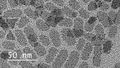
Die Chemikerin Jannika Lauth erhielt in diesem Jahr ein Carl von Ossietzky Young Researchers' Fellowship. Die Forscherin stellt winzige Halbleiter-Plättchen her, die elektrisch leitfähig werden, wenn man sie mit Licht bestrahlt. Mit innovativen Laserverfahren untersucht sie diese zweidimensionale Nanoteilchen. Mögliche Anwendungen sind ultradünne Solarzellen, schnelle Transistoren oder energiesparende LEDs.
Die eigentümlichen Gesetze der Nanowelt haben es Dr. Jannika Lauth angetan. Ganz selbstverständlich spricht die Chemikerin über Dirac‐Ladungsträger, Quantenpunkte oder Exzitonen. Lauths Spezialgebiet sind Halbleiter in einer ungewöhnlichen Form: Die Forscherin stellt Plättchen aus Verbindungen wie Bleisulfid, Indiumphosphid oder Indiumselenid her, die aus wenigen oder sogar nur aus einer einzigen Lage von Atomen bestehen.
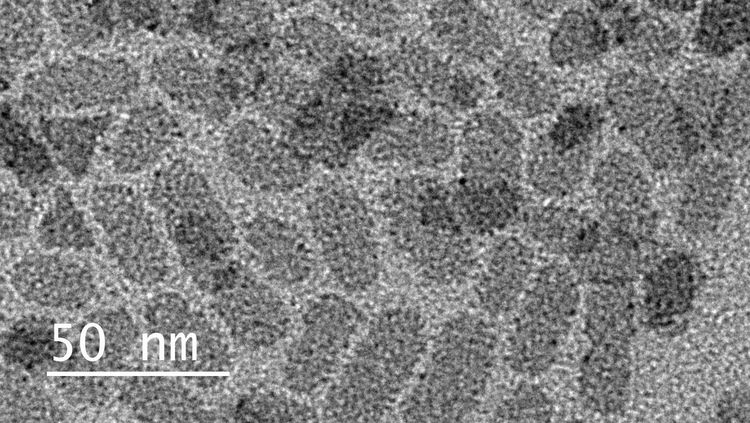
Die vier- oder sechseckigen Strukturen, mit denen die 33-jährige Forscherin sich beschäftigt, werden als zweidimensionale Nanomaterialien bezeichnet, weil sie ähnlich wie ein Blatt Papier extrem dünn im Vergleich zu ihrer seitlichen Ausdehnung sind. Es handelt sich um Teilchen in der Größenordnung von einigen Milliardstel Metern (Nanometern). Solche winzigen Partikel haben häufig andere physikalische Eigenschaften als größere Festkörper: Gold-Nanopartikel erscheinen beispielsweise rot und nicht golden, winzige Kupferteilchen sind extrem hart und nicht biegsam. Bei Nano-Halbleitern, wie Lauth sie untersucht, vergrößert sich im Vergleich zu Festkörpern der Abstand zwischen den Energieniveaus, die so genannte Bandlücke. Damit verändern sich auch die elektronischen Eigenschaften eines Materials.
Hochmobile Ladungsträger
Jannika Lauth interessiert sich vor allem für 2D-Teilchen, die elektrisch leitfähig werden, wenn sie mit Licht bestrahlt werden. „Aus diesen Halbleitern könnte man in Zukunft ultradünne, biegsame Solarzellen herstellen“, sagt die Chemikerin. Auch besonders schnelle Transistoren oder energiesparende LEDs sind denkbar. Je nach Abmessung der Nanoplättchen bieten sich unterschiedliche Anwendungen an: Für Solarzellen und Transistoren, bei denen es auf schnelle Schaltvorgänge ankommt, eignen sich eher etwas dickere Nanoplättchen, in denen besonders bewegliche Ladungsträger auftreten. Für LEDs ist es dagegen vorteilhaft, wenn die Halbleiterscheibchen extrem dünn sind. Auf diese Weise können Chemiker die physikalischen Eigenschaften eines Stoffs gewissermaßen nach Wunsch einstellen.
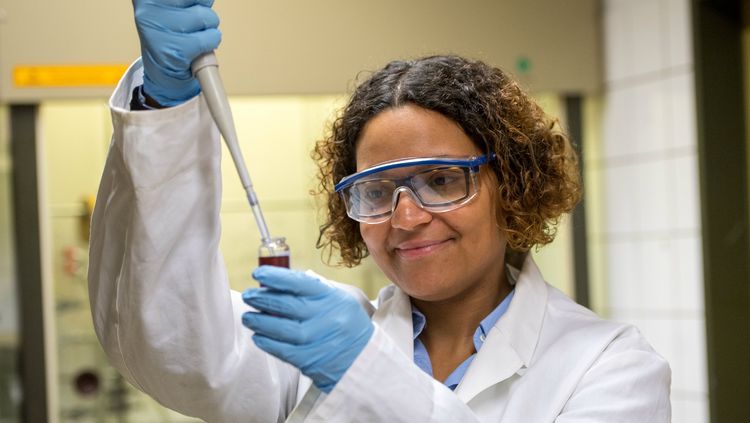
Lauth hat sich bereits seit ihrer Diplomarbeit an der Universität Hamburg darauf spezialisiert, Nanoteilchen herzustellen. 2010 entdeckten Forscher dort eher zufällig, dass sich winzige Kristalle unter bestimmten Umständen zu zweidimensionalen Strukturen verbinden. Diesen Pfad hat Lauth seit ihrer Postdoc-Zeit weiter verfolgt. Um scheibenförmige Nanoteilchen herzustellen, erzeugt sie aus gelösten Salzen so genannte Kolloide – winzige Partikel, die in organische Moleküle eingehüllt sind. „Nanoteilchen stehen im Grunde zwischen Molekülen und Festkörpern“, erklärt Lauth. Die organische Hülle stabilisiert den fragilen Zustand und sorgt dafür, dass sich die Nanoteilchen nicht sofort zu größeren Partikeln zusammenschließen. Über die Art der organischen Anhängsel und die Temperatur kann Lauth steuern, dass die Teilchen vor allem in die Breite wachsen. Inzwischen ist sie in der Lage, verschiedenste Nanokristalle in 2D-Form herzustellen. Ihr Ziel, die Dicke der Plättchen auf eine einzige Lage von Atomen zu reduzieren, hat sie bei einigen Materialien bereits erreicht.
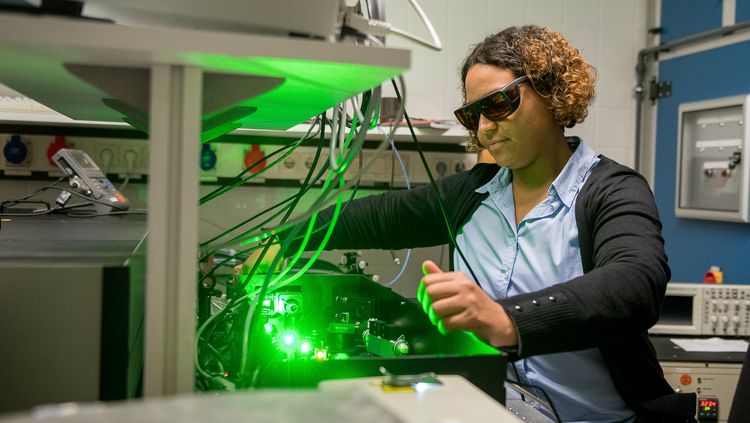
Weil sie solche Partikel nicht nur herstellen, sondern auch ihre ungewöhnlichen elektronischen Eigenschaften verstehen wollte, eignete sich Lauth in ihrer Postdoc-Zeit an der Technischen Universität Delft in den Niederlanden Kenntnisse in verschiedenen laserphysikalischen Charakterisierungsverfahren an. „In Delft habe ich sozusagen noch ein kleines Physikstudium absolviert“, erzählt sie.
Testing without Touching
Außerdem entwickelte sie dort ein Verfahren, um die Nanoteilchen von den organischen Anhängseln zu befreien und dünne Filme daraus herzustellen. Sowohl in der Lösung als auch im Film können die Substanzen mit spektroskopischen Methoden berührungslos untersucht werden. „So können wir herausfinden, welche Materialien etwas taugen, ohne dass man große Mengen davon herstellen muss“, sagt sie.
Die Chemikerin ist gerade an die Universität Oldenburg gewechselt und möchte nun am Institut für Chemie ihre eigene Nachwuchsgruppe aufbauen. Sie will die 2D-Halbleiter gezielt weiterentwickeln und beispielsweise Plättchen herstellen und spektroskopisch charakterisieren, die frei von Schwermetallen wie Blei sind. Lauth hat im Januar ein Carl von Ossietzky Young Researchers‘ Fellowship der Universität erhalten, das eine dreijährige Anschubfinanzierung sichert. Prof. Dr. Katharina Al-Shamery, durch deren Vermittlung Lauth nach Oldenburg kam, freut sich über den Zuwachs im Institut. „Jannika Lauth ist eine herausragende, zielstrebige Wissenschaftlerin, deren interdisziplinäre Forschung an der Schnittstelle zwischen Materialsynthese und Laserphysik auf hohes internationales Interesse stößt.“