


Wissenschaftlern des Alfred-Wegener-Instituts und der Universitäten Oldenburg und Potsdam ist der Nachweis einer neuen Flohkrebsart in der Nordsee gelungen. Sie nutzten für die Artneubeschreibung Erbgutinformationen, die sonst in anderen Bereichen der Genetik verwendet werden. Dieses Vorgehen könnte eines Tages die Biodiversitätsforschung revolutionieren. Wenn von neuen Arten in der Nordsee die Rede ist, handelt es sich häufig um vom Menschen eingeschleppte Tiere oder Pflanzen. Dass sich auch vor unserer Haustür mitunter unbekannte Tiere verbergen, zeigt jetzt die Entdeckung einer neuen Flohkrebsart. Wissenschaftlern um Dr. Jan Beermann vom Alfred-Wegener-Institut, Helmholtz-Zentrum für Polar- und Meeresforschung (AWI) und Dr. Michael J. Raupach vom Institut für Biologie und Umweltwissenschaften der Universität Oldenburg sowie Kollegen von der Universität Potsdam ist es gelungen, eine bislang übersehene Art in der Nordsee zu entdecken und zu beschreiben. Ein seltenes Ereignis, da es sich bei der Nordsee um eines der am besten untersuchten Meeresgebiete der Welt handelt. Veröffentlicht wurde die Neuentdeckung von Epimeria frankei jetzt im Fachmagazin Scientific Reports. Spitzere Beinplatten wiesen den Weg Ursprünglich analysierte der AWI-Ökologe Beermann gemeinsam mit Michael Raupach von der Universität Oldenburg DNA-Barcodes verschiedener Nordsee-Krebsarten; kleine Sequenzabschnitte, welche in der modernen Biodiversitätsforschung genutzt werden. Wissenschaftler erstellen aus diesen DNA-Barcodes molekulare Bibliotheken, die Artidentifizierungen erleichtern sollen. Bei der genauen Untersuchung der Einträge kamen den Wissenschaftlern erste Zweifel, ob es sich bei einer untersuchten Flohkrebsart tatsächlich nur um eine einzige Spezies handelt. „Als wir dann genauer hinschauten bemerkten wir, dass einige Tiere beispielsweise spitzere Beinplatten als andere hatten, auch wenn diese subtilen Unterschiede nicht leicht zu erkennen sind“, berichtet Beermann. „Der Moment, in dem einem klar wird, dass man eine neue Art entdeckt hat, ist unglaublich spannend und faszinierend. Man rechnet nicht unbedingt damit, in der Nordsee noch auf unbekannte Arten zu stoßen. Noch dazu innerhalb einer Gattung, die mit bis zu drei Zentimetern in der Nordsee relativ groß ist und außerdem durch ihre schillernde rote Farbe schon anderen Forschergenerationen aufgefallen ist“, sagt Jan Beermann. Die neue Epimeria-Art wurde auf den Namen „Epimeria frankei“ getauft - nach Prof. Heinz-Dieter Franke, einem renommierten Ökologen, der lange Zeit am AWI auf Helgoland arbeitete und außerdem der Doktorvater von Jan Beermann war. Umfassende genomische Informationen Mit der Entdeckung und dem verbesserten Informationsgehalt zu den zwei Arten mussten diese folglich neu beschrieben werden. „In diesem Zusammenhang wollten wir eine Artbeschreibung verfassen, welche sich nicht nur auf die Erfassung der äußeren Gestalt beschränkt, sondern auch umfassende genomische Informationen beinhaltet“, erläutert Michael Raupach von der Uni Oldenburg. „Vor einigen Jahren wäre eine solche Erfassung noch extrem aufwändig gewesen. Heute ermöglichen moderne Technologien eine schnelle und einfachere Analyse“, so Raupach weiter. Im Zuge der Artbeschreibung verwendeten die Wissenschaftler dann das vollständige mitochondriale Genom, das mit neuesten Methoden entschlüsselt wurde. Dieses haben sie mit Unterstützung des Genomik-Teams um Prof. Michael Hofreiter von der Universität Potsdam mit modernsten Technologien sequenziert. „Damit sind wir weltweit die ersten, die das komplette Erbmaterial der Mitochondrien Basenpaar für Basenpaar im Rahmen einer Artbeschreibung analysiert haben“, ordnen Hofreiter und Raupach ihre Arbeit ein. Sechs Jahre von Vermutung bis Bestätigung Von der ersten Vermutung, bis zur Bestätigung, dass es sich um eine andere, noch unentdeckte Flohkrebsart handelt, hat es gut sechs Jahre gedauert. Untersucht worden war ursprünglich die Spezies Epimeria cornigera, wobei die Wissenschaftler auf deren Schwesterart stießen. Zuvor war man davon ausgegangen, dass Epimeria cornigera vom Mittelmeer bis Island zu finden sei, was einem großen aber durchaus möglichen Verbreitungsgebiet entspräche. Allerdings fehlten bis heute verlässliche Informationen über die Lebensgewohnheiten. „Jetzt wissen wir, dass die neue Art, Epimera frankei, vom Mittelmeer bis in die Nordsee reicht, während die alte Art, Epimeria cornigera, eher im nördlichen Nordatlantik zu finden ist. Nur in der Nordsee gibt es ein kleines Überlappungsgebiet“, erklärt Jan Beermann. Mit der Beschreibung von E. frankei hat sich die Zahl der bekannten Epimeria-Spezies im nord-östlichen Atlantik auf insgesamt fünf erhöht. Die neue Entdeckung macht deutlich, dass marine Biodiversität auch heute noch unterschätzt werden kann und dass molekulare Methoden aus der heutigen Biodiversitätsforschung nicht mehr wegzudenken sind. Für ihre Publikation kombinierten die Forscher umfangreiche Untersuchungen aus Molekulargenetik und Morphologie zu sogenannten integrativen taxonomischen Methoden („taxonomics“). „Die erfolgreiche Validierung des Verfahrens zeigt uns, dass Taxonomics in der Biodiversitätsforschung in Zukunft auch für Überlegungen zu marinem Naturschutz von hoher Bedeutung sein können“, sind die Autoren überzeugt. Jan Beermann, Michael V. Westbury, Michael Hofreiter, Leon Hilgers, Fabian Deister, Hermann Neumann, Michael J. Raupach: Cryptic species in a well-known habitat: applying taxonomics to the amphipod genus Epimeria (Crustacea, Peracarida). DOI: 10.1038/s41598-018-25225-x
-
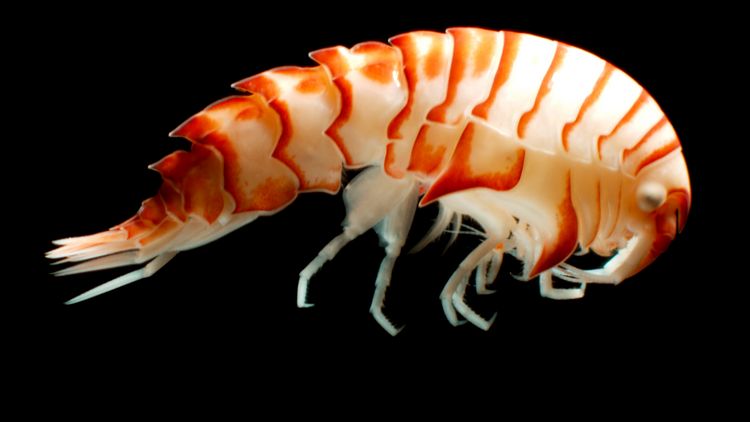
Der Flohkrebs Epimeria cornigera ist seit langer Zeit bekannt, jetzt haben Biologen eine Schwesterart in der Nordsee neu entdeckt. Foto: Alfred-Wegener-Institut / Jan Beermann
-
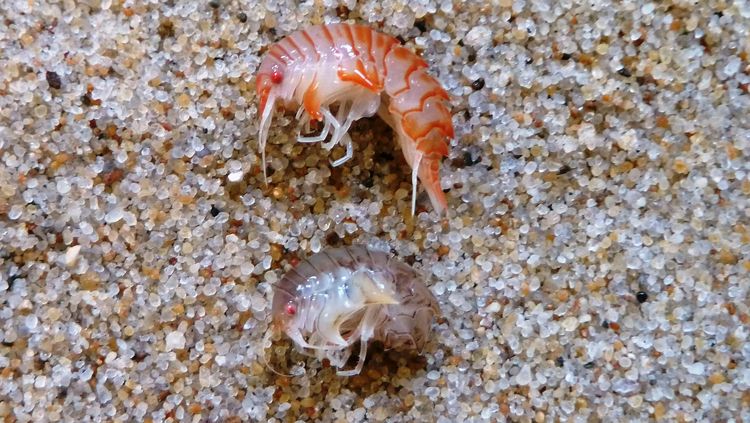
Der neu entdeckte Flohkrebs Epimeria frankei (unten) und seine Schwesterart Epimeria cornigera (oben). Foto: Alfred-Wegener-Institut / Hermann Neumann, Senckenberg am Meer
Neue Tierart in der Nordsee
Topics
- Astronomy
- Biology
- Botanical garden
- Chemistry
- Computing Science
- Cooperations
- Covid
- Culture
- Dutch Studies
- Early Career
- Economics
- Educational Sciences
- Energy
- Energy Research
- Environmental Sciences
- Equal opportunities
- German Studies
- Graduate academy
- Health Services Research
- Higher Education Policy
- History
- Human Medicine
- International affairs
- Marine Sciences
- Material Culture
- Medical ethics
- Medical Physics and Acoustics
- Music
- Neuroscience
- People
- Philosophy
- Physics
- Presidential Board
- Psychology
- Research
- Slavic Studies
- Social Sciences
- Special Needs Education
- Sport Science
- Study Affairs
- Sustainability
- Teacher Education
- Theology
- Transfer
- University Medicine
- Ukraine
- Wind Physics