

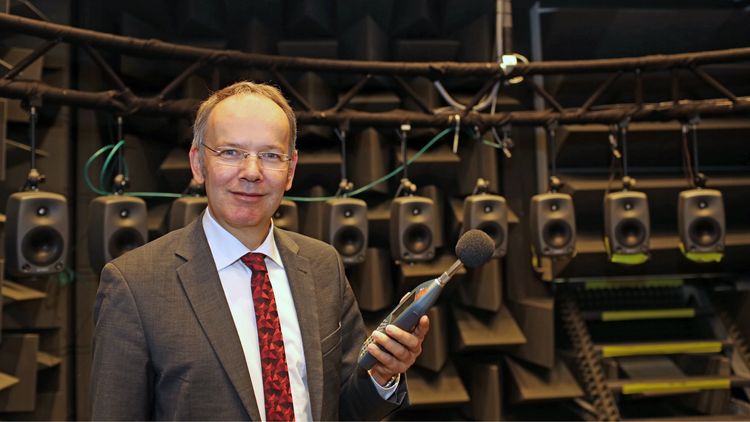

Die Universität bekommt einen neuen Sonderforschungsbereich: Das Vorhaben zum Thema „Hörakustik“ wird von der Deutschen Forschungsgemeinschaft (DFG) in den kommenden vier Jahren mit voraussichtlich rund acht Millionen Euro gefördert. SFB-Leiter ist der Psychoakustiker Volker Hohmann.
Verkehrslärm, Geschirrklappern oder Handygebimmel: Solche Störgeräusche machen es vielen Menschen schwer, einem Gespräch zu folgen – auch jenen, die eigentlich kein Hörgerät benötigen. „Sprachliche Kommunikation ist aber die Grundlage für gesellschaftliche Teilhabe“, betont Prof. Dr. Volker Hohmann. Er leitet den neuen SFB mit dem Titel „Hörakustik: Perzeptive Prinzipien, Algorithmen und Anwendungen (HAPPAA)“. Im Mittelpunkt des Großprojekts, dessen Gesamtlaufzeit auf zwölf Jahre angelegt ist, steht die Wechselbeziehung zwischen Menschen mit eingeschränktem Hörvermögen und ihrer akustischen Umgebung. Hohmann – einer der leitenden Forscher im Exzellenzcluster „Hearing4all“ und Träger des Deutschen Zukunftspreises – will gemeinsam mit seinen Kolleginnen und Kollegen die Grundlagen für verbesserte Hörgeräte und Hörassistenzsysteme schaffen. Mit der RWTH Aachen, der TU München, dem Fraunhofer-Institut für Digitale Medientechnologie IDMT, der Jade Hochschule und der HörTech gGmbH Oldenburg sind weitere führende Hörforschungs-Einrichtungen an dem SFB beteiligt.
„In dem neuen Sonderforschungsbereich widmen sich die Oldenburger Hörforscher einmal mehr ihrem Ziel, Hörgeschädigten bestmöglich zu helfen. Mit der Förderung würdigt die Deutsche Forschungsgemeinschaft die herausragende nationale wie internationale Bedeutung unserer Hörforschung“, erklärt Universitätspräsident Prof. Dr. Dr. Hans Michael Piper.
Hören als aktiver Prozess
Der Sonderforschungsbereich „Hörakustik“ baut auf den Ergebnissen der in Kürze auslaufenden DFG-Forschergruppe „Individualisierte Hörakustik“ auf, die Prof. Dr. Dr. Birger Kollmeier und Hohmann seit 2012 gemeinsam leiten. Die Forscher der Universität Oldenburg, des Kompetenzzentrums HörTech und der Jade-Hochschule schufen dabei die Grundlagen dafür, Hörtechnologien in Zukunft optimal an den einzelnen Nutzer und an die jeweilige akustische Umgebung anpassen zu können. Im Zentrum des jetzt bewilligten SFB steht nun die komplizierte Wechselbeziehung zwischen Menschen mit eingeschränktem Hörvermögen und ihrer akustischen Umgebung. „In der Realität verändert sich eine Hörsituation ständig, weil Menschen auf Stimmen und Geräusche reagieren. Sie wenden zum Beispiel ihren Kopf zur Schallquelle hin oder bewegen ihre Augen“, erläutert Hohmann. Bislang wurde diese Interaktion in der Hörakustik jedoch nicht berücksichtigt, so der Forscher. Das Hören wurde vielmehr als passiver Prozess angesehen. Probanden im Labor erhielten die Anweisung, sich möglichst nicht zu bewegen. „Daher funktionieren viele Hörgeräte im Labor gut, in der Realität aber weniger“, sagt er.
Eintauchen in eine virtuelle Umgebung
Hohmann und seine Kolleginnen und Kollegen bezeichnen die dynamische Wechselbeziehung zwischen dem Hörenden und seiner Umwelt als „akustische Kommunikationsschleife“. Sie beziehen diesen Prozess nun erstmals in die Hörmodellierung ein. Auch Menschen, deren Gehör altersbedingt bereits beeinträchtigt ist, die aber noch kein Hörgerät benötigen, können von dem verbesserten Verständnis dieser „Hörschleife“ profitieren. Um deren Grundprinzipien zu erfassen, erforscht das Team in drei Arbeitsbereichen mit insgesamt zwölf Teilprojekten Modelle, Algorithmen und Anwendungen. Aufbauend auf Modellen der Sprachwahrnehmung und Hörqualität bei Normal- und Schwerhörenden wollen Hohmann und seine Kollegen die Algorithmen verbessern, die akustische Signale in Hörhilfen verarbeiten, sowie einige Anwendungen exemplarisch untersuchen – um etwa zu erforschen, wie Lautsprechersignale in einer unruhigen Umgebung verständlicher werden können, beispielsweise Durchsagen im Bahnhof.
Ein weiteres Ziel besteht darin, ein intelligentes Ohrpassstück zu entwickeln, das hohe Klangqualität bietet und gleichzeitig Rückkopplungen unterdrückt sowie Störgeräusche reduziert. Außerdem untersuchen die Experten, wie sich komplexe akustische Szenen realitätsnah über Kopfhörer wiedergeben lassen. So könnten Probanden in Zukunft in eine virtuelle Realität eintauchen, die sowohl optisch als auch akustisch einer echten Umgebung ähnelt – etwa einem belebten Café oder einem unruhigen Klassenzimmer. Gleichzeitig ließe sich die Technologie auch einsetzen, um zum Beispiel Filme zu Hause mit optimaler Akustik anzusehen. Die Ergebnisse des SFB sollen langfristig auch für weitere Anwendungen im Bereich Unterhaltungselektronik genutzt werden, etwa für die Spracherkennung oder die Mensch-Maschine-Kommunikation.
Aktive Nachwuchsförderung
Der jetzt bewilligte Sonderforschungsbereich trägt zudem zur aktiven Nachwuchsförderung junger Wissenschaftlerinnen und Wissenschaftler bei – dank eines integrierten Graduiertenkollegs. SFB-Sprecher Hohmann betont: „Wir schaffen die Grundlagen, um zum Wohl der Patienten die Rehabilitation mit Hörhilfen weiter zu verbessern, bilden hochqualifizierten Nachwuchs für die Hörforschung aus und ergänzen darüber hinaus die Forschung des Exzellenzclusters Hearing4all um wichtige grundlegende Bausteine.“