

Die DFG-Forschergruppe BioGeoChemie des Watts erhielt den Preis für ihre herausragende Meeresforschung. Sprecher Prof. Dr. Jürgen Rullkötter nahm die Auszeichnung im Hamburger Rathaus entgegen. Was genau der Preis würdigt und was die Forscher im Watt herausbekamen.
Er wurde zum ersten Mal verliehen – der Norddeutsche Wissenschaftspreis. Und er ging an die Universität Oldenburg. Die DFG-Forschergruppe BioGeoChemie des Watts erhielt den Preis für ihre herausragende Meeresforschung. Ende November konnte Prof. Dr. Jürgen Rullkötter, Direktor des Instituts für Chemie und Biologie des Meeres (ICBM) sowie Sprecher der DFG-Forschergruppe, die Auszeichnung im Hamburger Rathaus entgegennehmen.
Der mit 50.000 Euro dotierte Preis würdigt in diesem Jahr hervorragende norddeutsche Kooperationen in der Meeresforschung. „Die DFG-Forschergruppe BioGeoChemie des Watts hat uns unter anderem deshalb überzeugt, weil die beteiligten Partner ihre Zusammenarbeit mit Kooperationsverträgen verbindlich geregelt und dadurch nachhaltige wissenschaftliche Strukturen geschaffen haben“, erklärte die Hamburger Wissenschaftssenatorin Dr. Dorothee Stapelfeldt anlässlich der Preisverleihung.
An der DFG-Forschergruppe BioGeoChemie des Watts sind unter Federführung der Universität das Max-Planck-Institut für Marine Mikrobiologie in Bremen und Senckenberg am Meer (Wilhelmshaven) beteiligt. Insgesamt lagen der hochkarätig besetzten Jury 14 Wettbewerbsbeiträge aus allen Gebieten der Meersforschung vor, drei wurden für die Endrunde nominiert. Ausgelobt wird der Preis von den Wissenschaftsministerien der Länder Mecklenburg-Vorpommern, Niedersachsen, Schleswig-Holstein, Bremen und Hamburg.
Die Forschergruppe BioGeoChemie des Watts wurde 2001 von der Deutschen Forschungsgemeinschaft (DFG) ins Leben gerufen, um mehr über die hydrodynamischen und biogeochemischen Vorgänge im Watt zu erfahren. „Eine tiefgreifende Kenntnis der im Wattenmeer ablaufenden physikalischen, biologischen und chemischen Prozesse ist eine der Voraussetzungen, um die einzigartige Landschaft angemessen schützen und Veränderungen infolge von Klimawandel und steigendem Meeresspiegel besser abschätzen zu können“, betonte Rullkötter.
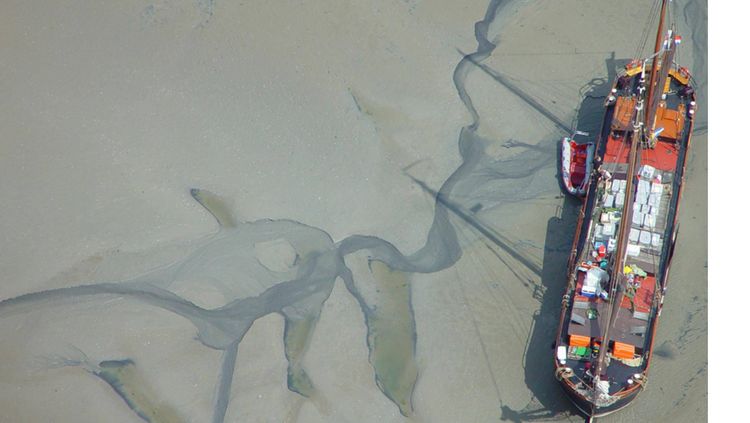
In intensiven Gelände- und Laborarbeiten haben die WissenschaftlerInnen im Rückseitenwatt der Insel Spiekeroog die Strömungssysteme erforscht. Zudem untersuchten sie den Transport von partikulärem und gelöstem Material in der Wassersäule, die Produktion von Biomasse durch Plankton und die Umsetzung abgestorbener Biomasse durch Mikroorganismen. Markantestes Forschungsinstrument der Gruppe: der gelbe Forschungsmesspfahl – eine Dauermessstation im Seegatt südwestlich von Spiekeroog.
Die WissenschaftlerInnen konzipierten die Messstation so, dass sie bei jeder Wetterlage – auch bei extremen Stürmen und Eis – verlässliche Messdaten aus dem Spiekerooger Watt übermittelt. Sie liefert ozeanographische und meteorologische Daten und misst – einmalig für das deutsche Wattenmeer – seit ihrer Errichtung im Jahr 2002 auch chemische Daten wie beispielsweise Nährsalzgehalte im Wasser. Die erhobenen Daten flossen unter anderem in hochauflösende mathematische Modelle wichtiger ökologischer Prozesse ein – wie Vorhersagen zu Strömungsverhältnissen oder Sedimenttransporten.
Den Erfolg der Forschergruppe sieht Rullkötter vor allem in der engen Zusammenarbeit der beteiligten Institute: „Wir konzipierten die Gruppe von Anfang an so, dass sich die Wissenschaftler und Forschungsinstitutionen gegenseitig inspirieren.“ So entwickelte die Arbeitsgruppe Meeresphysik der Universität Oldenburg innovative Forschungsgeräte, die beiden geochemischen Arbeitsgruppen des Instituts für Chemie und Biologie des Meeres (ICBM) untersuchten die anorganischen und organischen Proben.
Das Max-Planck-Institut für Marine Mikrobiologie beschäftigte sich mit Stofftransporten und mikrobiellen Prozessen. So fanden die ForscherInnen im Spiekerooger Watt hohe mikrobielle Umsatzraten im Sediment. Damit ist die Sandplate ein hochgradig aktiver Bioreaktor zur Remineralisierung abgestorbenen organischen Materials. Zugleich entdeckten sie eine hohe Anzahl und Vielfalt von Mikroorganismen, die giftige Schwefelverbindungen an der Sedimentoberfläche neutralisieren und sogar zum Wachstum nutzen können. Senckenberg am Meer mit seiner langjährigen Expertise von Arbeiten in Gezeitenbecken nordwestdeutscher Rückseitenwatten widmete sich der Erforschung der Sediment- und Morphodynamik im Rückseitenwatt von Spiekeroog. „Ohne das perfekte Zusammenwirken aller Beteiligten, die ihre jeweiligen Kompetenzen in das Forschungsfeld einbrachten, wäre dieser Erfolg nicht möglich gewesen“, so Rullkötter.