


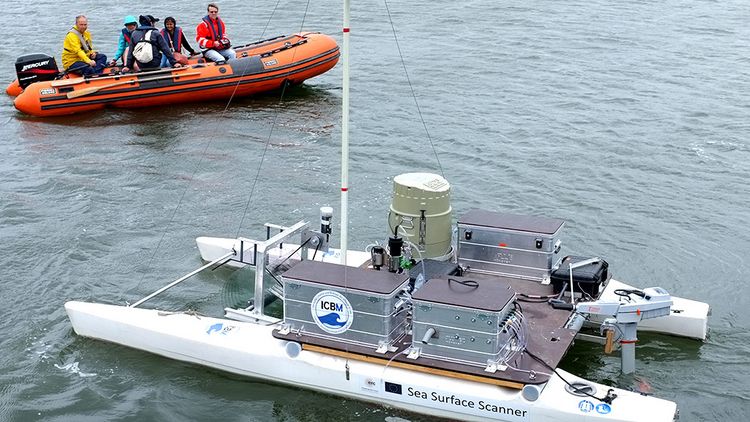

Das Niedersächsische Wissenschaftsministerium fördert künftig neun anwendungsorientierte Forschungsprojekte aus den Mitteln des Europäischen Fonds für regionale Entwicklung (EFRE) – zwei davon an der Universität Oldenburg.
In der EFRE-Richtlinie „Innovationen durch Hochschulen und Forschungseinrichtungen“ wird das geplante Wilhelmshavener Zentrum für Marine Sensorik (ZfMarS) des Instituts für Chemie und Biologie des Meeres (ICBM) mit knapp 2,5 Millionen Euro kofinanziert. Federführend ist die Universität Oldenburg außerdem bei „VIBHear“, einem „Innovationsverbund für integrierte, binaurale Hörsystemtechnik“. Beteiligt an diesem Verbundprojekt sind – neben der Universität – das Kompetenzzentrum HörTech, das Hörzentrum Oldenburg, die Medizinische Hochschule Hannover und die Jade Hochschule. Die Gesamtförderung beträgt hier 1,2 Millionen Euro.
Sensoren als Schlüsseltechnologie
Sensoren gehören zu den Schlüsseltechnologien moderner Meerestechnik. Ihre Einsatzfelder und Zuverlässigkeit zu erforschen, steht im Mittelpunkt des neuen interdisziplinären und transferorientierten ZfMarS. Das ICBM arbeitet dabei eng mit der Jade Hochschule und der regionalen Industrie zusammen. Die Wissenschaftler setzen drei Schwerpunkte: Im „Innovationslabor für Zuverlässigkeit und Bewuchsvermeidung“ wird an Sensoren geforscht, die Offshore-Technologien noch zuverlässiger und effizienter überwachen. Das „Innovationslabor für Öl, Wasser, Eis“ soll neue Messverfahren für die technologische Stärkung umweltfreundlicher maritimer Transporte hervorbringen. Ziel ist es, Energierohstoffe auch unter widrigen Bedingungen umweltsicher erkunden, gewinnen und lagern zu können. Im „Innovationslabor für marine Oberflächen“ geht es um Probe- und Messverfahren für aquatische Oberflächenprozesse, die im Zusammenhang mit Umweltverschmutzungen und Klimaveränderung stehen. Das neue Zentrum deckt das gesamte Forschungsfeld der Wasser-Sensor-Wechselwirkungen ab – von der marinen Umwelt über Inlandgewässer bis zu Prozessen in Schiffen oder Aquakulturanlagen.
Innovationen für besseres Hören
Schwerhörigkeit wird in der alternden Gesellschaft immer mehr zum Problem. So sind technische Hörhilfen in den letzten zehn Jahren erheblich weiterentwickelt worden. Mit der jetzt bewilligten EFRE-Förderung gründen die Hörforscher der Universität Oldenburg und ihre Partner ein neues Verbundprojekt. Der Innovationsverbund strebt dabei die internationale Spitzenposition für herstellerunabhängige Systemlösungen rund um konventionelle und implantierbare Hörsysteme an. Ziel ist es, Voraussetzungen dafür zu schaffen, dass Forschungsergebnisse vermehrt in technologische Lösungen umgesetzt werden – zum Wohl der hörgestörten Patienten. Zudem sollen traditionell getrennte Technologien von Hörgeräten und Cochlea-Implantaten zusammengeführt werden. Aufbauend auf den Forschungsergebnissen der Universitätsstandorte Oldenburg und Hannover – unter anderem im Exzellenzcluster „Hearing4all“ – sind insgesamt fünf komplementär angelegte Teilprojekte geplant.