


Sie ist hauchdünn, aber dennoch wichtig – die Grenzschicht zwischen Ozean und Atmosphäre. Sie beeinflusst den Austausch von Gasen wie Kohlendioxid und Sauerstoff zwischen Wasser und Luft – und wirkt sich so auf das Klima aus. Ein internationales Forscherteam untersucht diese Schicht nun im Jadebusen.
Die Ozeane bedecken mehr als 70 Prozent der Erdoberfläche und spielen eine große Rolle für das Klima auf der Erde. Besonders wichtig ist der Übergang zwischen Wasser und Luft – an dieser Grenzschicht spielen sich viele Prozesse ab. Doch wie genau wirken sich diese auf das Klimageschehen aus? Und was passiert nachts an der Grenzschicht?
Um diese Fragen zu beantworten, ist ein internationales Forscherteam am Institut für Chemie und Biologie des Meeres (ICBM) der Universität Oldenburg zusammengekommen. Zwei Wochen lang untersuchen die Wissenschaftler im Projekt MILAN auf dem Jadebusen die hauchdünne Oberflächenschicht des Meeres – auch in der Nacht.
Der größte Teil der Ozeane ist von dünnen natürlichen Häutchen, sogenannten Oberflächenfilmen, bedeckt. In dieser Grenzschicht sammeln sich organische Moleküle biologischen Ursprungs, da hier kaum Verwirbelungen stattfinden. Diese Schicht verlangsamt außerdem den Gasaustausch zwischen Ozean und Atmosphäre. Oft bietet sie ideale Lebensbedingungen für Mikroorganismen, die diesen Austausch zusätzlich aktiv beeinflussen.
Doch was genau in dieser Grenzschicht passiert, haben Wissenschaftler im Detail noch nicht verstanden. Denn Messungen und Proben aus diesem hauchdünnen Film zu gewinnen ist schwer – besonders nachts. „Es ist das erste Mal, dass wir Oberflächenfilme auch nachts untersuchen, überdies international und fachübergreifend. Das wird eine Herausforderung, denn die Arbeit bei Dunkelheit auf See ist nicht einfach“, sagt Dr. Mariana Ribas Ribas, Ozeanographin in der Arbeitsgruppe Meeresoberflächen am ICBM. Gemeinsam mit ihrem Kollegen Dr. Christian Stolle, der zudem am Institut für Ostseeforschung Warnemünde forscht, hat sie das Projekt initiiert.
Um ein umfassendes Bild zu erhalten, welche Mengen von Gasen und anderen Stoffen durch den Oberflächenfilm ausgetauscht werden, müssen die Forscher rund um die Uhr messen. Denn die Aktivitäten der Mikroorganismen unterscheiden sich zwischen Tag und Nacht. Tagsüber lässt die Sonneneinstrahlung zum Beispiel Mikroalgen Sauerstoff produzieren – die Ozeane steuern immerhin die Hälfte des Luftsauerstoffs auf der Erde bei. Darüber hinaus nehmen die Meere ungefähr ein Drittel des von Menschen produzierten Treibhausgases Kohlendioxid auf. Nachts jedoch, wenn die Organismen keine Photosynthese betreiben können, treten atmende Mikroorganismen in der Grenzschicht in den Vordergrund, die Kohlendioxid produzieren.
In den kommenden zwei Wochen am Jadebusen geht es vor allem um folgende Fragen: Schwanken die Zusammensetzung und die Stoffwechselleistungen der Mikroben-Gemeinschaften im Tagesverlauf nennenswert? Und wie stark beeinflussen diese den Austausch von Sauerstoff und Kohlendioxid durch den Oberflächenfilm? Außerdem interessiert die Wissenschaftler, inwieweit biologische, physikalische und (photo-) chemische Prozesse die Menge und Beschaffenheit feinster Schwebstoffe, Aerosole, über der Meeresoberfläche prägen – diese wirken sich auch auf die Wolkenbildung aus.
Die Idee für MILAN (sea-surface microlayer functioning during the night) ist auf unkonventionelle Weise am Rande einer Fachtagung entstanden. „Normalerweise wirbt man Geld ein und führt dann ein Projekt durch. Hier lief es anders herum“, erklärt Ribas Ribas. Gemeinsam wolle man MILAN nun zu einem europäischen Projekt ausbauen.
Zum Team gehören Forscher aus Costa Rica, Dänemark, Großbritannien, Italien, Kroatien, Polen, Schweden und Spanien. Von deutscher Seite sind neben den Oldenburgern Forscher des GEOMAR Helmholtz-Zentrums für Ozeanforschung Kiel, des Bremer Leibniz-Zentrums für Marine Tropenforschung (ZMT) und des Leibniz-Instituts für Troposphärenforschung (TROPOS) in Leipzig beteiligt.
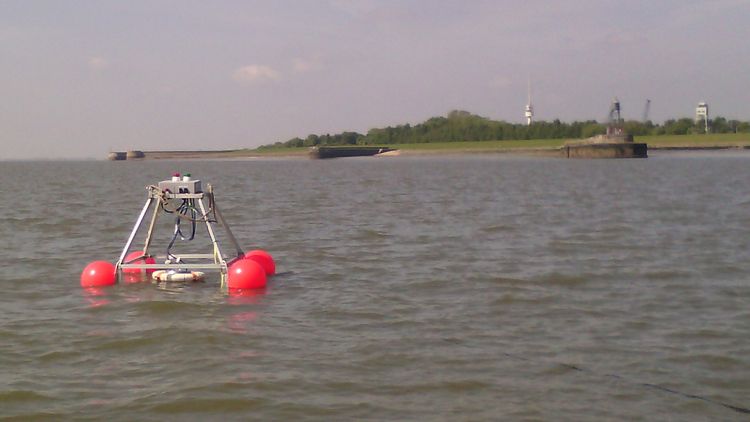
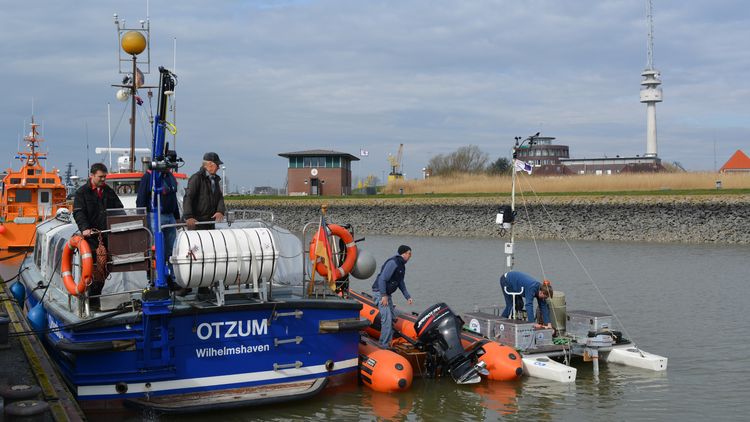
Das Projektteam nutzt das ICBM-Forschungsboot „Otzum“ und den Forschungskutter „Senckenberg“ des Instituts Senckenberg am Meer in Wilhelmshaven. Von Bord des Schiffes aus kommt neben einer sensorbestückten Spezial-Driftboje auch ein ferngesteuerter Forschungskatamaran der Arbeitsgruppe Meeresoberflächen zum Einsatz: Er sammelt größere Mengen des Oberflächenfilms für Laboruntersuchungen ein.