



Medizin, Biologie, Lehrerbildung, Informatik, Hörforschung: Ihr jüngster Oldenburg-Besuch am Dienstag bescherte Bundesforschungsministerin Johanna Wanka weitere Einblicke in das vielfältige Wirken der Universität.
Wie erleben deutsche und niederländische Studierende den Modellstudiengang Humanmedizin der „European Medical School Oldenburg-Groningen“ (EMS)? Was erforschen Kinder im Botanischen Garten der Universität? Wie könnte informatische Forschung des An-Instituts OFFIS die „smarte“ Stadt der Zukunft prägen? Über ein breites Spektrum an Themen informierte sich Bundesforschungsministerin Prof. Dr. Johanna Wanka an der Universität, ehe sie bei der Verleihung des „Oldenburger Bullen“ die Verdienste von Hörforscher Prof. Dr. Dr. Birger Kollmeier würdigte.
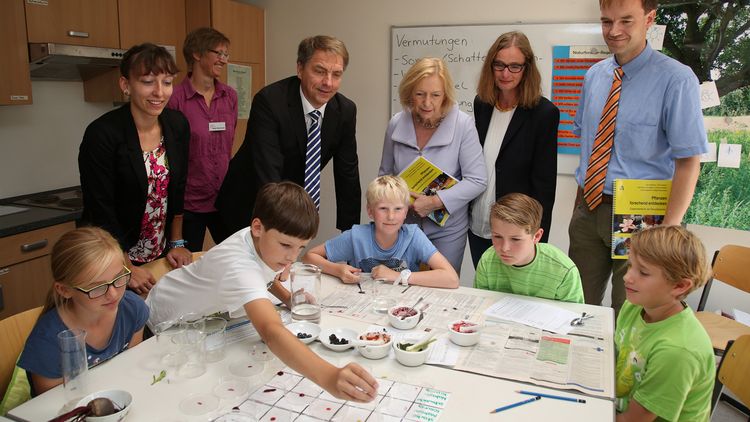
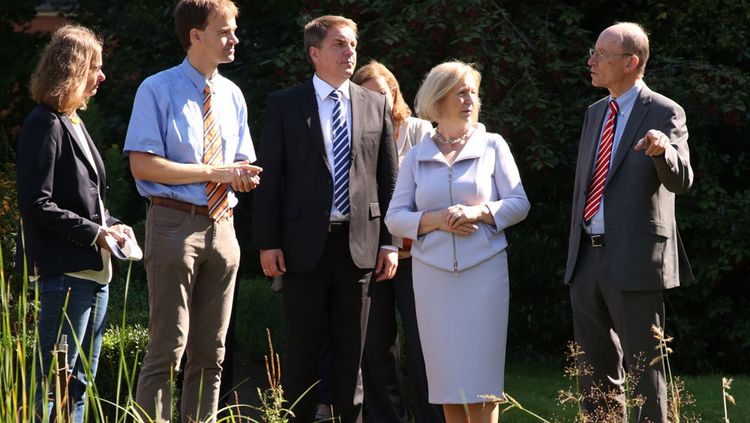
Strahlender Sonnenschein empfing die Ministerin bei ihrem Außentermin im Botanischen Garten der Universität. Direktor Prof. Dr. Dirk Albach freute sich über die „Aufmerksamkeit und besondere Wertschätzung“ für die 3,5 Hektar große Gartenanlage, die neben aller Pflanzenvielfalt auch zahlreiche Tiere beherbergt – bundesweit sind es nur in der Stuttgarter „Wilhelma“ noch mehr.
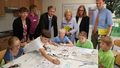
Die amtierende Oldenburger „Kohlkönigin“ Wanka machte unter anderem am Grünkohlbeet Halt, wo Albach die diversen Sorten vorstellte und über die krebsvorbeugende Wirkung des Gemüses referierte. Die Arbeit der „Grünen Schule“ stellte Biologiedidaktikerin Prof. Dr. Corinna Hößle vor. Diesen außerschulischen Lernort nutzen jährlich – unter studentischer Anleitung – ungefähr 2.000 Kinder aller Schulformen und Altersstufen im Rahmen von Unterrichtseinheiten oder besonderer Aktionen. Wanka schaute einigen Schülern über die Schulter, die das Verfärben pflanzlichen Materials bei verändertem pH-Wert untersuchten.
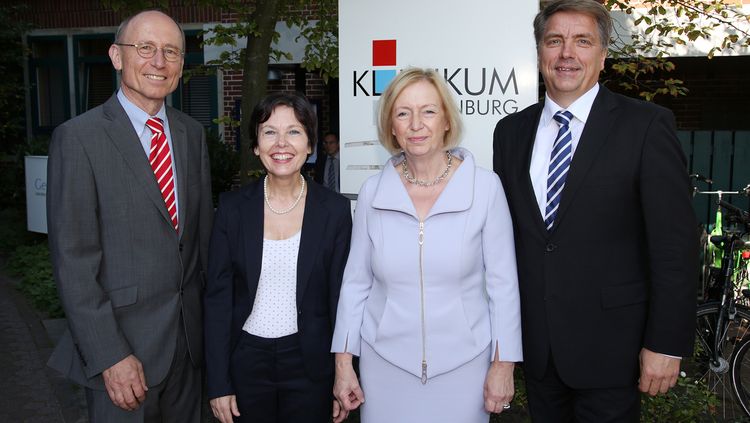
Mit dem medizinischen Nachwuchs war die Ministerin zuvor am Klinikum in Kontakt gekommen. Studierende aus Groningen und Oldenburg berichteten, wie sie die grenzübergreifende Ausbildung ganz praktisch erleben. „Die Zufriedenheit der Studierenden hat mich gefreut“, so Wanka, die sich mit der Kommissarischen Dekanin Prof. Dr. Martina Kadmon über die Entwicklung der Fakultät VI Medizin und Gesundheitswissenschaften austauschte.
„Ich habe mich darüber gefreut, wie es weitergegangen ist“, sagte Wanka, die die Gründung der Oldenburger Fakultät im Jahr 2012 als niedersächsische Wissenschaftsministerin erlebt hatte. Nun kämen bald die ersten Absolventenjahrgänge, „und jetzt kommt es darauf an, Forschung zu verstärken und notwendige Investitionen zu tätigen“, so die Ministerin. „Ich glaube, da ist das bisher Geleistete eine gute Voraussetzung.“ Universitätspräsident Prof. Dr. Dr. Hans Michael Piper wertete das Gespräch mit Wanka über die EMS als „ermutigend“.
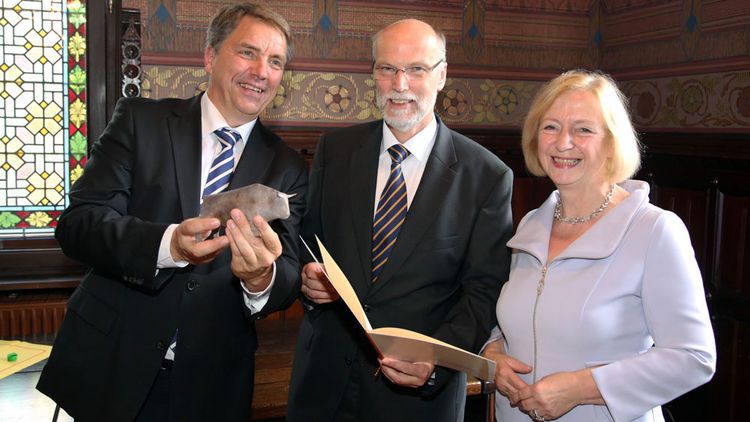
Einen Wissenschaftler der Fakultät VI, den Hörforscher Prof. Dr. Dr. Birger Kollmeier, würdigte Wanka bei der Verleihung des Wirtschaftspreises „Oldenburger Bulle“ mit einer Laudatio. Sie bezeichnete den Sprecher des Exzellenzclusters Hearing4all als „eine Koryphäe auf dem Gebiet der Hörforschung“. Die Liste seiner Auszeichnungen und Preise sei lang. „Er hat Oldenburg auf der Karte der Bundesrepublik als Exzellenzstandort verankert“, so die Forschungsministerin.
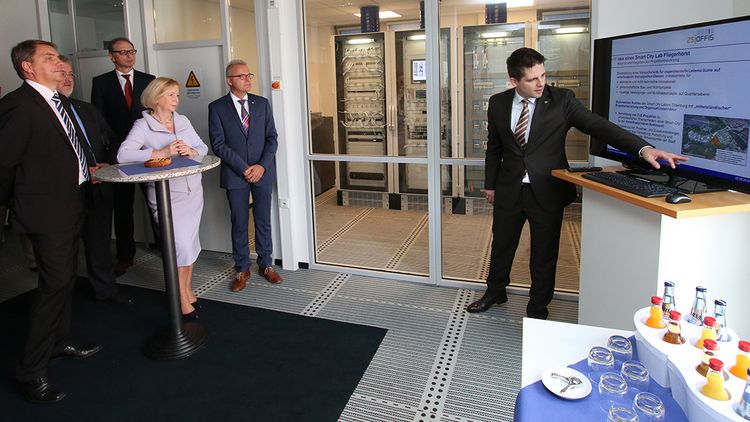
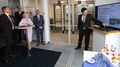
Als eine weitere Facette der Forschung an der Universität informierte sich Wanka am OFFIS über Smart City Technologien. Die Chancen eines gezielten Einsatzes von Informationstechnik und deren Vernetzung möchte die Stadt Oldenburg noch stärker für ihre eigene Entwicklung nutzen – beispielsweise in den Sektoren Energie und Verkehr. Der Energieinformatiker Prof. Dr. Sebastian Lehnhoff stellte der Ministerin das Oldenburger Modellprojekt „Smart City Living Lab Fliegerhorst“ vor, das „smarte“ Stadtstrukturen der Zukunft erproben helfen soll.