


Die Brandrodung des Regenwalds hinterlässt große Mengen Holzkohle – die mit der Zeit als extrem stabile Kohlenstoffverbindungen im Meer landen. Die Folgen für marine Mikroorganismen seien unabsehbar, so die Autoren einer jetzt veröffentlichen Studie.
Bis Mitte des letzten Jahrhunderts erstreckte sich der Atlantische Regenwald über weite Teile des heutigen Brasiliens – von Amazonien bis in den Süden zur gegenwärtigen argentinischen Grenze. Es folgten Jahrzehnte der Abholzung: In den 70er Jahren des vergangenen Jahrhunderts war der Atlantische Regenwald nahezu komplett vernichtet, vor allem, um Rinderweiden Platz zu machen. Dass die Brandrodung unerwartete Folgen hat, konnten deutsche Wissenschaftler um Dr. Thorsten Dittmar vom Max-Planck-Institut für Marine Mikrobiologie zusammen mit Kollegen aus Brasilien und den USA in einer Studie nun nachweisen.
Die Brandrodung der vergangenen Jahrhunderte hat große Mengen Holzkohle im Waldboden hinterlassen. Mit der Zeit lösen sie sich auf, werden durch Regenwasser ausgewaschen und über Flüsse ins Meer transportiert. Diese gelöste Kohle besteht aus extrem stabilen Kohlenstoffverbindungen. Die vorliegende Studie – jetzt im internationalen Fachblatt Nature Geoscience veröffentlicht – legt nahe, dass die Menge an dieser stabilen Form von Kohlenstoff in der Tiefsee durch menschliche Aktivität zunehmen wird. „Mit unbekannten Folgen für marine Mikroorganismen und den globalen Kohlenstoffkreislauf“, so Dittmar.
Der Anfang vom Ende des Atlantischen Regenwalds
Die Menschheit nutzt seit Urzeiten das Feuer, um Land urbar zu machen. Als im 16. Jahrhundert europäische Siedler nach Brasilien kamen, war dies auch dort bald gängige Praxis – und der Anfang vom Ende des Atlantischen Regenwalds. Die Brandrodung hat im Laufe der Jahrhunderte den Regenwald von mehr als 1,3 Millionen Quadratkilometer auf jetzt nur noch 100.000 Quadratkilometer schrumpfen lassen. Dabei blieben 200 bis 500 Millionen Tonnen Holzkohle in den Böden zurück.
Diese im Boden gespeicherten Verbrennungsrückstände sind extrem stabile komplexe Kohlenstoffverbindungen. Die Wassermassen während der Regenzeit waschen Teile der Kohle aus den Böden. Über Flüsse gelangen diese ins Meer, wo sie die biogeochemischen Stoffkreisläufe für Jahrhunderte und Jahrtausende beeinflussen werden.
Meeresforschung im Regenwald
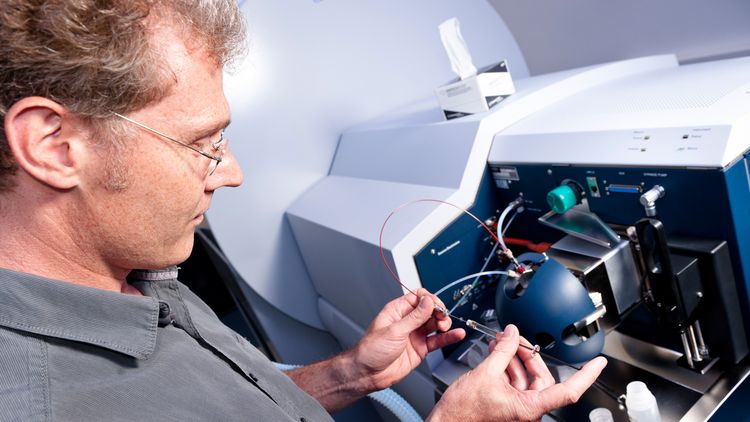
Dr. Thorsten Dittmar und seine Arbeitsgruppe am Max-Planck-Institut für Marine Mikrobiologie verfügen über ein hochempfindliches Massenspektrometer. Damit können sie die komplexen Kohlenstoffverbindungen analysieren und verfolgen. Die Arbeitsgruppe ist an der Oldenburger Universität als Außenstelle des Max-Planck-Instituts etabliert und beschäftigt sich seit einigen Jahren mit dem Kohlenstoffkreislauf, insbesondere dem gelöstem organischem Material im Meer.
„Vor ein paar Jahren konnten wir im Meer die typischen Kohlenstoffverbindungen nachweisen, die bei der Verkohlung von Pflanzen, also der Produktion von Holzkohle entstehen“, erläutert Dittmar. „Wir vermuteten, dass eine der Quellen das Abbrennen von Zuckerrohrpflanzen und Waldbrände in Brasilien sein könnte.“ So seien sie als Meeresforscher dazu gekommen, Forschung im Regenwald zu machen und Kontakt zu brasilianischen Kollegen aufzunehmen. „Die hatten seit Jahren Boden- und Wasserproben um das Gebiet des Paraiba do Sul-Flusses genommen.“
Als die Forscher die Bilanzen aufstellten, waren sie überrascht: Es wurden erheblich mehr Kohlenstoffverbindungen während der Regenperioden aus dem Boden gespült, als durch die jährliche Verbrennung nachgeliefert wurde. „Als wir unsere Messwerte aus den Proben der brasilianischen Kollegen über die Jahre mit den Niederschlagsmengen und dem Auftreten von Feuern in einer übersichtlichen Grafik darstellten, war der Zusammenhang klar. Diese Mengen Kohlenstoffs können nur aus den Zeiten der Brandrodung stammen.“
Die Wissenschaftler konnten ihre Vermutung durch weitere Experimente und Befunde bestätigen. Die Brandrodung im großen Stil endete 1973. Das jetzt praktizierte Abrennen der Zuckerrohrplantagen vor der Ernte liefert Verbrennungsrückstände von nur 190 bis 740 Tonnen Kohlenstoff pro Jahr. Doch die Menge an Kohlenstoffverbindungen im Fluss Paraiba do Sul waren drei bis 16 Mal höher als die jährlich neu entstehenden Mengen.
Nutzung der Holzkohle „kein nachhaltiges Konzept”
Hochgerechnet auf die gesamte Fläche des ehemaligen Regenwalds schätzen die Forscher, dass 50.000 bis 70.000 Tonnen jedes Jahr durch Flüsse abtransportiert werden und im Meer landen. Und im Labor konnten die Forscher aus den Bodenproben des früheren Regenwalds die höchsten Konzentrationen löslicher Kohlenstoffverbindungen herauswaschen. Es wurde immer offensichtlicher: Die Konzentrationen im Fluss konnten nicht von den heutigen Zuckerrohrplantagen stammen, da auch flussaufwärts hohe Konzentrationen nachgewiesen wurden, in Gebieten mit geringer Dichte an Zuckerrohrplantagen.
„Es gibt Überlegungen unter Wissenschaftlern, Holzkohle als langfristigen Kohlenstoffspeicher zu nutzen, um diesen Kohlenstoff aus dem globalen Kreislauf zu verbannen“, so Dittmar. Die Ergebnisse zeigten aber, dass dieses Verfahren kein nachhaltiges Konzept sein könne, denn dieser Kohlenstoff lande früher oder später im Meer und verändere dort das Ökosystem. „Und wir wissen nichts über die Konsequenzen.“