
Old Testament
Staff:
- Dr. Friederike Neumann
- Julia Klose (student assistant)
- (student assistant)
- Jana Finzel (student assistant; Old Languages Hebrew)


Press and public relations
- EKD press release: Benedikt Hensel appointed Director of the German Protestant Institute for Classical Studies in Jerusalem
UOLpress releases on the Old Testament and Prof. Dr B. Hensel
- Instagram channel for the Old Testament in Oldenburg: https://www.instagram.com/unioldb.at.
- Press release regarding Prof. Dr B. Hensel of the UOL’s leadership of the excavation, dated 18 July 2023
- Report on the 2023 excavation and Summer School in the MoX (18 July 2023)
Old Testament
The Old Testament is the first, more extensive part of the Christian Bible. The scriptures, originally written in Hebrew, form the basis and centre of this subject. The students - mostly future teachers - are taught knowledge and access to understanding of the most significant texts and topics in this collection of scriptures. Since the Old Testament as a whole was written over a period of about a thousand years and most of the writings also went through a longer process of creation, their proper indexing is carried out in a historical perspective: above all, the students are familiarised with historical-critical methods in order to learn to understand the texts as products of their time, which were written under certain historical-political, social and religious-historical conditions as well as influenced by the environment or written in critical confrontation with it. In addition to the historical-critical tools, literary approaches to text indexing and the hermeneutical interest in the lasting significance of the Old Testament also come into play. The aim of studying the canonical writings of the Old Testament is to perceive how the authors interpret their world and history theologically and thereby to recognise different theological voices in these writings. On this basis, a current understanding and relevance of the texts can then be reflected, especially with regard to religious education.
On the one hand, the Hebrew canon forms the basis of Jewish faith, so that the study of it establishes a connection to Jewish interpretive traditions and Jewish studies. On the other hand, the scriptures translated into Greek were the Bible of early Christianity, so that the Old Testament as a background of tradition often opens up a deeper understanding of the New Testament.
Students in Oldenburg have the option of learning Hebrew and can take the Hebraicum examination if they wish.
Research profile
Research Foci
The centre of Benedikt Hensel’s research is occupied by three key areas, which are being intensively explored through international projects:
- Digital Biblical Archaeology and Digital Ancient Studies of the Eastern Mediterranean, which encompass Biblical Archaeology, digital cultural heritage research (eCultural Heritage and Advanced Technologies) and Digital Archaeology and Ancient Studies of the Southern Levant (Projects and research are brought together under DAO – Digital Ancient Studies Oldenburg | Digital Altertumswissenschaften Oldenburg at the UOL)
- The history and religious history of Israel and ancient Judaism (click here you can find the relevant research) in the context of the ancient Near East and the ancient world. A distinctive feature of the research conducted in Oldenburg is a) the historical focus on investigating the plurality and regional diversity of ancient Judaism (from the 6th century BC onwards) in combination with b) a consistent methodological approach centred on materiality and archaeology of ancient Judaism.
- The theology and hermeneutics of the Hebrew Bible and the Old Testament ( clickhere for related research).
Research expertise
- Biblical archaeology, (digital) classical studies of the Eastern Mediterranean, digital cultural heritage research and digital archaeology in the Southern Levant
- History of religion and the history of Israel (focusing on the 8th–1st centuries BC)
- History and constructions of identity in emerging/early Judaism (Persian and Hellenistic periods) in the context of ancient cultures
- Literary history of the Old Testament, in particular the Pentateuch/Hexateuch and the Book of Daniel
- Old Testament theology, biblical theology and (overall) biblical hermeneutics
- Cultural-historical, cultural-scientific and cultural-anthropological approaches
- Transjordan and its influence on the Southern Levant
- Methodological reflection on literary-historical and archaeological approaches
- (Imperial) Aramaic, Hebrew and Greek epigraphy
Research: Projects
Ongoing international research projects
- Research project "AnHuNav - Animal and Human Navigation in the Ancient Southern Levant: An Interdisciplinary Project on Spatial Perception, Route Formation, and Orientation between Environmental Knowledge and Textual Tradition (Iron Age to Roman Imperial Period)" (since 2026)
- Research project "Hazor digital (Digital Archaeology)" (since 2024)
- Research project "Resettlement of Ruins and Memories in the Making. A Case Study on Hazor and the Shaping of Early Israelite Identities during the Iron Age" (Gerda Henkel-funded project in the "Lost Cities" focus; project leader Benedikt Hensel; project partner: The Hebrew University of Jerusalem) (since 2024)
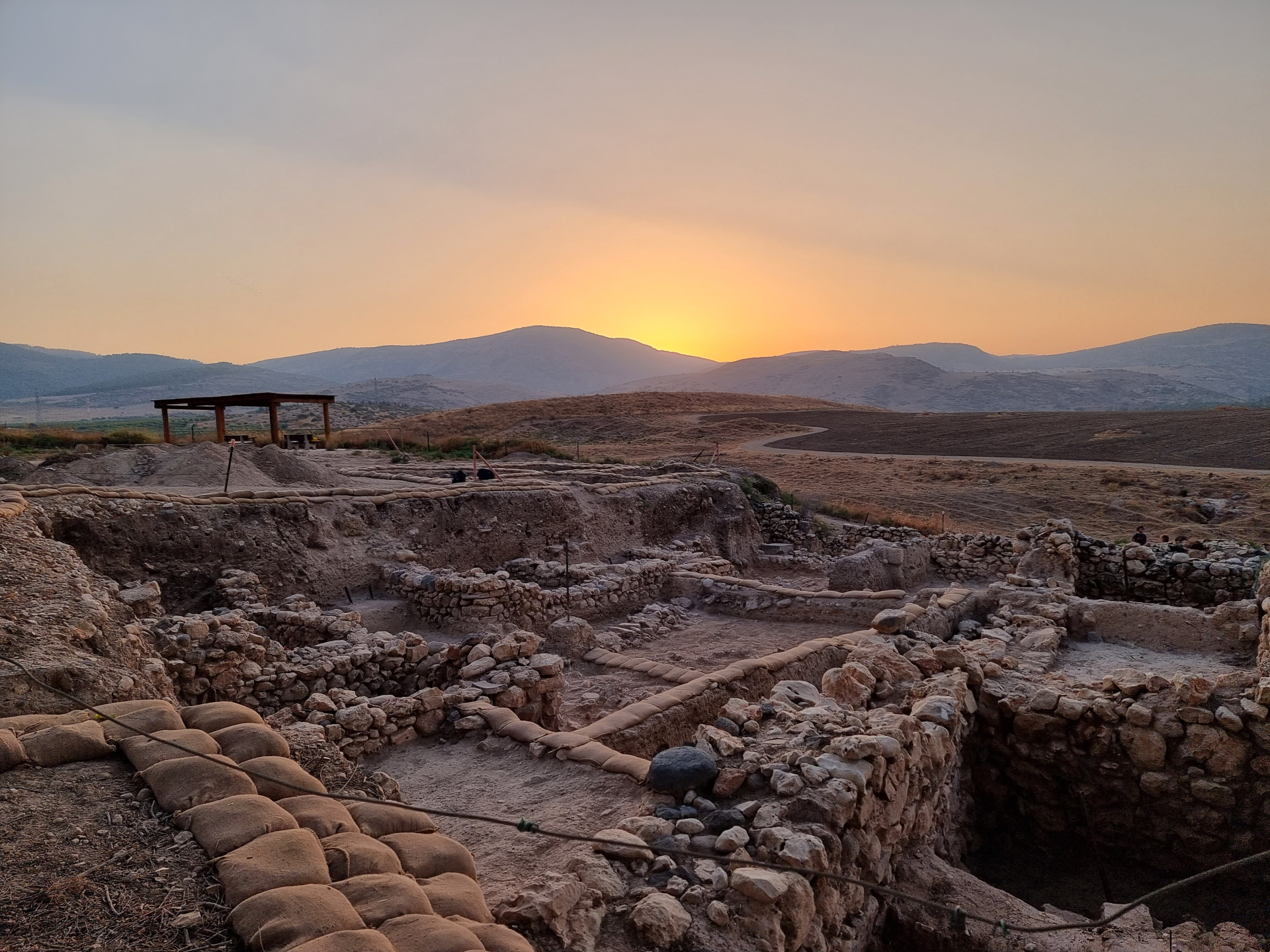
- Research project "Hazor Excavations - Israel's largest archaeological excavation" (co-director; interdisciplinary and international large-scale project with the Hebrew University of Jerusalem, Israel) (since 2023)
Book projects
Current book projects in the field of Biblical Archaeology and Ancient Judaism by Benedikt Hensel (monographs):
- Archaeological Guide to Ancient Israel, Kröner Verlag: Stuttgart
- Archaeology of the Southern Levant. Academic records on biblical archaeology from the Iron Age to the
Hellenistic era (Neue Theologische Grundrisse), Mohr Siebeck: Tübingen - Textbook on Ancient Judaism, de Gruyter Studium (together with Stefan Beyerle)


Benedikt Hensel appointed Director of the German Protestant Institute for Classical Studies in Jerusalem
Oldenburg Professor of Old Testament takes up office in Jerusalem on 1 January 2027!
Benedikt Hensel has been appointed as the new Director of the German Protestant Institute for Ancient Studies of the Holy Land (DEI) in Jerusalem. Hensel has been University Professor of Old Testament Studies at the University of Oldenburg since 2022. He will take up his new post at the beginning of 2027, taking over the management and administration of the Institute in Jerusalem. The Council of the Evangelical Church in Germany (EKD) confirmed a corresponding decision by the DEI Administrative Board at its most recent meeting. Click here for the EKD press release.