
The Coastal Vegetation Ecology Lab (CoVe) - Short Interview
The Coastal Vegetation Ecology Lab (CoVe) - Short Interview
Today we are talking about Open Science - a topic that is becoming increasingly important and the subject of much discussion. How did you come to this topic?
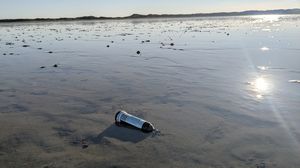
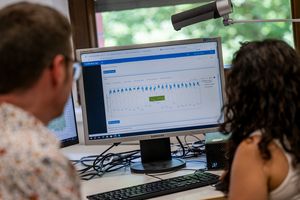
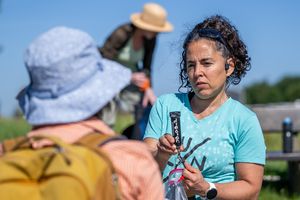
In the context of ecological restoration and nature-based solutions, we are aware of the critical role of local communities and managers for project success. It’s the local people who are in direct contact with natural resources, the first witnesses to the effect of environmental change and the most likely to lead successful ecosystem management approaches if they have available tools. Open access knowledge is essential to warrant such availability. Unfortunately, in many cases, especially for developing countries, local community access to science-based knowledge to support management plans is economically unavailable (i.e, monitoring tools), this motivated us to engage in the development of the mini buoy and its accompanying app, increasing the local manager’s monitoring tool kit, potentially improving planning and understanding the outcomes of restoration or conservation actions, which end up also facilitating adaptive management – adjusting management actions in response to monitoring and evaluation processes.
What is behind your initiative or project and how does it actually support Open Science?
The Mini Buoy seeks to provide lower operation costs of coastal hydrodynamics monitoring, while increasing spatial and temporal monitoring resolution. With the average cost of one industry standard current sensor, it’s possible to build upwards from 30 Mini buoys and, in case of damage or loss, one Mini Buoy is far easier to replace than one current velocity commercial instrument. These advantages have also made hydrodynamic monitoring available to the scientific community, engaging researchers, master and PhD students with monitoring approaches that would otherwise require high-budget projects. The increased spatial monitoring capacity delivered by the Mini Buoy is helping us understand species responses to their environmental hydrodynamic forcing, returning valuable information for example, on physical tolerance thresholds, habitat suitability and quantifying current velocity attenuation by intertidal coastal vegetation.
What (scientific) aspirations do you personally associate with Open Science and how does this manifest itself in your daily work?
There are many advantages associated with Open Science environments, starting with an increase of multilateral cooperation; platforms like GitHub, Qgis and other community developed Open-Access tools allow space for scientific creativity, diversification and interdisciplinary cooperation, increasing transparency and hopefully increasing also the positive impact of science in societies and our natural environment.
What would an ideal Open Science world look like for you?
A world where scientific knowledge is readily available to support the most vulnerable sectors of environment and society, building effective knowledge exchange and feedback loops between governments, communities and scientists, integrating more effective solutions to support sustainable cities and futures.
Finally, what advice do you have for Open Science newcomers?
The main purpose of science is to understand how our world functions, how it responds to change and ultimately, develop strategies to improve the lives of our planet’s inhabitants (human or otherwise). Engaging with Open science, such strategies might develop faster and be more effective than in a restricted access science world. Share your ideas, be open to collaborate with different disciplines and try open source tools, when you are a direct beneficiary of Open science you will be more motivated to pay it forward.