
Klimaoasen Oldenburg - Short Interview
Klimaoasen Oldenburg - Short Interview
Today we are talking about Open Science - a topic that is becoming increasingly important and the subject of much discussion. How did you come to this topic?
The Botanical Garden and the Landesmuseum Natur und Mensch are places that are inherently in close contact with the public. Accordingly, we attach great importance to transparent research and the active involvement of the public - be it to make scientific processes understandable, to make social perspectives themselves the subject of research or to incorporate the knowledge of the public into research. For us, open science is therefore not only a logical way to promote acceptance and participation, but is also increasingly forming the basis of scientific questions. Museums and botanical gardens also see themselves in a mediating role between science and society as well as within the scientific community. It is therefore a central concern of ours to sensitize colleagues from university research and practice to the principles of Open Science and to encourage them to open up their work, to present it in museums and botanical gardens and to use it for exchange with the public.
What is behind your initiative or project and how does it actually support Open Science?
“Klimaoasen Oldenburg” [1] is an interdisciplinary project for the climate-resilient redesign of the Schlossgarten and Eversten Holz garden monuments. In addition to environmental science research on biodiversity and climate change, we rely on participatory formats to make findings visible, comprehensible and socially connectable. Classic open science principles such as transparency, citizen science and science communication are firmly anchored here - for example through accompanying communication via the website, social media and participatory events. However, our cultural science research approach goes even further: it not only conducts open science about society, but with society. Together with citizens, we investigate how access to environmental knowledge can be designed, which formats strengthen the relationship between people and nature and which educational and mediation offers - such as future hands-on stations in the urban forest - can have a long-term effect. The result is a research process that not only produces scientific findings, but also develops their application potential for an open, sustainable society.
What (scientific) aspirations do you personally associate with Open Science and how does this manifest itself in your daily work?
For us, open science means fundamentally opening up science to society. For us, the impact of research is not only measured by the reputation of scientific publications, but also by how findings are received and understood in society - and ideally translated into concrete behavior. Science that is communicated in a way that is understandable not only to specialist colleagues, but also to the general public, can stimulate discussion, open up new perspectives and motivate people to become active themselves - whether through their own projects, civil society engagement or participation in citizen science initiatives. In our daily work, this claim is particularly evident in the active, target group-specific communication of our research results. We deliberately focus on low-threshold formats: via our website, social media, articles in the local press, podcasts, magazines and publicly accessible databases. We see open science as a bridge between science and society and communication as its central supporting element.
What would an ideal Open Science world look like for you?
Even if a completely ideal open science world will never be achievable in reality - as science is always caught between independent research and opening up to society - the vision of open science remains a guiding principle: in an ideal open science world, transparency, collaboration, free access and social participation would take center stage. Research would be open across disciplines, institutions and national borders. Publications, data, methods and processes would be freely accessible, citizen science would be firmly anchored and the comprehensible communication of science would be a matter of course. The trend should therefore be towards making research ever more open, participatory, transparent, fair and reproducible. With the aim of making knowledge available to all people as a common good and allowing them to help shape it. This would also reduce the distance between science and society - in terms of trust, understanding and shared responsibility.
Finally, what advice do you have for Open Science newcomers?
Try out the opening of your research! Find out what you enjoy doing. Think of science as a joint project - participation and involvement are not an extra, but an attitude that makes science more transparent, fairer and more effective.
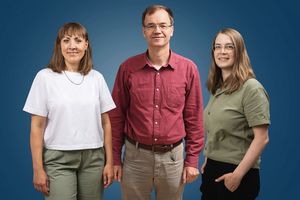
[1] Scientifically involved: Saskia Benthack (Project leader and scientific conception Klimaoasen Oldenburg, accompanying cultural research), Caroline Hoops (Public relations and science communication Klimaoasen Oldenburg), Prof Dr Dirk Carl Albach (Institute of Biology and Environmental Sciences University of Oldenburg, Head of Botanical Garden, accompanying environmental research), Dr Ursula Warnke (Director Landesmuseum Natur und Mensch Oldenburg)