Sensory Neuroscience
Sensory Neuroscience
Sensory Neuroscience
The research area “Sensory Neuroscience” investigates the function of neurosensory modules and networks and their links to perception and cognition. Molecular, cellular, physiological and evolutionary research approaches focus on the understanding of processes that control the transduction in sensory organs, and the signal pathways in and between cells, and which generate functional neural networks at different organizational levels and create behavioral patterns. Computational modeling will further deepen our understanding of these networks.
Linking these different levels of perception by multidisciplinary – and multimodal – approaches is the challenging task of the research area “Sensory Neuroscience”.
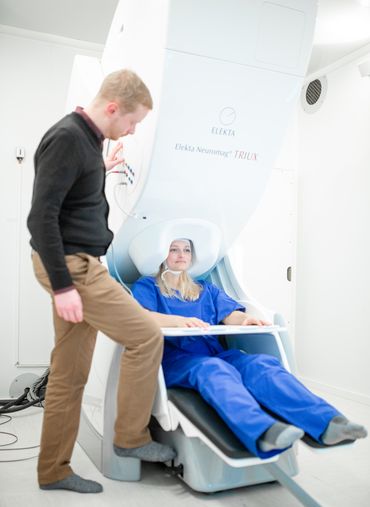
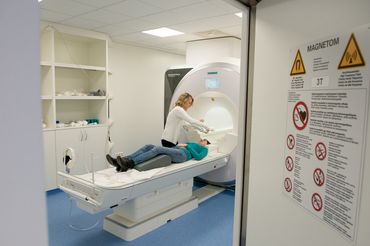
Basic research is at the core of the Research Center Neurosensory Science and supported by grants from numerous national and international research councils. New technologies and up-to-date equipment (e.g. STED microscopy, optogenetics, MRI, MEG) provide unique facilities and experimental options for the integration of theoretical and clinical medicine, and the combination of physics, chemistry and computer science. Along this line, new research fields will be developed by means of structured programs. A special focus lies on the development of novel – and innovative – research models (e.g. invertebrate models of neuro-acoustics) to study the multisensory bases of complex behavior.
The concept of the Collaborative Research Center “Magnetoreception and navigation in vertebrates: from biophysics to brain and behavior” (SFB 1372) was developed from both collaborative projects: DFG Research Training Group “Molecular Basis of Sensory Biology” (GRK 1885), speaker: Prof. Karl-Wilhelm Koch, duration of funding: 2013 to 2023, and AFOSR Research Grant: “Cryptochrome-based magnetic sensing”, speaker: Prof. Peter Hore (Oxford), sub-projects of Prof. Henrik Mouritsen and Prof. Karl-Wilhelm Koch. The duration of the second funding period of the SFB is from 2023 to 2026. Extension applications for a third funding period is planned. Speaker: Prof. Henrik Mouritsen; further PIs from the field of sensory neuroscience: Profs. Dedek, Gerlach, Greschner, Koch, Lienau, Solov’yov and Winklhofer as well as Dr. Heyers. A Research Training Group (RTG) has also been integrated within the SFB since 2023. The second funding period of the SFB runs from 2023 to 2026. The application for an extension to the third funding period is being prepared.
We consider the establishment of one new DFG Cluster of Excellence as a particularly significant achievement and the reward of the aforementioned collaborative projects: “NaviSense: International Cluster of Excellence for the Sensory Basis, Mechanisms and Impacts of Animal Navigation”, spokesperson: Prof. Henrik Mouritsen, duration of funding: 2026 to 2032. The cluster will investigate the physical, genetic, biochemical and neuronal foundations of animal navigation. The knowledge generated will provide a scientific basis for relocation and reintroduction programmes for endangered animal species from the perspective of sensory ecology, for example.
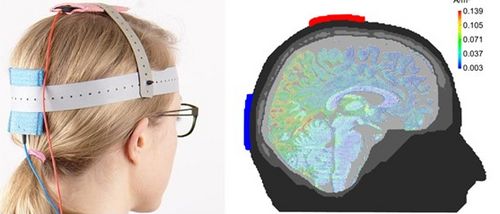
There is currently another DFG-funded Research Training Group “Neuromodulation of Motor and Cognitive Functions in Brain Health and Disease” (GRK 2783), speaker: Prof. Christiane Thiel, duration of funding: 2022 to 2027.