
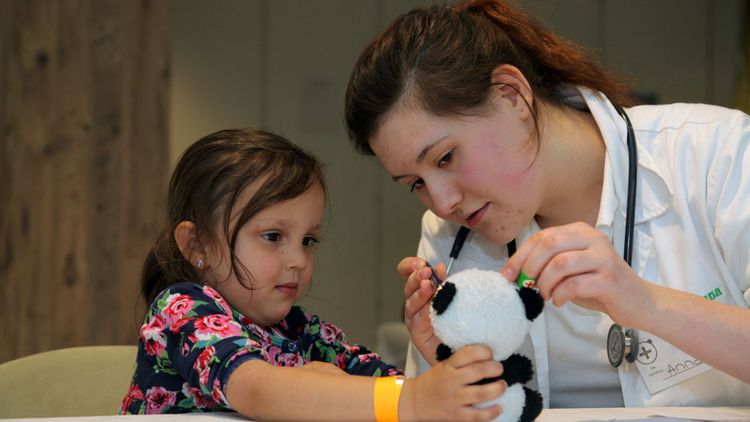
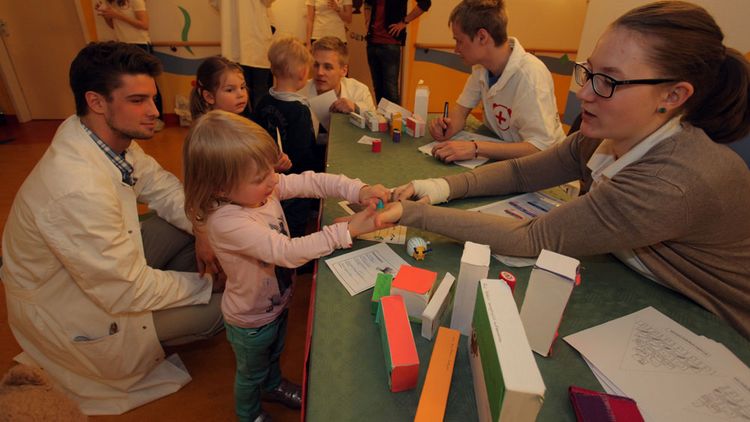
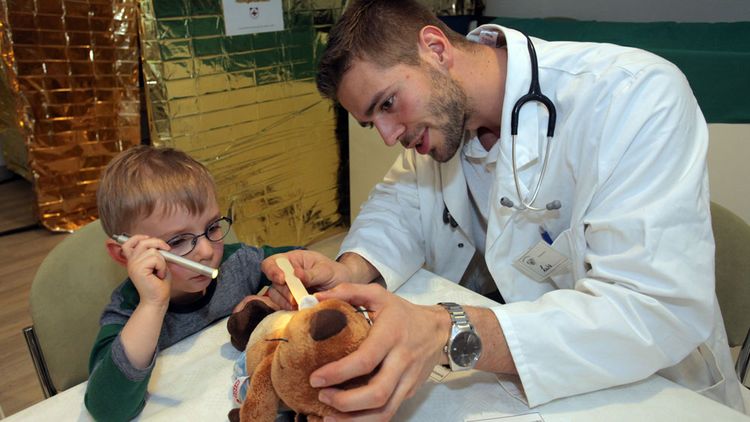
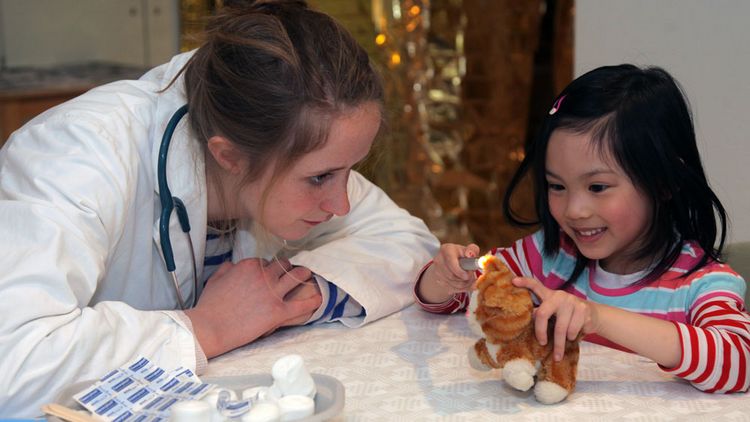
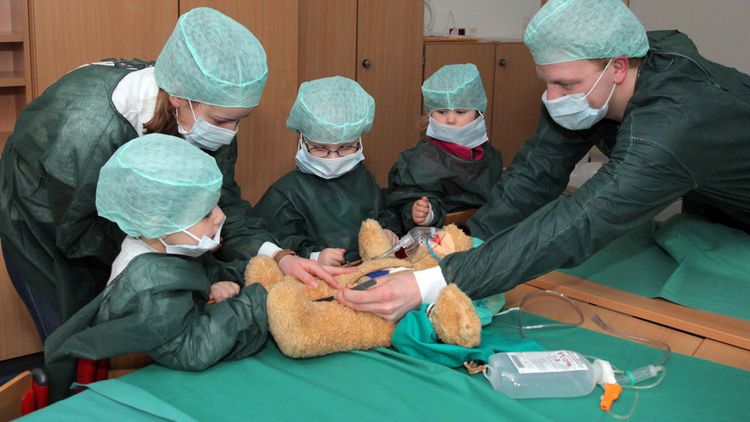


Cuddly patients at Oldenburg Children's Hospital: medical students at the university organised a "Teddy Bear Hospital" for the third time. The event allays possible fears of visiting the doctor and at the same time trains the future doctors in dealing with children.
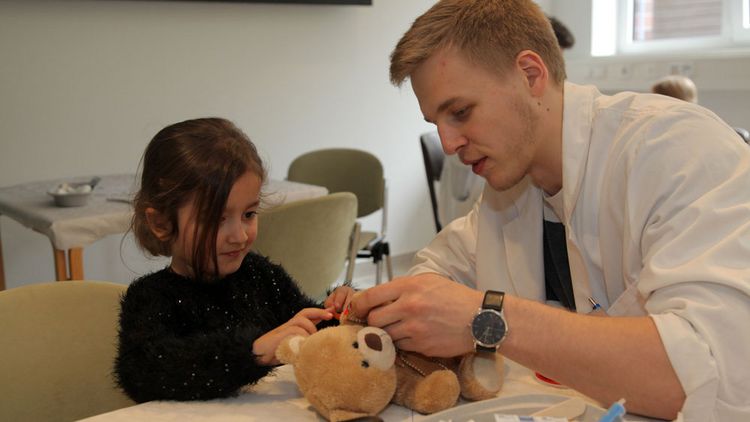
Phillip Behnke, who is actually a student of human medicine, has two animal patients to treat in his office hours. Three-year-old Ellen from Wiefelstede has brought her bird and her tortoise to the "Teddy Bear Hospital", which Phillip and around 50 of his fellow students are organising for the third time in the children's clinic at the hospital.
The "teddy doctor" quickly finds out what is wrong with Ellen's protégés: the bird has headaches, the turtle has back pain. He adds them to the patient file. What's the bird's name? "Bird." And the tortoise's name? "Tortoise." After a thorough examination, during which Ellen is allowed to assist, Vogel is given an injection and Tortoise has an X-ray. To alleviate her back pain, Phillip prescribes "Aua-Weg-Zepam", which is fortunately in stock in the neighbouring "pharmacy" - along with Alles-Gut tablets, Hatschi-Weg and comforting drops.
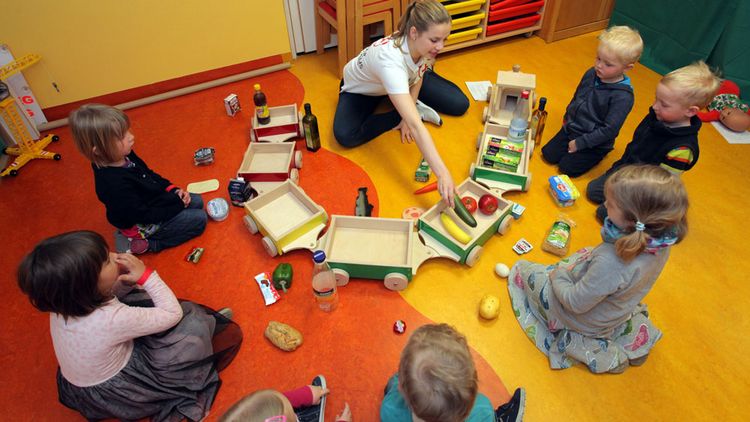
Ellen is just one of many children visiting the teddy bear hospital this week with kindergarten groups or parents. Many of them wonder whether it will be bad if they have to go to hospital. The campaign aims to allay any fears they may have and at the same time teach them about hygiene and the operation procedure, X-rays and radiation protection, the functions of the human body, healthy eating and exercise in a fun way.
Although they mainly act as companions for their dolls and cuddly toys to the "teddy doctors", the students can practise interacting with three to six-year-old patients. "It takes a special tone with children," says Lena Wurst, who helps to coordinate the crowds. "Perhaps some of our fellow students have even been inspired to become paediatricians as a result of the event." Co-organiser Stephanie Heinold is delighted that medical students from all year groups as well as some sports and nutrition science students are involved as dedicated teddy doctors.
Reassuringly, the staff at the teddy bear hospital are able to master even the biggest medical challenges with ease. For example, during the examination of Lentje's doll Ella, it turns out that she not only has a cough and a fever but, according to her mummy, has simply "broken everything". Medical student and "teddy doctor" Lutz Brautmeier therefore has to bandage her head, arms and legs with her help before he can look after Mika's feverish cuddly beaver.
One of the children's carers, Silke Lorenzen-Andersson, is delighted with the success of the treatment - and praises the Oldenburg students' efforts. After one of her protégés recently had to be picked up from the kindergarten by ambulance, hospitalisation was a big issue for the children. "The teddy bear hospital was a great opportunity to address this issue."