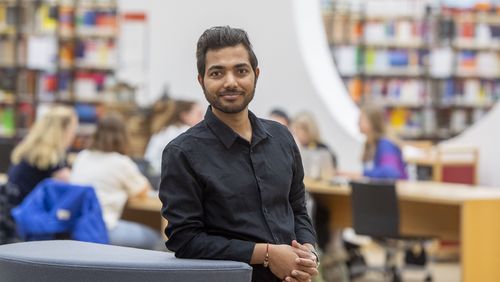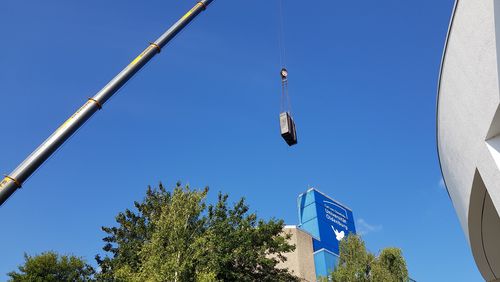


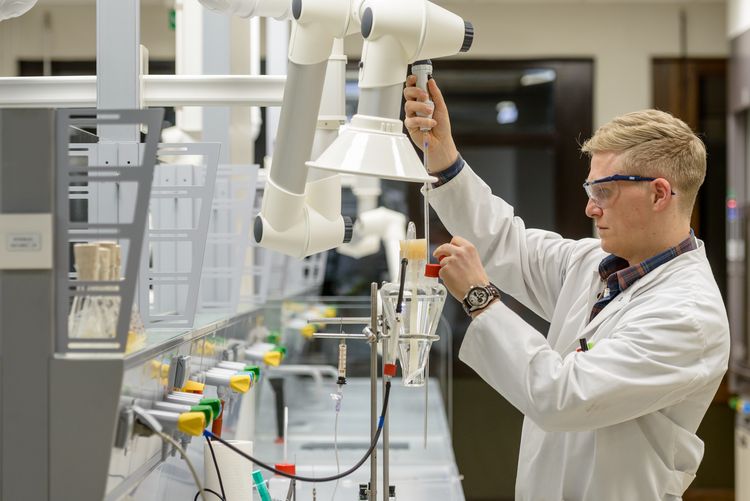
Ein neues Lehrlabor auf dem Campus Wechloy verbessert ab März die Ausbildung in Studiengängen wie Biologie, Umweltwissenschaften, Medizin oder Chemie. Der Mikrobiologe Prof. Dr. Ralf Rabus freut sich über die neuen Räumlichkeiten, in denen ausschließlich Blockpraktika stattfinden sollen.
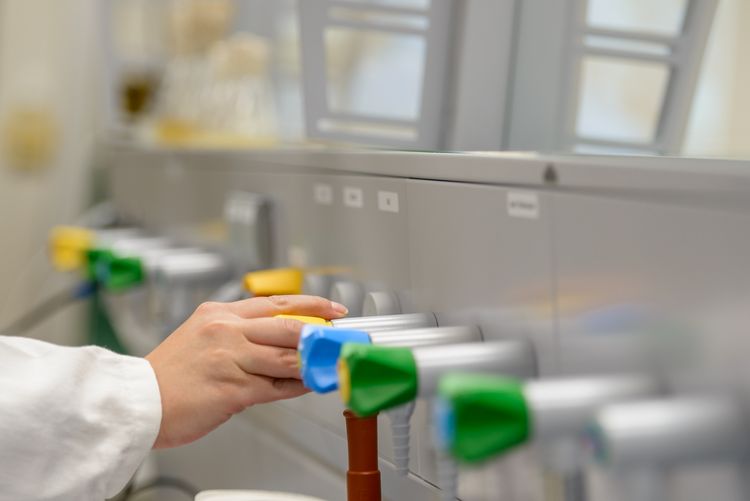
Blitzblank strahlen die 96 Arbeitsplätze im neuen Lehrlabor im Untergeschoss des Gebäudes W3 auf dem Campus Wechloy. Die noch jungfräulichen Arbeitsplatten aus unempfindlicher grauer Keramik warten nur darauf, dass ab März die ersten Studierenden des Fachs Chemie hier Säuren titrieren, Destillierkolben befüllen oder Lösungen ansetzen. Später sollen auch angehende Mikrobiologen, Mediziner, Umweltwissenschaftler oder Landschaftsökologen den praktischen Teil ihrer Laborausbildung in dem neuen Labor absolvieren.
In nur zehn Monaten Bauzeit haben sich drei ältere Laborräume in ein modernes, hochwertig ausgestattetes Lehrlabor verwandelt, das anspruchsvolle Praktika in verschiedenen Fachgebieten ermöglicht. „Bei der Planung haben wir viel Wert auf Flexibilität, Modularität und digitales Lernen gelegt“, berichtet Prof. Dr. Ralf Rabus vom Institut für Chemie und Biologie des Meeres (ICBM) der das Umbau-Projekt 2015 anschob und begleitete. „Es ist uns gelungen, über alle Ebenen der Universität hinweg schnell zu einer guten Entscheidung zu kommen und so für die Studierenden weitere hervorragende Laborbedingungen zu schaffen“, so Rabus.
Investition in die Zukunft
Rund 1,4 Millionen Euro hat die Universität in das neue Labor investiert, in dem in Zukunft pro Jahr rund 500 Studierende der Fakultäten V Mathematik und Naturwissenschaften und VI Medizin und Gesundheitswissenschaften experimentieren können. Auf etwa 200 Quadratmetern Fläche stehen nun vier Reihen mit jeweils 24 modernen Arbeitsplätzen für die Labor-Ausbildung zur Verfügung. Am vergangenen Mittwoch eröffneten die Dekane der beiden Fakultäten, Prof. Dr. Christoph Lienau und Prof. Dr. Hans Gerd Nothwang, den neuen Experimentierraum offiziell.
Das helle Großraumlabor kann entweder von einer Gruppe mit knapp hundert Studierenden genutzt oder durch eine mobile Wand geteilt werden. Die beiden dann entstehenden Räume lassen sich vom Zugang bis hin zur Medientechnik komplett unabhängig voneinander betreiben. Dann können zwei Gruppen mit jeweils 15 bis 30 Studierenden getrennt experimentieren. „Es könnten beispielsweise Praktika in so unterschiedlichen Fächern wie Chemie und Mikrobiologie parallel stattfinden“, sagt Rabus.
Moderne Medientechnik
Auf die Medientechnik wurde bei der Planung besonders viele Wert gelegt. So lassen sich etwa Bilder der Präparate, die Praktikanten gerade mit einem Mikroskop untersuchen, über einen Internetanschluss direkt mit einem Beamer an die Wand projizieren. Den Lehrkräften steht ein kleines Display in einer Ecke des Raumes zur Verfügung, um die Technik von der Beleuchtung bis hin zur Belüftung zu steuern. Über eine USB-Buchse können gegebenenfalls Laptops oder andere Geräte angeschlossen werden.
Das Labor hat außerdem eine moderne Lüftungsanlage mit energieeffizienter Wärmerückgewinnung erhalten. Um im Laborbetrieb möglichst viel Energie zu sparen, werden Lüftungs- und Klimageräte nur bei Bedarf über die Gebäudeleittechnik zugeschaltet.
Spülküche und Lagerräume
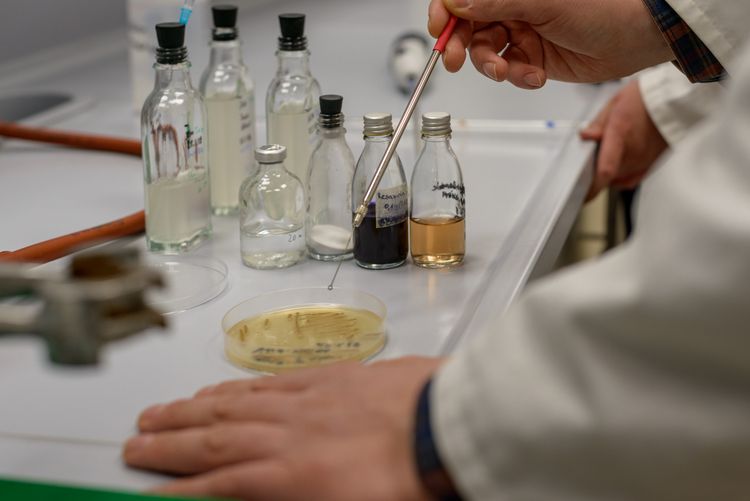
Für mikrobiologische Praktika stehen in einer gesonderten Spülküche sechs Wärmeschränke bereit, um Bakterienkulturen aufzubewahren oder zu inkubieren. Dazu können die Studierenden zwei Autoklaven zum Sterilisieren, eine Eismaschine und eine Reinstwasseranlage für ihre Experimente nutzen. Jede Fachrichtung kann das Material, das für ein Praktikum benötigt wird, in einem Lagerraum direkt neben dem Labor unterbringen. Ein Besprechungsraum mit großem Bildschirm für Präsentationen vervollständigt das neue bifakultäre Lehrlabor.