



Wissenschaftliche Texte sind für viele eine Hürde im Studium. Bei deren Lektüre und vor allem dem Verfassen eigener wissenschaftlicher Arbeiten hilft die Lernwerkstatt der Zentralen Studienberatung - seit Januar eine dauerhafte Einrichtung der Universität.
Ein jungfräuliches Blatt Papier, eine leere Seite auf dem Bildschirm – der Beginn aller Texte, ob in der Wissenschaft oder anderswo. So sahen auch die Anfänge von Manuelas Masterarbeit aus. Aber dabei blieb es zu lange: „Ich saß da, vor mir eine weiße Seite, und nach einer Stunde Ablenken hatte ich immer noch eine weiße Seite“, erinnert sich die 25-Jährige. So verging die Zeit, bis die Schließung der Bibliothek nahte und es nicht mehr lohnte, mit dem Schreiben anzufangen. „Total planlos“ habe sie immer wieder ihr gesammeltes Material sortiert – „aber das war auf Dauer nicht zielführend“, sagt sie heute selbstironisch.
Dass sie den Einstieg ins Schreiben geschafft und inzwischen die ersten zehn Seiten formuliert hat, dafür ist Manuela der Lernwerkstatt der Zentralen Studienberatung (ZSB) dankbar. In deren Schreibberatung entwickelte sie eine Gliederung, „mit der ich total zufrieden bin und an der ich mich auch super entlanghangeln kann“, sagt Manuela. „Eigentlich total erstaunlich“, fügt sie fast ungläubig hinzu. Auch über die Einleitung habe sie vorm Schreiben mit Anke Görres gesprochen.
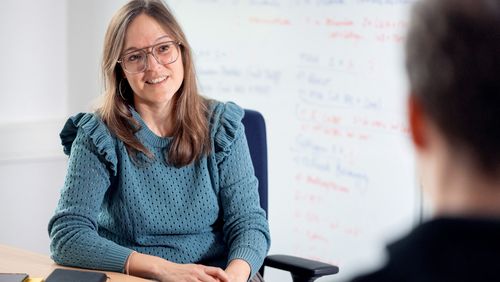
Anke Görres, das ist die Leiterin der ZSB-Lernwerkstatt, im Grunde personifiziert sie – als deren einzige Mitarbeiterin – die Lernwerkstatt. Eine Einrichtung, die seit Anfang 2015 per Präsidiumsbeschluss eine dauerhafte Institution an der Uni ist. „Mittlerweile sind Schreibwerkstätten an den meisten deutschen Hochschulen etabliert, in den USA sowieso“, erzählt Görres. Aus Sicht der Vizepräsidentin für Studium und Lehre, Prof. Dr. Gunilla Budde, hat es sich „als wertvoll erwiesen, Studierenden beim Sprung von der Ideen- und Materialsammlung hin zu einem wissenschaftlichen Text zu helfen – unabhängig vom Fach“.
Die Nachfrage ist gestiegen: Gegenüber 2010, als Görres mit einer Viertelstelle in der noch jungen Lernwerkstatt anfing, hat sich ihre Arbeitszeit verdreifacht. „Mehr und mehr Studierende lassen sich beim wissenschaftlichen Schreiben beraten“, sagt Anke Görres. Primär gehe es um strukturelle Fragen, die Gliederung, die Argumentationslogik. So coachte Görres im letzten Jahr 150 Studierende in Einzelterminen, fast 350 nahmen an Workshops zu Lern- und Lesestrategien, zum Präsentieren und Schreiben teil. Montags in ihrem Büro und dienstags in der Bibliothek bietet Görres Sprechstunden an, basierend auf der Einsicht, „dass ein Gespräch Vieles klären kann – und dass erst ein Sprechen ein Denken erzeugt“. Beim Schreiben fehle vielen Studierenden ein solches Gegenüber.
Ähnlich war es bei Martha. Die 28-Jährige fühlte sich regelrecht „erdrückt“ von der Aufgabe, das empirische Material für ihre Masterarbeit mit der Theorie zu verzahnen, verfiel in Panik. Auf den Tipp einer Freundin hin suchte sie die Lernwerkstatt auf, hoffend, „dass da jemand ist, der mit mir zusammen den Kopf ein bisschen sortieren und den Prozess strukturieren kann“. Das sei ermutigend und bereichernd gewesen. „Frau Görres mag im Thema überhaupt nicht drin sein, aber kann mit ihrem Erfahrungsschatz den Transfer sehr gut leisten.“
Die Themenvielfalt gehört für Görres dazu. „Die Bandbreite von Pädagogik, Anglistik, Germanistik über Ökonomie bis zur Ökologie ist total spannend“, erzählt sie. Zugleich gewinnt sie Einblick in Studienverläufe. Etwa in denjenigen von Martha, die im Masterstudium vergeblich auf Methoden-Kurse hoffte, und der beim gängigen schriftlichen Ausarbeiten von Referaten – anstelle „richtiger“ Hausarbeiten – die Theorie im Nachhinein zu kurz kam. Oder in den Studienverlauf von Anna, die im geisteswissenschaftlichen Zwei-Fach-Bachelor mit nur zwei Hausarbeiten bis zur Abschlussarbeit kam – und durchfiel.
Besonders erstaunt es Görres, „dass es Studiengänge gibt, in denen einzelne Studierende vor der Bachelor- keine einzige Hausarbeit geschrieben haben“. Im Bemühen, Credits für den Abschluss zu sammeln, nähmen sich oder hätten manche offenbar nicht die Zeit, sich wissenschaftlich in ein Thema zu vertiefen. Viele hätten Defizite beim Recherchieren, beim Verknüpfen von Lektüre und Schreibprozess. „Manchen fehlt auch das Bewusstsein, was tue ich hier eigentlich, was ist eigentlich Wissenschaft?“ Sie wünscht sich einen angemessenen Stellenwert der „Schlüsselkompetenz“ Schreiben für alle von Studienbeginn an.
Germanist Prof. Dr. Albrecht Hausmann kann dies nur unterstreichen. Schreiben sieht er als „Teil des wissenschaftlichen Erkenntnisprozesses“, als entscheidend für ein gelungenes Studium. Womöglich mindere allerdings die ständige Prüfungssituation im Bachelor-Master-System den Lerneffekt von Hausarbeiten: Manchen Studierenden fehle das Interesse fürs Feedback, sobald sie ihre Credits bekommen hätten. Viele seien auch unsicher, was wissenschaftliches Schreiben sei, glaubten: „Hauptsache kompliziert“, dabei gelte doch: „Hauptsache reflektiert“.
Historikerin Budde beobachtet neben sinkender Schreib- auch eine geringere Lesekompetenz bei Studierenden. „Manche können nicht einmal ein Lieblingsbuch benennen, die wenigsten lesen Zeitung, viele informieren sich nur noch online“, sagt sie. „Die Informationsaufnahme ist diffus geworden.“ Das spiegele sich im Schreiben wider. Sie lasse gezielt Texteinstiege üben, empfehle das Lesen guter Texte. „Wir wollen Studierenden das Erfolgserlebnis einer eigenen wissenschaftlichen Arbeit verschaffen – das befriedigende Gefühl, seine Gedanken zu Papier zu bringen.“