



Reparieren statt konsumieren: Mit der ReparierBar haben Studierende einen monatlichen Treff geschaffen, bei dem junge Menschen mit Unterstützung kaputte Gegenstände wieder nutzbar machen können. Mit zum Konzept gehören Kulturangebote und Gespräche.
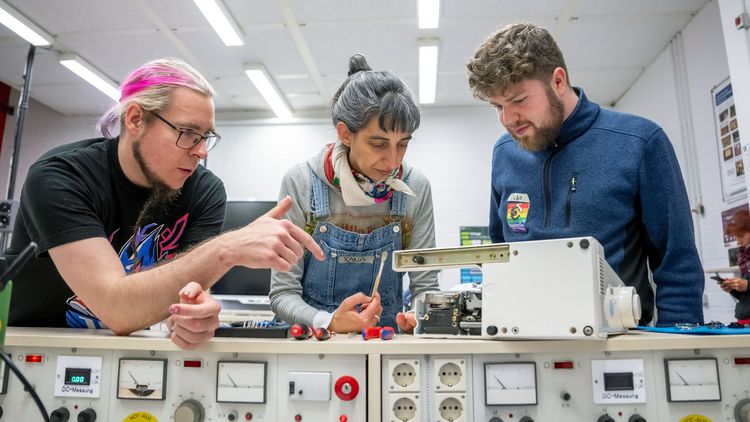
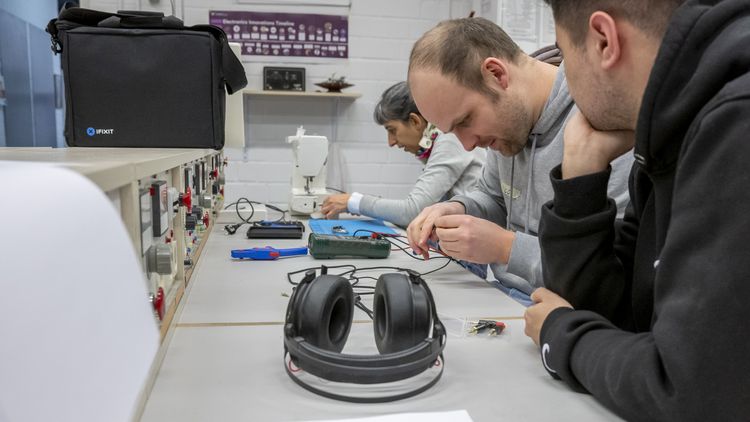
Die häufigsten „Patienten“ in der ReparierBar sind kaputte Elek-trogeräte. Gerade schraubt ein Student sein Keyboard auf. „C2 funktioniert nicht“, sagt er und deutet auf die verstummte Taste. Auch Meric Turgut, Student im ersten Semester, hat ein Tonproblem. Gemeinsam mit Elektroingenieur Nico Merz beugt er sich über den Klinkenstecker seines kaputten Kopfhörers. Die eigenen Reparaturversuche waren erfolglos. Dass er den Kopfhörer auf keinen Fall wegwerfen möchte, hat für Turgut auch ideelle Gründe. „Den hat mir ein YouTuber geschenkt“, erzählt er.
Seit Oktober vergangenen Jahres verwandeln sich die Werkstatträume der Abteilung Technische Bildung immer am zweiten Freitag des Monats, ab 16.00 Uhr, in die ReparierBar. Wo abends normalerweise Lötkolben kalt bleiben und Kreissägen stillstehen, herrscht dann ab 16.00 Uhr bis in die Abendstunden reger Betrieb. Nach dem Aufräumen geht es gemeinsam in die Innenstadt – die Gesellschaft ist zu gut, um direkt nach Hause zu gehen.
Wer etwas reparieren möchte, füllt am Empfang einen Laufzettel aus, auf dem der Defekt des mitgebrachten Gegenstands vermerkt wird. Dann heißt es unter Umständen erst einmal: warten, bis ein sogenannter Reparateur beziehungsweise eine Reparateurin frei ist. So heißen die Handwerkerinnen und Handwerker, die Reparaturwillige ehrenamtlich bei der Arbeit unterstützen. „Wir haben für fast jeden Bereich jemanden, der sich damit auskennt“, sagt Ocko Grensemann, selbst angehender Technik- und Musiklehrer. In der Elektrowerkstatt seien ausschließlich ausgebildete Personen tätig, in den anderen Werkstätten aber auch versierte Hobby-Handwerkerinnen und -Handwerker. Grensemann hat die ReparierBar an der Universität gemeinsam mit Lehramtsstudentin Clara Hippach initiiert.
Besonders die Elektrowerkstatt ist gefragt
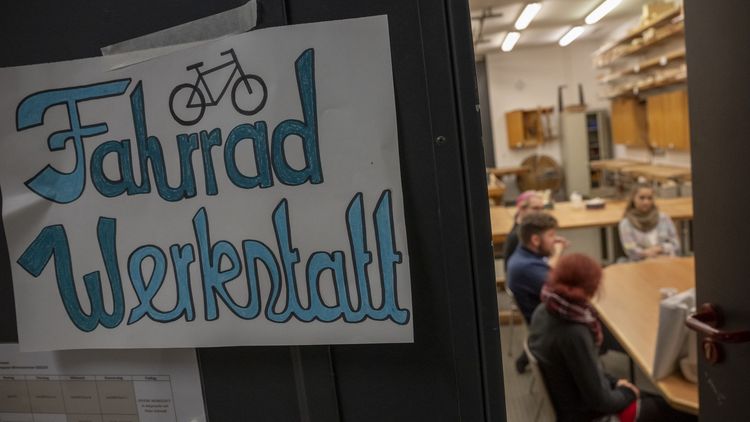
Neben Holz-, Metall- und Elektrotechnik-Reparaturen helfen Ehrenamtliche auch bei kaputten Fahrrädern und Computerproblemen. Sogar ein 3D-Drucker steht zur Verfügung, um kurzfristig fehlende Ersatzteile zu produzieren.
Wer warten muss, kann die Zeit leicht überbrücken – im Barraum gibt es Getränke, Snacks und eine Kleidertauschbörse. Die ReparierBar bietet außerdem ein kulturelles Programm: Lesungen, Livemusik, Poetry-Slams oder Vorträge laufen nebenbei. Für das Konzept sind die Veranstaltungen genauso wichtig wie die Rettung kaputter Föne oder Küchenstühle. „Wir wollen durch die kulturellen Angebote besonders junge Menschen erreichen, die sich noch nie mit Reparatur auseinandergesetzt haben“, erklärt Grensemann.
Unterstützt wird die ReparierBar von dem vom ReparaturRat Oldenburg e.V. betriebenen Ressourcenzentrum an der Ofener Straße. Auch dort können Menschen mit Profi-Unterstützung kaputte Gegenstände reparieren. Der Draht ist denkbar kurz: Ocko Grensemann arbeitet neben dem Studium für ein Projekt des ReparaturRats, in dem es ebenfalls darum geht, Reparaturwissen an die nächste Generation weiterzugeben. Das Ressourcenzentrum schult außerdem alle Elektroreparateur*innen im Umgang mit speziellen Elektroprüfgeräten. Mit diesen Geräten lässt sich feststellen, ob Gegenstände nach der Reparatur gefahrlos weiterbetrieben werden können.
Auf das neue Angebot an der Universität sind inzwischen auch Nicht-Studierende aufmerksam geworden. Ein älterer Mann aus der Nachbarschaft hat das große Banner neben dem Eingang zum Gebäude A1 auf seiner Hunderunde gesehen und an diesem Freitagabend seinen 38 Jahre alten Hi-Fi-Receiver mitgebracht. „In der ganzen Zeit hatte er nur zweimal kleine Probleme, aber jetzt kommt nichts mehr raus, obwohl er noch angeht“, berichtet er.
„Grundsätzlich ist absolut jeder willkommen“, betont Clara Hippach. Ein besonderes Augenmerk liegt jedoch auf Studierenden. „In und um Oldenburg gibt es mehr als 20 Repaircafés, aber die werden nicht von jungen Leuten besucht, obwohl doch gerade sie sich für Nachhaltigkeit einsetzen“, sagt sie.
Auf dieses Ungleichgewicht ist sie im vergangenen Jahr im Seminar „Energie und Klima interdisziplinär“ aufmerksam geworden, das im Rahmen des Konzepts „Bildung für nachhaltige Entwicklung“ stattfindet. Es soll Studierenden den Blick über den Tellerrand des eigenen Fachs ermöglichen. Dort begegnete sie Dr. Katharina Dutz aus der Arbeitsgruppe Technische Bildung, die von den Repaircafés erzählte. „Es ist mir seit Jahren ein Anliegen, auch junge Menschen für die Reparaturkultur zu begeistern“, sagt Dutz, die auch Vorstandsmitglied des ReparaturRats ist.
Mit ihrer Idee für eine studentische Initiative, die explizit junge Menschen in den Blick nimmt, liefen die Studierenden bei ihr daher offene Türen ein. Dutz unterstützte das Engagement, indem sie etwa Kontakte herstellte und dabei half, geeignete Räume zu finden. Gleichzeitig ist ihr wichtig, dass die Studierenden eigenverantwortlich handeln. „Ich glaube, junge Leute haben nur dann ein Interesse am Ehrenamt, wenn sie Verantwortung übernehmen können.“
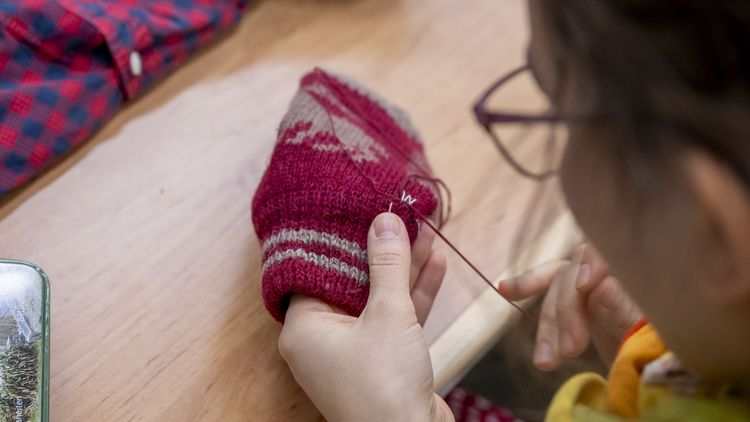
Mit den Rückmeldungen ihrer Gäste sind die Studierenden sehr zufrieden. „Die sind begeistert“, sagt Clara Hippach. „Für viele ist das die Chance, in einem sicheren Raum das erste Mal zu löten, zu singen oder zu nähen. Das ist auch für uns ein Erfolg.“