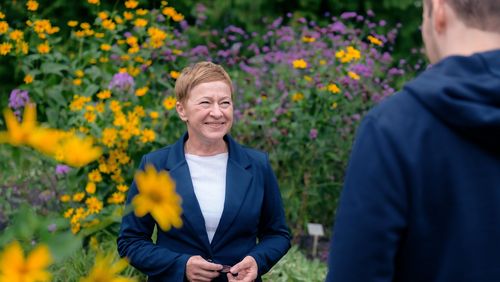


Die polnische Literaturhistorikerin Lena Magnone erforscht die Rolle von Schriftstellerinnen in slavischsprachigen Ländern des ehemaligen Österreich-Ungarns. Ruhe und Inspiration zum Schreiben ihrer Arbeit hat sie in Oldenburg gefunden.
An einem grauen Frühlingsnachmittag hat Lena Magnone ihr Büro fast ausgeräumt. „Morgen muss ich nur noch meine Sachen zusammenpacken und mein Fahrrad losschicken“, sagt sie. Die Zeit der polnischen Literaturwissenschaftlerin am Institut für Slavistik der Universität ist fast vorbei. Doch obwohl sie mit Packen beschäftigt ist, schwärmt Magnone von ihrer Forschung – und von dem Ort, den sie lieben gelernt hat: Oldenburg.
„Wenn mich jemand fragt, betone ich immer, dass es keinen besseren Ort zum Forschen gibt als die Universität Oldenburg“, sagt Magnone. Hier habe sie wissenschaftliche Inspiration und Ruhe für ihre Arbeit gefunden, die Stadt habe sie schon beim ersten Besuch verzaubert.
Gut drei Jahre hat die polnische Literaturwissenschaftlerin an der Universität verbracht. Zwei verschiedene Förderungen – ein Stipendium der Humboldt-Stiftung und eine vom Deutschen Akademischen Austauschdienst finanzierte Stelle – ermöglichten Magnone das Leben und Arbeiten in Oldenburg. Das Büro im Institut für Slavistik, einem roten Backsteingebäude an der südöstlichen Spitze des Campus Haarentor, und das Zimmer im Gästehaus der Universität seien für sie in der vergangenen Zeit zum „Schreibrefugium“ geworden.
Magnone, damals Assistenzprofessorin an der Universität Warschau, kam 2018 zum ersten Mal nach Oldenburg, um an einer von der Slavistin Prof. Dr. Gun-Britt Kohler organisierten Tagung teilzunehmen. Kohler inspirierte sie auch zu dem Forschungsprojekt, an dem sie bis heute arbeitet: Die Rolle, die Schriftstellerinnen in slavischsprachigen Ländern Österreich-Ungarns für die literarische Moderne in Mitteleuropa gespielt haben.
An den Rand gedrängt: Frauen und ihre Geschichten
„Die literarische Moderne an der Schwelle vom 19. zum 20. Jahrhundert bestand vor allem aus Männerclubs, aber ich habe mich schon immer mehr für die Literatur von Frauen interessiert“, erläutert Magnone. Sie hinterfragt das gängige Bild von einer männlich geprägten literarischen Moderne und untersucht, was die Schriftstellerinnen der Zeit verband und wie sie sich trotz Herausforderungen behaupten konnten.
Zu Beginn des 19. Jahrhunderts hätten Schriftstellerinnen im damaligen Österreich-Ungarn eine zentrale Rolle bei der Herausbildung nationaler Identitäten gespielt, erklärt Magnone: Die Frauen schrieben in ihren slavischen Muttersprachen wie Polnisch, Kroatisch, Böhmisch oder Ukrainisch. Noch heute werden Maria Konopnicka in Polen und Lesya Ukrainka in der Ukraine beispielsweise für ihre Nationalliteratur geehrt. Im Gegensatz dazu spielten Schriftstellerinnen in Ländern wie Frankreich oder England zu diesem Zeitpunkt noch keine große Rolle.
Im Laufe des 19. Jahrhunderts änderte sich jedoch die Rolle der Frauen in der mitteleuropäischen Literatur. Die literarische Moderne verstand sich als unpolitisch und gegen das Establishment gerichtet – mit Nationalismus wollten ihre Vertreter nichts zu tun haben. In der Folge seien Frauen und ihre Geschichten an den Rand gedrängt worden, erläutert Magnone.
Doch wie wurden Schriftstellerinnen der Moderne marginalisiert und warum wurden sie von der Literaturgeschichte vergessen? Und welche Strategien nutzten die Frauen, die trotz allem schriftstellerisch aktiv waren? Diese Fragen entwickelte Magnone während ihres ersten Aufenthalts als Humboldt-Stipendiatin im Austausch mit den Oldenburger Forschenden weiter. Sie reiste zudem in Städte wie Zagreb oder Prag, um dort Zeit in Archiven zu verbringen.
Als das Humboldt-Stipendium auslief, war Magnones Forschung noch längst nicht abgeschlossen. Die Literaturwissenschaftlerin bewarb sich daher mit Hilfe von Dr. Anne Clausen, Referentin für Forschungsförderung im Referat Forschung und Transfer der Universität, für die renommierte PRIME-Initiative des Deutschen Akademischen Austauschdienstes (DAAD). Das Programm bietet Forschenden nach der Promotion eine voll finanzierte Stelle für 18 Monate an einer deutschen Hochschule und die Möglichkeit, davon 12 Monate im Ausland zu forschen. Die Bewerbung hatte Erfolg. „Frau Clausen war eine große Hilfe“, betont Magnone.
Von Oldenburg nach Paris
Von Oldenburg aus machte sich die Literaturwissenschaftlerin dank der DAAD-Förderung auf nach Frankreich. An der Pariser Universität Sorbonne gebe es Expertise zur Literatur aller slavischen Sprachen – vom Böhmischen über das Slowenische und Serbische bis zum Ukrainischen, erläutert Magnone. Der Austausch mit den Forschenden sei sehr wichtig für sie gewesen. „Ich konnte meine Ideen reflektieren und weiterentwickeln.“
Doch Ruhe zum Schreiben ihres avisierten Buchs fand Magnone erst wieder nach ihrer Rückkehr nach Oldenburg. Zwar ist ihre Arbeit noch immer nicht abgeschlossen, doch erste Schlussfolgerungen kann Magnone bereits ziehen: So haben aus ihrer Sicht einige der Schriftstellerinnen, mit denen sie sich beschäftigt, nur in der literarischen Moderne Fuß fassen können, wenn sie beispielsweise einen Vertreter der Moderne heirateten – ein Muster, das sie in allen kleinen Sprachen Österreich-Ungarns gefunden hat.
Zur Marginalisierung der Autorinnen habe zudem beigetragen, sagt Magnone, dass diese in slavischen Sprachen schrieben und nicht in Deutsch – der damals dominierenden Sprache in Österreich-Ungarn: Aufgrund der Sprachbarriere hätten die Frauen in „dieser frauenfeindlichen Ära“ keine transnationale feministische Bewegung bilden können. Doch obwohl „die Frauen meist allein arbeiteten, war das, was sie erreichen wollten, waren ihre Themen wie etwa weibliche Sexualität oder, überraschenderweise, die Faszination der Philosophie Nietzsches, und bestimmte stilistische Entscheidungen in allen Sprachen sehr ähnlich“, erläutert die Literaturwissenschaftlerin.
Dass Schriftstellerinnen in Zentraleuropa marginalisiert oder vereinnahmt werden, sei auch heute noch der Fall, betont Magnone. Ein Beispiel sei die polnische Schriftstellerin Maria Konopnicka, die von 1842 bis 1910 lebte, erklärt sie: Die ehemalige rechte Regierung in Polen habe die Autorin „in ihrer Eigenschaft als Nationaldichterin benutzt und gleichzeitig hat die radikale Linke sie als LGBT-Ikone angesehen.“ Für Magnone zeigt dies, wie relevant ihre Arbeit auch mit Blick auf die heutigen Gesellschaften ist.