

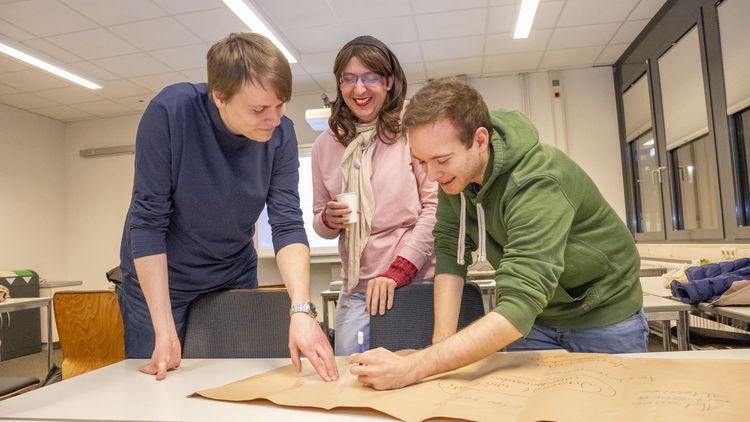


Das Niederdeutsche Forum will die Regionalsprache im kulturellen Leben der Universität sichtbarer machen – alle Interessierten sind zu den zweiwöchentlichen Treffen eingeladen.
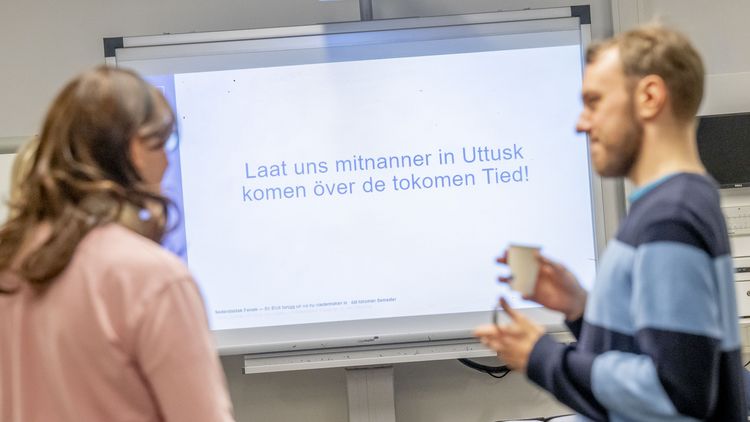
„Es gibt tolle Möglichkeiten, an der Universität Niederdeutsch zu lernen, aber es ist schwierig, anschließend in Übung zu bleiben“, sagt Germanistikstudent Joschka von Lienen. Gemeinsam mit seinem Kommilitonen Thees Becker hat er deshalb zu Beginn des vergangenen Wintersemesters das Niederdeutsche Forum –
auf Platt: Nederdüütsk Forum – ins Leben gerufen. Alle zwei Wochen laden sie in Raum A6-0-009 ein – zum Platt schnacken, aber auch, um gemeinsam dafür zu sorgen, dass die Regionalsprache im Kulturangebot der Universität sichtbarer wird.
Gemeinsame Ausflüge zu niederdeutschen Vorstellungen am Oldenburgischen Staatstheater und eine Exkursion zum „ThinkTank Platt“ des Niederdeutschsekretariats in Hamburg liegen bereits hinter den Forumsgästen. Auch einschlägige Literatur – vom niederdeutschen Gedichtband „Quickborn“ bis zu „Harry Potter un de Wunnersteen“ – war bereits ein Thema.
Obwohl der Treff ausdrücklich mehr als ein „Klöönkring“, also ein Plauderstündchen, sein soll, ist das Sprechen für viele der Hauptgrund dafür, dabei zu sein. Mit dem Überschreiten der Türschwelle wechseln die meisten Teilnehmenden automatisch vom Hochdeutschen ins Plattdeutsche. Dabei sind Sprachkenntnisse nicht einmal erforderlich, um mitzumachen. „Wir haben auch zwei oder drei Leute dabei, die selbst nicht aktiv Plattdeutsch sprechen, sondern die Sprache nur verstehen“, sagt Becker.
Allen gemeinsam ist die Liebe zur Regionalsprache, die die wenigsten bereits aus dem Elternhaus mitbringen. Lucia Gerst etwa ist in Stuttgart aufgewachsen. „Als ich zum Studieren nach Oldenburg gekommen bin, habe ich gesehen, dass es ein Zertifikat Niederdeutsch gibt und habe einfach mal mitgemacht“, erzählt die Germanistikstudentin. Heute ist sie als studentische Hilfskraft selbst daran beteiligt, Studierenden die Sprache zu vermitteln und schreibt eigene Geschichten auf Plattdeutsch. „Ich finde den Klang einfach schön“, sagt sie.
Die sprachwissenschaftliche Sicht auf die kaum noch gesprochene Niederdeutsch-Variante seiner ostfälischen Heimat beschäftigt hingegen André Graën aus der Nähe von Hildesheim – und zwar so sehr, dass er trotz erfolgreich absolviertem Informatikstudium gerade wieder studiert: im neuen Bachelor-Studiengang Niederdeutsch. „Es gibt so viele Aspekte, mit denen sich die Forschung bisher nie beschäftigt hat, und so viele sprachwissenschaftliche Schätze zu entdecken“, sagt er.
Bis zu 13 Teilnehmende wirken zurzeit im Niederdeutschen Forum mit. Angehörige der Universität können jederzeit einsteigen. Neben gemeinsamen Ausflügen soll im Sommersemester die Planung eigener Aktionen im Mittelpunkt stehen. „Wir würden zum Beispiel gern einen plattdeutschen Poetry-Slam veranstalten“, sagt von Lienen. Außerhalb von Lehre und Forschung fehle es bisher auf dem Campus an niederdeutschem Einfluss. „Die Lücke wollen wir schließen“, sagt Thees Becker.