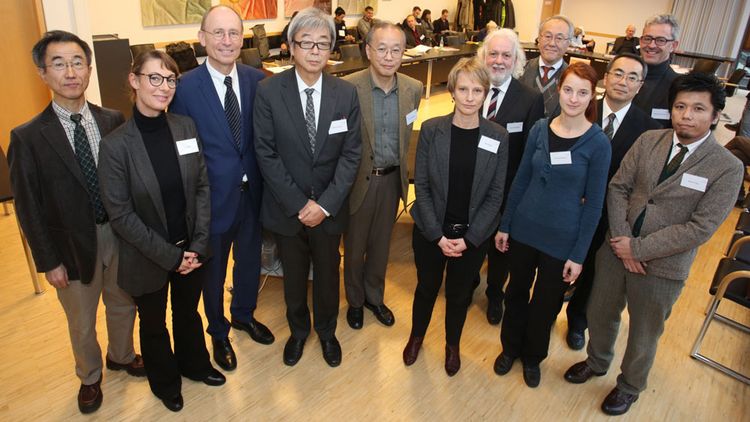
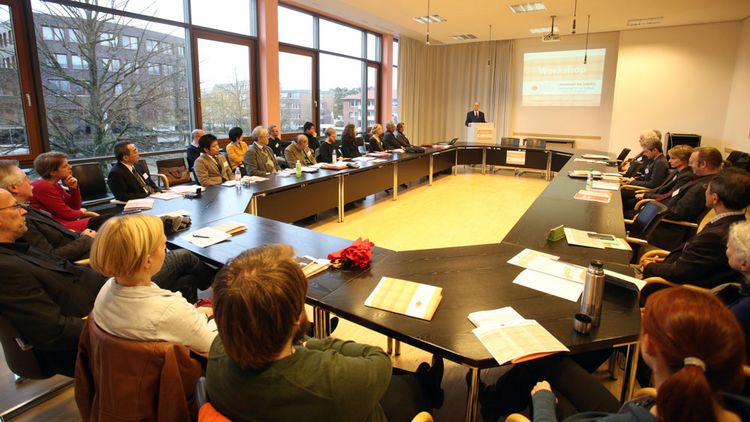


Corporal punishment in school sports, Aristotle's reflections on drunkenness or the colourful world of "Lolita": using examples such as these, experts from Japan and Germany analysed the emergence of self-images and world views at the University of Oldenburg.
The theme of the joint three-day workshop was the genealogy of the subject, i.e. the emergence of self-images and world views from social, intellectual-historical and cultural constellations. The workshop was organised by the university's "Genealogy of the Present" research centre and the Oldenburg Research Training Group "Self-Formations", which is funded by the German Research Foundation.
On the one hand, the centre focused on the question of how it comes about that people willingly subordinate themselves to social demands - for example, when non-conformist behaviour is combated with medication in connection with diagnoses such as attention deficit hyperactivity disorder (ADHD).
On the other hand, the scientists tracked down the - mostly rare - situations in which criticism of prevailing conditions is articulated. Sociologist Prof Dr Koichi Hasegawa from Tohoku University, for example, showed that the protest against nuclear power after the Fukushima disaster always gained momentum when activists took up new forms of protest such as the "Umbrella Revolution" in Hong Kong and knew how to use social networks such as Twitter and Facebook.
The discussion of such cases once again revealed the role that the formation of historical tradition plays in the relationship between the individual and society in Japan and Germany. At the same time, it was recognised that common national stereotypes should be questioned: despite all the differences between the two countries, there have long been close links between Europe and Japan, and not just at an academic level. The Oldenburg cultural scientist Norbert Henzel demonstrated this for popular culture using Japanese street fashion as an example. According to the tenor of the final discussion, it is therefore worthwhile to take a look at the many overlaps between the cultures in addition to national characteristics.
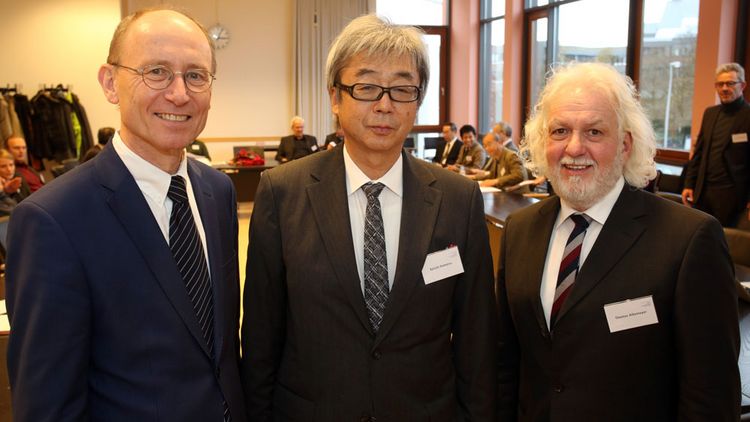
In this sense, the workshop had a "positive alienating effect", summarised the head of the Japanese delegation, philosopher and Kant expert Prof. Keiichi Komatsu from Sendai University. Together with Oldenburg sociologist Prof. Dr Thomas Alkemeyer, who is responsible for the co-operation on the German side, he is determined to deepen the collaboration between the German-Japanese research group in the coming years.