
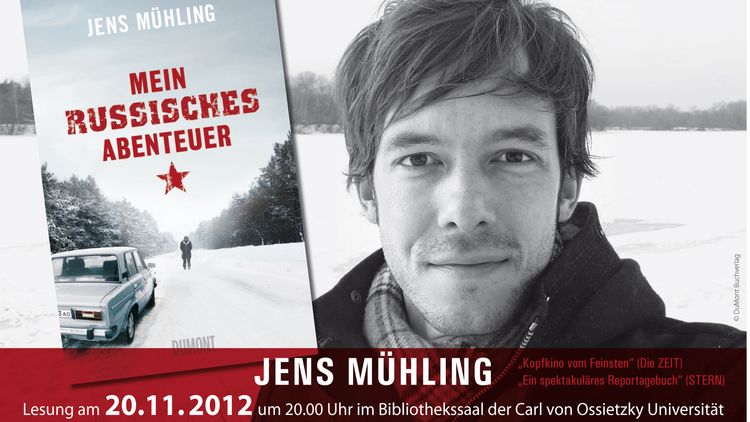
In „Mein russisches Abenteuer” erzählt der Journalist Jens Mühling, wie er zu einer Einsiedlerin in der Taiga reist. Und auf welche merkwürdigen Geschichten er unterwegs stößt. Am 20. November liest Mühling im Bibliothekssaal der Universität. Wir haben vorab mit ihm gesprochen.
FRAGE: „Mein russisches Abenteuter” beginnt mit Juri, einem russischen TV-Produzenten in Berlin, der fiktive Geschichten aus Russland für deutsche Medien produziert - weil die wahren Geschichten so unglaublich sind, dass sie niemand glauben würde, meint Juri. War für Sie die Begegnung mit Juri eine Art Initialzündung, sich mit Russland zu beschäftigen?
MÜHLING: Ja, denn vorher hatte ich mit Russland wenig zu tun gehabt, und mit Juri entwickelte sich plötzlich diese Vorstellung von einem Land, in dem die wahren Geschichten unglaublicher sind als die ausgedachten. Das wollte ich mir unbedingt mit eigenen Augen ansehen, und als ich kurz nach meiner Begegnung mit Juri zum ersten Mal nach Russland reiste, um das Land kennenzulernen, hatte ich den Eindruck, dass an Juris Worten tatsächlich etwas dran war. An einem meiner ersten Abende in Moskau geriet ich in eine Schlägerei zwischen einem orthodoxen Mönch und seiner heimlichen Geliebten. Ich beschloss, unbedingt wiederzukommen.
FRAGE: Ob der Mathematiker Anatolij Fomenko, der 1000 Jahre der russischen Geschichte für erfunden hält und das mit komplexen Grafiken und Berechnungen zu belegen versucht. Oder Wissarion, ein ehemaliger Verkehrspolizist, der in der Perestroika-Zeit ein Erweckungserlebnis hat, sich für die sibirische Inkarnation Jesu hält und fortan an die 5.000 Jünger um sich schart: Die Geschichten der Menschen in Ihrem Buch sind auch Glaubensgeschichten. Eine Erfahrung, die Sie oft gemacht haben?
MÜHLING: Man könnte die Liste noch fortsetzen: Ich habe auf meiner Reise fanatische orthodoxe Christen getroffen, altgläubige Einsiedler, Esoteriker, slawische Neo-Heiden - und glühende Kommunisten, was ja auch eine Art von Religion ist. Dieser Schwerpunkt meines Buchs hat damit zu tun, dass in Russland seit dem Zusammenbruch der sowjetischen Ideologie eine sehr auffällige Suche nach neuen Lebensinhalten eingesetzt hat, nach Antworten auf die Frage, wer die Russen nun eigentlich sind, seit sie keine Sowjetmenschen mehr sind.
FRAGE: Und dafür durchstöbern die Menschen die russische Vergangenheit?
MÜHLING: Ja, die Suche ist meist rückwärtsgewandt. Viele sind auf der Suche nach Überbleibseln der vorrevolutionären Zeit, aus denen sich eine neue Identität basteln lässt. Oft werden dabei gerade religiöse Ideen wiederbelebt - zum einen wohl, weil sie in der sowjetischen Epoche so strikt tabuisiert waren, zum anderen aber sicher auch, weil Russland immer einen schweren Hang zum Metaphysischen hatte, der auch den sowjetischen Kommunismus stark geprägt hat.
FRAGE: Sie waren von 2003 bis 2005 bei der Moskauer Deutschen Zeitung, haben die Sprache gelernt, waren für das Buch ein ganzes Jahr unterwegs, vor allem in der Provinz. Liegen da die wirklichen Geschichten verborgen?
MÜHLING: Auch in Moskau und Sankt Petersburg findet man die erstaunlichsten Geschichten, aber in der Provinz wird man vielleicht eher fündig, wenn man auf der Suche nach dem „russischen” Russland ist. Für meine Zeit bei der Moskauer Deutschen Zeitung würde ich im Rückblick sagen, dass ich Russland damals in meiner journalistischen Arbeit meist an dem gemessen habe, was ich aus dem Westen kannte. Ich habe intuitiv nach Ähnlichkeiten gesucht, die Unterschiede habe ich als etwas Vorübergehendes betrachtet, als Defizite, die das Land irgendwann überwinden würde. Genau diesen Eindruck bekommen viele Ausländer in Moskau: Die Stadt ist irgendwie westlich und irgendwie auch nicht, und als Ausländer hält man ihre westlichen Aspekte intuitiv für die Zukunft, für die Marschrichtung.
FRAGE: Eine trügerische Sicht der Dinge?
MÜHLING: Das wurde mir klar, als ich Russland ein bisschen besser kannte. Bei meiner Buchrecherche ging es mir dann nicht mehr so sehr um Ähnlichkeiten, sondern vor allem um die Unterschiede, um Russlands Andersartigkeit, ich habe nach Menschen gesucht, deren Gedankenwelt mir fremd ist. Und die findet man eher in der Provinz als in Moskau.
FRAGE: Das große Ziel Ihrer Reise ist eine Einsiedlerin, die seit ihrer Geburt in der Taiga lebt. Und die erst im Erwachsenenalter erfährt, dass es jenseits ihres Waldes eine Zivilisation gibt. Das klingt wie eine jener Geschichten, von denen Juri meint, sie würde niemand glauben. Wie sind Sie auf dieses Thema gekommen?
MÜHLING: Auf den Namen Agafja Lykowa stieß ich zum ersten Mal in einer russischen Zeitung - da war die Rede von einer Einsiedlerfamilie, die vor den Bolschewiken in die Taiga geflohen war, noch vor dem Zweiten Weltkrieg, und die erst 40 Jahre später zufällig wiederentdeckt wurde. In dem Zeitungsausschnitt, den ich las, hieß es, inzwischen sei nur noch die jüngste Tochter übrig geblieben, die nach wie vor in der Taiga lebe, aber so ganz genau wusste niemand, ob sie wirklich noch am Leben war.
FRAGE: Was genau hat Sie daran fasziniert?
MÜHLING: Einerseits die ganz offensichtliche Einzigartigkeit und anderseits, weil die Geschichte einen großen Bogen durch die russische Vergangenheit spannt, es hängt sozusagen alles an ihr dran: die Christianisierung der Slawen im 9. Jahrhundert, die große Kirchenspaltung im 17. Jahrhundert, die den ewigen Streit zwischen westlich orientierten Reformern und Anhängern eines russischen Sonderwegs auslöste, schließlich die Revolution. Alle diese Ereignisse waren nötig, um die Familie Lykow in die Taiga zu treiben - und so wurde die Suche nach Agafja Lykowa für mich eine Reise durch die russische Geschichte.
FRAGE: Die Einsiedlerin tatsächlich aufzuspüren, gestaltet sich als schwierig. Der erste Anlauf geht mächtig schief ...
MÜHLING: Ich geriet an einen Bootsfahrer, der sich am Steuer mit Industriealkohol betrank, um auf halber Strecke plötzlich festzustellen, dass er zwar jede Menge Schnaps, aber nicht genug Benzin eingepackt hatte. Ein herber Rückschlag, der in der Nacherzählung deutlich lustiger klingt, als er sich beim Erleben anfühlte. Danach brauchte ich erstmal eine längere Sibirien-Pause. Beim zweiten Anlauf hatte ich dann mehr Glück - und stand am Ende eines strapaziösen Fußmarschs durch die Taiga tatsächlich vor Agafja Lykowa, der Einsiedlerin.
FRAGE: Sie begleiten sie mehrere Tage, leeren mit ihr die Reuse und füttern die Ziegen. Und irgendwann können Sie auch den Erzählungen der Einsiedlerin, ihrer Lebensgeschichte folgen - was sich wie ein sehr seltener Blick in eine andere Epoche liest.
MÜHLING: Genau das war es tatsächlich. Das für mich Erstaunlichste an Agafja ist die Art, wie sie beim Erzählen Biografisches mit Biblischem vermischt. Sie spricht über ihren Vater, und im nächsten Moment ist sie mitten in einer Episode des Johannes-Evangeliums, ohne dass man als Außenstehender einen merklichen Übergang erkennen konnte. Es gibt für Agafja keine klar gezogene Grenze zwischen ihren Erinnerungen, ihren liturgischen Büchern und ihrer greifbaren Umgebung. Alles gehört untrennbar zu ihrer Welt, alles ist gleichermaßen real. In diese Gedankenwelt einzutauchen, war das größte Abenteuer meiner Reise.
Sibirische Jesus-Inkarnation und Taiga-Eremitin



Topics
- Astronomy
- Biology
- Botanical garden
- Chemistry
- Computing Science
- Cooperations
- Covid
- Culture
- Dutch Studies
- Early Career
- Economics
- Educational Sciences
- Energy
- Energy Research
- Environmental Sciences
- Equal opportunities
- German Studies
- Graduate academy
- Health Services Research
- Higher Education Policy
- History
- Human Medicine
- International affairs
- Marine Sciences
- Material Culture
- Medical ethics
- Medical Physics and Acoustics
- Music
- Neuroscience
- People
- Philosophy
- Physics
- Presidential Board
- Psychology
- Research
- Slavic Studies
- Social Sciences
- Special Needs Education
- Sport Science
- Study Affairs
- Sustainability
- Teacher Education
- Theology
- Transfer
- University Medicine
- Ukraine
- Wind Physics