





Was macht man mit alten, kaputten oder nicht mehr passenden Kleidungsstücken? Und welches Verhältnis haben die Oldenburger zu ihren Hosen, Pullovern und Röcken? Diesen Fragen geht das Projekt feelKLEID nach.
Betritt man die Oldenburger Schlosshöfe durch den Eingang zwischen Galeria Kaufhof und der Bremer Landesbank, bietet sich dort zurzeit ein überraschendes Bild: Direkt hinter der Eingangstür auf der rechten Seite gibt die Glasfront eines Ladengeschäfts den Blick frei auf einen Rohbau: die Betonwände sind nur flüchtig weiß gestrichen, die Decke ist unverkleidet, Kabel und Rohrsysteme sind sichtbar, Beleuchtung gibt es nur aus einigen Stehlampen.
Acht Studierende des Bachelors Materielle Kultur haben im Oktober gemeinsam mit Petra Eller, Wissenschaftliche Mitarbeiterin am Institut für Materielle Kultur, das damals leerstehende Geschäft bezogen. Hier, im „Tempel des Konsums“, setzen sie sich in den kommenden zwei Semestern mit der Beziehung zwischen Kleidung und Träger und nachhaltigem Kleiderkonsum auseinander.
Kooperationsprojekt mit der Kunstschule
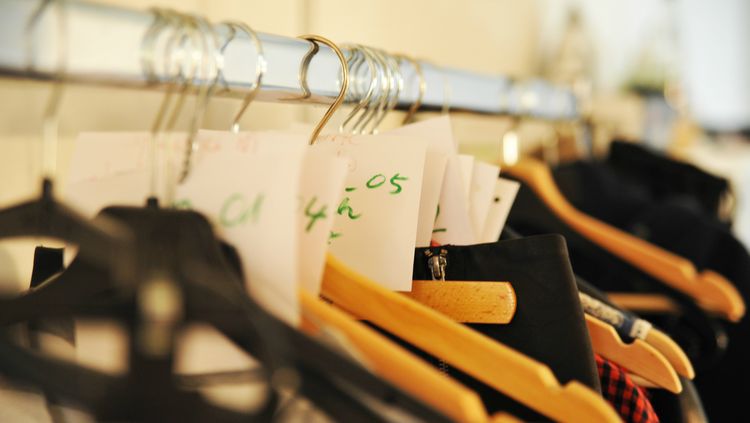
feelKLEID heißt dieses Projekt, bei dem das Institut mit der Kunstschule Oldenburg und der Designerin Anastasia Lotikova, Stipendiatin der Kunstschule, kooperiert. An insgesamt fünf Terminen sind die Oldenburgerinnen und Oldenburger eingeladen, alte Kleidungsstücke im Studio vorbeizubringen, sich mit ihnen fotografieren zu lassen und über das jeweilige Stück zu erzählen: Wann und wo wurde es gekauft? Welche Erinnerungen sind damit verknüpft? Worauf wird allgemein beim Kauf von Kleidung geachtet?
Um diese Informationen später systematisch auswerten zu können und so einen Einblick in das Konsumverhalten der Oldenburger zu bekommen, zeichnen die Studierenden die Interviews auf und geben Fragebögen aus. Die Kleidungsstücke selbst werden ebenfalls in die Forschung mit einbezogen: Mit ihnen setzen sich die Studierenden im weiteren Verlauf des Projekts wissenschaftlich und künstlerisch auseinander.
Gefördert wird das Vorhaben durch generationKunst, ein Modellprogramm des Landesverbands der Kunstschulen Niedersachsen e.V. mit dem Ziel, Kunst im Alltag erfahrbar zu machen. Das Ladengeschäft stellt die Bremer Landesbank, der die Flächen gehören, kostenfrei zur Verfügung.
Forschen am Objekt
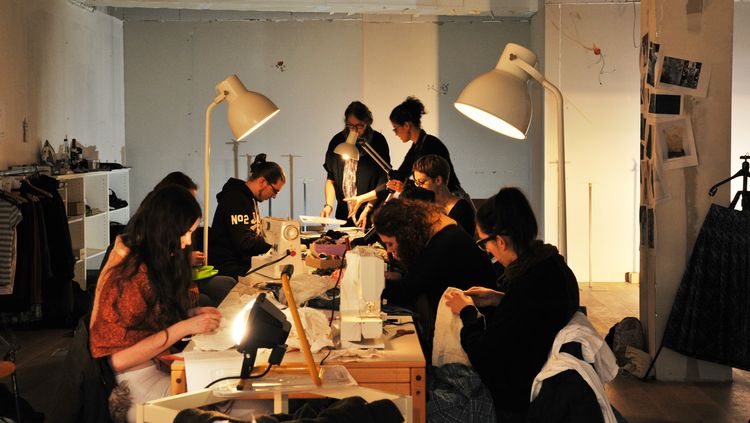
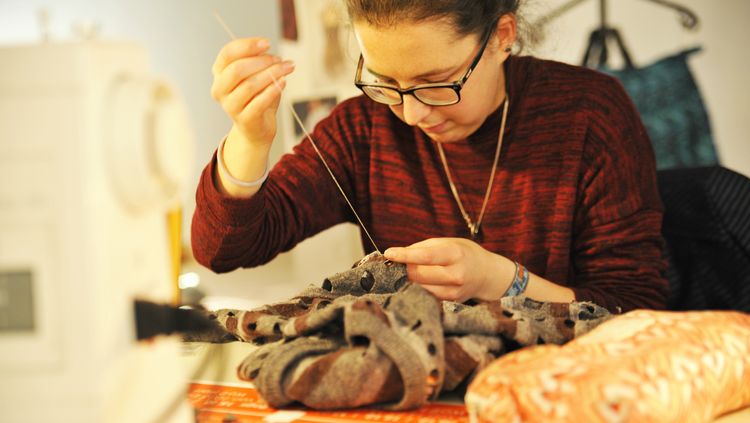
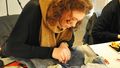
Mittlerweile haben sich die Studierenden schon fast häuslich eingerichtet in ihrem Studio: auf einem langen Tisch stehen und liegen Nähmaschinen, Garnrollen, Scheren und Stoffe aller Art; dazwischen Tüten mit Gummibärchen, Stiftemäppchen und Smartphones. Upcycling steht heute auf dem Programm – aus alten Dingen neue machen. In einer Performance zu Beginn des Projekts hatten die Studierenden Kleidungsstücke zerschnitten – „Was sie nicht wussten: Dass sie die Stücke heute wieder zusammennähen müssen“, erzählt Eller. Auf diese Weise lernen die Studierenden, selbst am Material zu arbeiten. Und auch inhaltlich arbeiten sie sich nach und nach in die Themen rund um nachhaltigen Kleidungskonsum ein – und profitieren hierbei von ihrem unterschiedlichen Vorwissen.
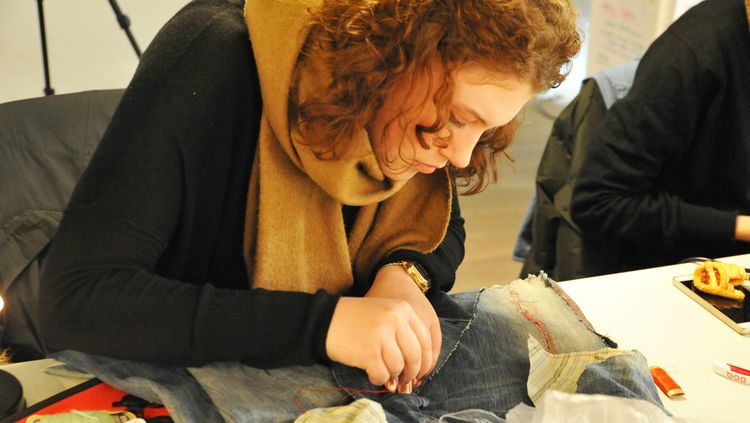
Konzentriert nähen die Projektteilnehmerinnen und -teilnehmer an ihren Hosen und Hemden – erstaunlicherweise fast alle mit der Hand. Nur Maren Limpert hat sich eine Nähmaschine geschnappt: „So bekomme ich schönere Nähte, zum Beispiel einen Zickzack-Stich“, erklärt sie. Lucia Stolle, die neben ihr sitzt, näht ihre Jeans händisch wieder zusammen – mit leuchtend rotem Garn und großen Stichen: „Ich will, dass es auffällt“. Ob bunte Stoffflicken auf einer blauen Arbeitslatzhose oder große Kreuzstiche aus heller, dicker Wolle auf einer dunklen Strickjacke – jeder findet seinen eigenen kreativen Weg, sein Kleidungsstück wieder zusammenzuflicken. „Es geht nicht darum, perfekte Nähte zu machen. Die Studierenden sollen einfach ausprobieren, was man mit den Teilen machen kann und so vielleicht ein neues Design entwickeln“, so Eller.
Welche konkreten Forschungs- und Designvorhaben im Laufe des Projekts entstehen, hängt schließlich von den Studierenden selbst ab – und auch davon, wie viele und welche Art von Kleidungsstücken am Ende abgegeben werden. Die Informationen aus den Interviews und Fragebögen ermöglichen einen umfassenden Eindruck von einem Stück. Darauf aufbauend können die Studierenden schließlich selbst entscheiden, aus welcher Perspektive sie die Kleidung erforschen möchten – sei es kulturgeschichtlich, ökologisch oder materiell. „Dieser Ansatz, das Material selbst als Ausgangspunkt für Forschungsfragen zu nutzen, nennt sich ästhetische Forschung“, erklärt Eller.
Erfahrungen sammeln in der Projektorganisation
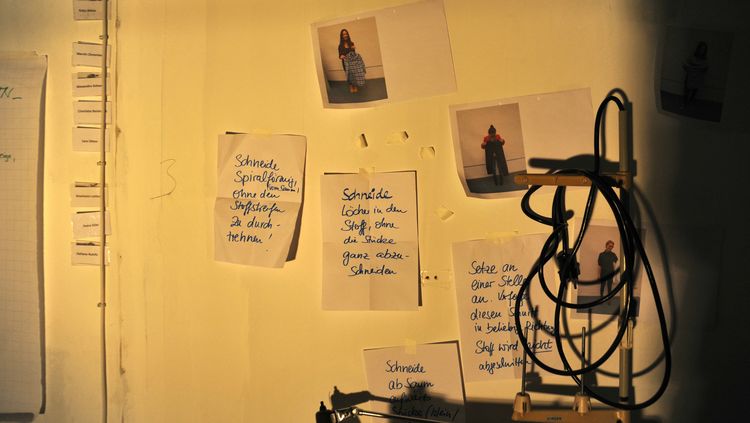
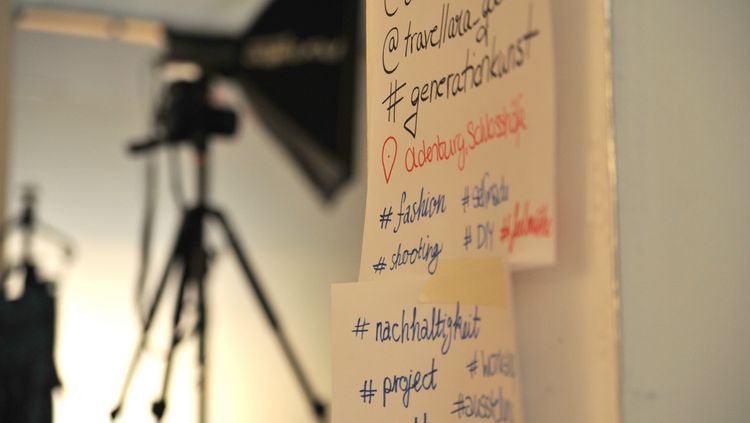
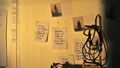
Abgesehen von der Auftakt-Performance arbeiten die Studierenden heute das erste Mal praktisch mit dem Material; bisher stand die Organisation des Projekts im Vordergrund: die Fototermine planen und vorbereiten, Fragebögen konzipieren, Social-Media-Kanäle auf die Beine stellen. Um den Überblick nicht zu verlieren, wurde ein Pfeiler kurzerhand zur Pinnwand umfunktioniert – wie man die Foto- und Interviewaufnahmen richtig sichert ist hier ebenso festgehalten wie die Hashtags, die für Instagram-Posts zu verwenden sind.
Dieses „Drumherum“ mitzubekommen und nicht nur im Seminar über Texte zu diskutieren, kommt bei den Teilnehmerinnen und Teilnehmern gut an: „Jeder kann sich einbringen, mit dem, was er schon weiß und wir können voneinander lernen“, sagt Maren Limpert. Unterstützt werden die Studierenden von der Fotografin Bonnie Bartusch und von Lotikova, die ihr Atelier im Laden nebenan hat und die mit den Studierenden im engen fachlichen Austausch steht.
Bis Ende des Monats haben die Oldenburgerinnen und Oldenburger noch Gelegenheit, sich mit ihren Kleidern fotografieren zu lassen: der nächste Fototermin findet am Freitag, 12. Januar, von 14.00 bis 15.00 Uhr statt. Außerdem lädt das Projektteam zum Abschluss des Semesters zur „Patch-Party“ ins Studio ein: Am Freitag, 26. Januar können Besucherinnen und Besucher von 18.00 bis 21.00 Uhr Kleider tauschen, Patches (auf Deutsch: Aufnäher) selbst gestalten und damit alte oder kaputte Kleidungsstücke reparieren und aufpeppen. Und auch Fotos können Kleider-Spenderinnen und –Spender an diesem Abend noch machen lassen.
Parallel werten die Studierenden die Interviews und Fragebögen der Spender weiter aus. Im Sommersemester steht dann die Auseinandersetzung mit den Kleidungsstücken im Vordergrund – die Ergebnisse werden am Ende in einer Ausstellung präsentiert.