

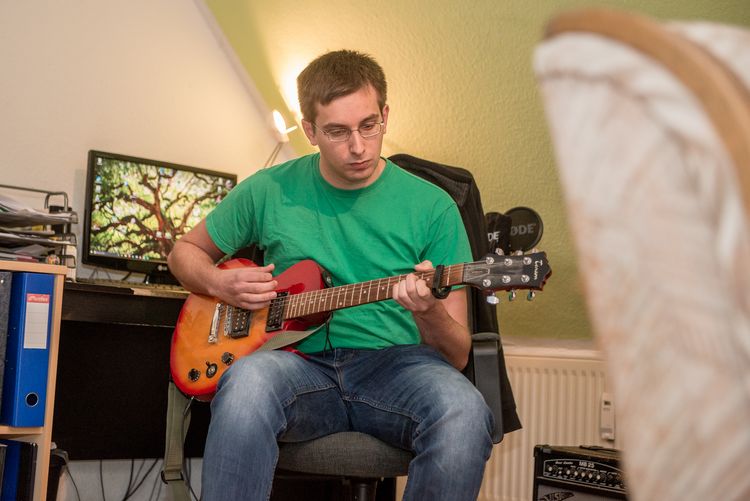






Während die Wohngemeinschaft in den 1960er-Jahren als Protest gegen die spießige, bestimmende Elternschaft erprobt wurde, hat sie sich heute als beliebteste und meist gewählte gesellige Wohnform unter Studierenden etabliert. Im Gegensatz dazu bietet die großräumige Einzelwohnung in einem stressigen Alltag zwischen vollgepacktem Masterstudium und zwei Nebenjobs einen komfortablen, ruhigen Feierabend. Sind 32 Quadratmeter große Einzelappartements mit neuer Küche und reinlichem Bad das Aus für WGs? Wir haben Studierende in ihren vier Wänden besucht.
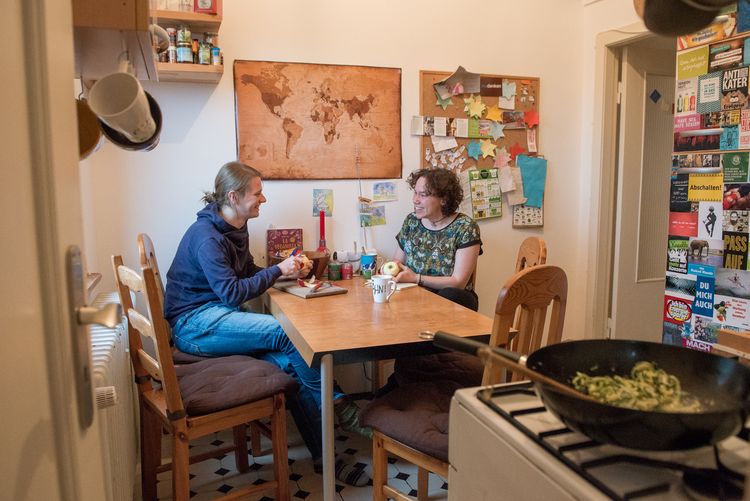
Stella Diettrich (22) und Till Ziehm (23) sitzen am hölzernen Küchentisch und schälen Äpfel für einen Kuchen, der für die abendliche WG-Party bestimmt ist. Auf dem Gasherd kocht in einem messingfarbenen Kessel das Teewasser. In den Wandregalen und an Haken neben einer bunten Postkarten-Wand deutet eine große Sammlung aus Schneebesen, Kartoffelstampfer und Gefährten darauf hin, dass gemeinsames Kochen auf der Tagesordnung steht. Die angehende Umweltwissenschaftlerin und der Physikstudent wohnen mit Regine Albers (24, Landschaftsökologie) und Kirsten Kleis (24, Englisch und Philosophie) in einer 4-Zimmer-Wohnung in einem Altbau. Die Wohnung zu finden war gar nicht so leicht.
Fakt ist, dass nur für jeden zehnten Studierenden ein Zimmer in einem Studentenwohnheim zur Verfügung steht. Der freie Wohnungsmarkt muss also den größten Anteil an Unterkünften für Studierende stellen. Das Angebot passt aber nicht immer zu dem knappen studentischen Budget von durchschnittlich 250 bis 500 Euro im Monat Das ergab eine Umfrage des Studentenwerks und des Allgemeinen Studierenden-Ausschusses (AStA) im Wintersemester 2015/16. Laut Erhebung eines Immobilienportals liegen die durchschnittlichen Mietpreise in Oldenburg bei einer Wohnungsgröße bis 40 Quadratmeter bei 9,46 Euro pro Quadratmeter. Je größer die Wohnung ist, desto günstiger wird’s. Das Wohnen in einer WG ist also erwiesenermaßen tendenziell günstiger als das Wohnen alleine. Der finanzielle Faktor ist aber bei weitem nicht der einzige, der für ein gemeinsames Wohnen spricht.
„Hier findet Gemeinschaft statt.“
Für Stella, Till, Regine und Kirsten sind es die geteilten Momente, welche die Lebensqualität und das Wohlfühlen ausmachen. Da kann sich spontan ein Frühstück in der gemeinsamen Küche länger ausdehnen oder an einem Sonntag ein Kochabend mit zehn Leuten in der WG ein Stockwerk tiefer stattfinden. „In unserer WG ist es nicht nur praktisch, dass wir von den jeweils mitgebrachten Haushaltsgegenständen profitieren – wir sind mittlerweile richtig gut ausgestattet und müssen nicht alles einzeln anschaffen. Sondern auch, dass unsere unterschiedlichen Fähigkeiten den WG-Alltag bereichern. Ich konnte Stella beim Bett aufbauen helfen“, sagt Till. „Und wenn Till mal zum Beispiel Kleidung zu nähen hat, kommt er damit zu mir. Im Gegenzug habe ich hier ein bisschen Kochen gelernt“, meint Stella. Meistens sei es bei ihnen gar nicht nötig, viele Kompromisse einzugehen. Im Gegenteil sind sich die beiden einig, dass es toll ist, auf diese Art und Weise ihre Kommunikationsfähigkeit zu verbessern.
„Die WG ist eben der Ort, an dem Gemeinschaft stattfindet“, sagt Dr. Norbert Gestring vom Institut für Sozialwissenschaften, der zur Stadtsoziologie forscht. Er gibt zu bedenken, dass das Studium als eine Lebensphase der Verlängerung der Jugend zu verstehen sei, die sogenannte Postadoleszenz. Dies sei eine Phase, in der man viel ausprobieren könne, beispielsweise mit Gleichberechtigten in einer Wohngemeinschaft zusammenzuwohnen und das Wohnen gemeinsam auszuhandeln. Prinzipiell sei aber auch das Einzelappartement eine gute Lösung. „Jeder Schritt raus aus dem Elternhaus kann als Schritt zur Emanzipation verstanden werden. Die WG bietet im Gegensatz dazu aber gute Chancen, soziale Kompetenz zu erlernen“, sagt Gestring. WG-Bewohner lernten eher Toleranz sowie den Umgang mit Konflikten als Alleinwohnende.
„Die soziale Komponente war vor 30 Jahren selbstverständlich, da wäre noch niemand auf die Idee gekommen, viele Einzelappartements zu bauen“, sagt Ursula Sontag, Leiterin der Abteilung für studentisches Wohnen des Studentenwerks Oldenburg. Daher hatte das erste Wohnheim des Studentenwerks in der Huntemannstraße noch Flure mit 16 Zimmern. 2011 wurden diese saniert und in Einzel- und Doppelappartements umgebaut. Das Studentenwerk kam damit der sich ändernden Nachfrage der Studierenden nach. Der größte Anteil der Studentenwohnheimplätze sind heute aber nach wie vor WG-Zimmer. So gibt es beispielsweise auch in der Huntemannstraße immer noch neben den sanierten Wohnungen 11er-WGs. Die Wartelisten der Einzelappartements sind jedoch die längsten. Dies hänge auch mit gestiegenen Erwartungen an eine Wohnung zusammen, so Sontag.
„Alles von sich werfen dürfen“
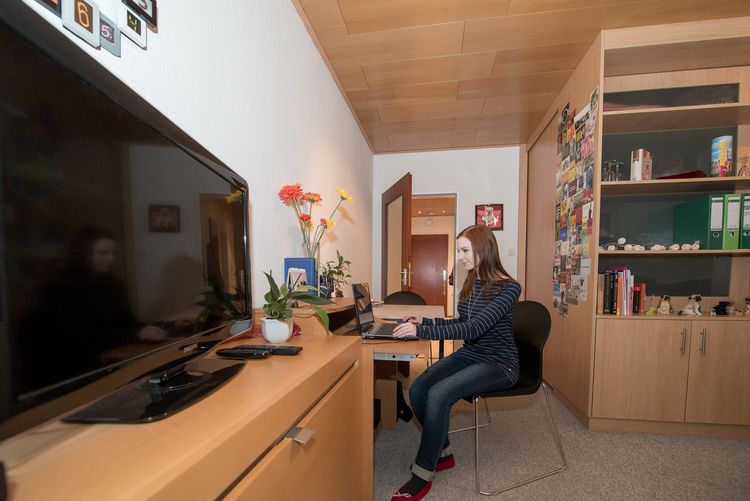
Für Vanessa Witt (27, Nachhaltigkeitsökonomie), war nach der Zusage ihres Studienplatzes in Oldenburg klar, dass es eine eigene Wohnung sein soll. Für die Appartements der Studentenwohnheime waren die Wartelisten kurz vor Studienbeginn aber zu lang. So fand sie über Anzeigen im Internet ihre 35-Quadratmeter-Wohnung samt einiger Möbel, in der sie nun oft laute Musik hören, sich im Bad Zeit lassen und den Hausputz und Abwasch nach ihren Vorstellungen verschieben kann. Ein geräumiges Wohnzimmer lädt mit einem Dreisitzer-Sofa vor einem großen Flachbildfernseher zu einem Filmabend ein. Ordnung zu halten fällt mit deckenhohen Schränken leicht.
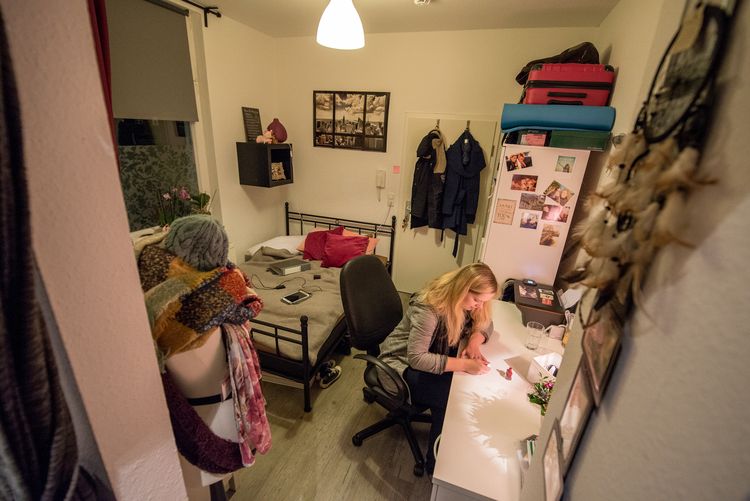
Miriam Fels (25, Integrated Media und Lehramt) sieht als Vorteil ihrer bis in den letzten Zentimeter perfekt ausgenutzten 19-Quadratmeter-Wohnung, dass sie nach einem stressigen Tag erst einmal Tasche, Jacke und Einkäufe von sich werfen kann. Sie habe mit ihrer kleinen, aber gemütlichen Wohnung auch finanziell einen Glückstreffer gelandet, erzählt Miriam. Da ist es auch zu verkraften, dass zwischen Schreibtischstuhl und Bett kaum Platz bleibt. Und wer kann schon behaupten, dass er tatsächlich nur einen Schritt vom Bett bis zur Haustür machen muss? Irgendwie ist sie schon hin- und hergerissen zwischen WG-Zimmer und Einzelwohnung. „Mit meinen drei Jobs und dem Studium bin ich aber doch froh über die Ruhe zuhause.“
Und was ist nun die absolute Wunsch-Wohnform der Studierenden? Auch das klärt die Umfrage des Studentenwerks und des AStA. An erster Stelle steht mit 33,9 Prozent die WG, an zweiter Stelle mit 27,4 Prozent die Wohnung alleine. Kein großer Unterschied also.
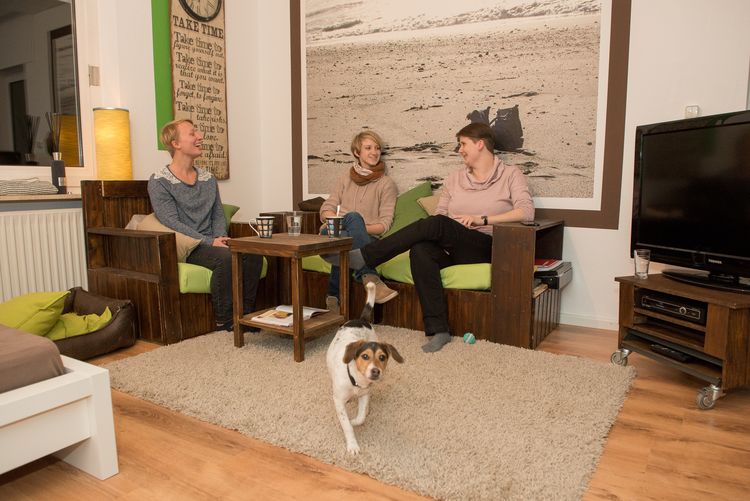
Lina Brunnée (25, Redaktionsvolontärin), Michaela Boelsen (28, Fachassistentin für Finanzen) und Jana Sander (28, Einzelhandelskauffrau) haben die Erfahrung gemacht, dass in WGs aus Bekanntschaften Freundschaften werden können. Die drei haben kürzlich ihr Studium beendet oder die Ausbildung abgeschlossen und wohnen weiter in derselben WG-Konstellation. Dafür ist in der 130 Quadratmeter umfassenden 4-Zimmer-Wohnung mit Wohnzimmer, weitläufigem Flur und großer Küche so viel Platz, dass sich zu Partys bis zu 50 Leute in der Wohnung versammeln. Die drei vertreten den Standpunkt, dass Wohngemeinschaften immer von Vorteil sind – ob in Mehrgenerationenhäusern, im Studentenleben oder im höheren Alter. „So hat man Ansprechpartner in allen Lebenslagen, kann sich gegenseitig helfen und den Haushalt teilen.“, so Lina.
Bedeuten also schicke Einzelappartements - etwa die 138 neuen Einzelwohnungen des Studentenwerks im Artillerieweg - den Untergang der WGs? Keinesfalls. Immer wieder betonen WG-Bewohner, wie schön die ausgiebigen Essen, spontanen Abende und Gespräche sind. Fazit: Die WG ist und bleibt fester Bestandteil des studentischen Wohnens und zwar aus voller Überzeugung.
Sarina Lux