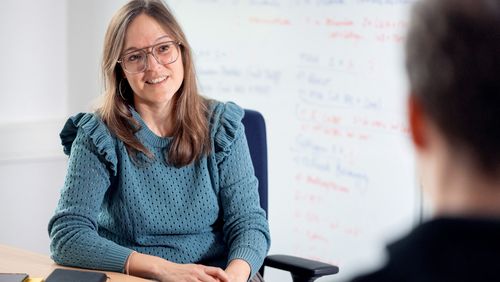


Nadja Kuhlmeier und Christin Nadermann, Lehramtsabsolventinnen der Fächer Biologie und Chemie, verbrachten zwei Monate an einer High School in Port Elizabeth in Südafrika. Wir sprach mit ihnen über ihre Erfahrungen – und über Extreme im Schulalltag.
FRAGE: Wie haben Sie den Unterricht und den Schulalltag in Südafrika erlebt?
NADERMANN: Das Schulsystem dort ist ganz anders strukturiert als in Deutschland. Die Schüler tragen eine Schuluniform, und der Unterricht ist sehr hierarchisch aufgebaut: Die Lehrer erklären und schreiben an die Tafel, die Schüler schreiben ab. Die Schule war sehr schlecht ausgestattet. Es fehlte an Schulbüchern und Heften. Manche Schüler hatten noch nicht mal einen Stift. Wirklich schockierend war für uns, dass die Lehrer einen Rohrstock im Unterricht verwendeten.
FRAGE: Wie war Ihre Reaktion darauf?
KUHLMEIER: Das war für uns eine sehr beklemmende Situation. Erst mit der Zeit lernten wir zu akzeptieren, dass wir nicht einfach etwas daran ändern können. Die Lehrer waren streng, konnten aber gleichzeitig auch sehr herzlich sein. So hat der Schulleiter jeden Morgen sein Pausenbrot an Schüler verschenkt, die keins dabei hatten. Diese Extreme waren Teil des Schulalltags.
FRAGE: Für die Masterarbeit haben Sie die Schülerinnen und Schüler zu ihren Vorstellungen von der Evolution befragt. Was haben Sie dabei herausgefunden?
NADERMANN: Bei sehr vielen Schülern ist die Vorstellung von der Evolution stark religiös geprägt. So wird auch in den Familien und der Schule gemeinsam gebetet. Einige wenige Kinder waren aber auch kritisch und hinterfragten die biblische Schöpfungslehre.
FRAGE: Hatten Sie engen persönlichen Kontakt zu den Schülerinnen und Schülern?
KUHLMEIER: Einmal haben wir eine Schülerin nach Hause begleitet. Da haben wir verstanden, warum sie nie ihre Hausaufgaben macht: Sie wohnte mit ihrer Familie in einer der unzähligen Wellblechhütten. Es gab dort keinen Tisch und nur ein Bett, das sich die achtköpfige Familie teilte.
FRAGE: 1994 wurde die Apartheid in Südafrika offiziell abgeschafft. Was sind Ihre Eindrücke vom Zusammenleben weißer und schwarzer Südafrikaner?
NADERMANN: Die Trennung zieht sich immer noch durch fast alle Lebensbereiche. Nur wenige Schwarze haben es in höhere Positionen geschafft. Deshalb gibt es noch viele Probleme. Oft fehlt das Verständnis für die jeweils andere Kultur, Missverständnisse sind die Folge. Als Gäste konnten wir zwar mühelos sowohl mit dem schwarzen Schulleiter Ausflüge unternehmen als auch mit unseren weißen Nachbarn die Freizeit verbringen. Ein Zusammentreffen mit allen unseren Bekannten war aber nicht denkbar – beide Seiten lehnten dies ab.
FRAGE: Welche Erfahrungen haben Sie gesammelt – für Ihren Beruf als Lehrerin, für den Alltag?
KUHLMEIER: Als wir zurückkamen, ist uns klar geworden: Wir sind ganz schön verwöhnt, und wir klagen hier oft auf sehr hohem Niveau. Schüler brauchen keinen Showunterricht, um zu lernen und glücklich zu sein. Viel wichtiger ist, dass die menschlichen Beziehungen nicht auf der Strecke bleiben.
----------------------
DER HINTERGRUND: AUSTAUSCH MIT SÜDAFRIKA
Seit 1998 kooperiert die Universität mit der Nelson Mandela Metropolitan University (NMMU) in Port Elizabeth, Südafrika. Im Fokus steht die Lehrerausbildung und -fortbildung. Seit 2012 sind die Biologiedidaktikerin Prof. Dr. Corinna Hößle und der Bildungswissenschaftler Prof. Dr. Karsten Speck Sprecher der Partnerschaft mit der NMMU. Im Oktober letzten Jahres startete das Projekt „Studies of Diversity in Different Educational Systems. Research on Teaching and Learning in South Africa and Germany”. Ziel ist es, Lehramtsstudierenden den Erwerb interkultureller Kompetenzen im jeweiligen Partnerland zu ermöglichen und die Partnerschaft in das zukünftige Berufsfeld Schule zu übertragen. Neben dem WissenschaftlerInnenaustausch, den das Wissenschaftsministerium finanziert, soll auch der Austausch der Studierenden weiter gefördert werden. Insgesamt haben in den letzten drei Jahren bereits zehn Lehramtsstudierende der Biologie ihre Masterarbeit zur Lehr- und Lernforschung während eines Aufenthalts an der NMMU verfasst. In Südafrika wurden dazu Untersuchungen zur Lehr- und Lernforschung an Schulen durchgeführt.