Wirtschaft lernen im Labor – das ermöglicht das „Oldenburger Experimentallabor Ökonomische Bildung“ (OX), das das Institut für Ökonomische Bildung der Universität am Dienstag eröffnet hat. Im OX können Schulklassen und andere Lerngruppen an Experimenten zu verschiedenen wirtschaftlichen Themen teilnehmen.
Außerdem dient das Labor der Aus- und Weiterbildung von Ökonomie-Lehrern sowie der fachdidaktischen Forschung. Es ist Teil des Projekts „Biographieorientierte und phasenübergreifende Lehrerbildung in Oldenburg plus“ (OLE+) der Universität, das das Bundesforschungsministerium im Rahmen der Qualitätsoffensive Lehrerbildung fördert. Die wissenschaftliche Leitung liegt bei dem Oldenburger Wirtschaftsdidaktiker Prof. Dr. Dirk Loerwald.
„Die Lehrerbildung an der Universität Oldenburg zeichnet sich seit jeher durch einen hohen Praxisbezug aus“, sagte Prof. Dr. Sabine Kyora, Vizepräsidentin für Studium, Lehre und Gleichstellung, anlässlich der Eröffnung. Dies werde in besonderer Weise in den Theorie-Praxis-Räumen sichtbar, die aktuell in verschiedenen Fachrichtungen des Lehramtsstudiums aufbaut und weiterentwickelt werden. „An diesen Orten können die Studierenden Unterrichtskonzepte erproben und reflektieren, aber auch fachdidaktische Forschung betreiben. Ich freue mich, dass wir mit dem OX nun auch ein Labor für die ökonomische Bildung geschaffen haben“, so Kyora weiter.
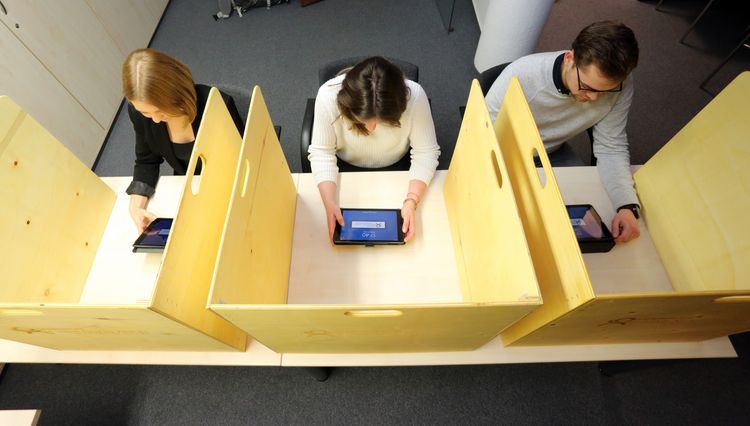
Das ökonomische Labor in der Oldenburger Innenstadt (Kurwickstraße 14/15) ist eins der ersten seiner Art deutschlandweit. An 30 Tablet-Arbeitsplätzen können Schüler, Studierende, Referendare und Lehrer Ökonomie-Experimente durchführen. Dabei geht es beispielsweise um die Frage, wie man etwas gerecht verteilt oder bewusste Konsumentscheidungen trifft. Das Experiment als moderne Methode des Ökonomieunterrichts soll Schülern und Lehrern einen neuen Zugang zu wirtschaftlichen Themen eröffnen – etwa dem Vergleich verschiedener Marktformen oder staatlicher Eingriffe auf Märkte. „„Das Besondere an ökonomischen Experimenten ist, dass sie fachliches Lernen und spielerisches Entdecken ebenso miteinander verknüpfen wie die Erkenntnisse aktueller Forschung mit den Inhalten der Lehre. Das sorgt für hohe Motivation“, sagt Loerwald.
Neben den Experimenten mit Schulklassen und anderen Lerngruppen bieten Laborleiter Markus Allbauer und das Team des Instituts für ökonomische Bildung auch Fortbildungskurse für Lehrkräfte an. Darin erfahren sie mehr über das Experiment als Lernmethode und erhalten praktische Tipps für die Integration in ihren Unterricht. Eine weitere Säule des OX ist die fachdidaktische Forschung. Wissenschaftler und forschende Studierende können an Experimenten teilnehmen, das Geschehen im Labor beobachten, und so das Experiment als Unterrichtsmethode erproben und fachdidaktisch kontinuierlich weiterentwickeln.