Navigation [Access-Key 1]
Access-Key 1
Access-Key 8
Access-Key 2
Access-Key 4
Access-Key 6
Access-Key 9
Access-Key 7
Info und Anleitung Info and instruction
Embed -Suche einbinden search (Mit der Aktivierung der Google-Suche bestätigen Sie, dass Sie mit der Einbindung und der dazu erforderlichen Datenübermittlung an Google einverstanden sind.) (By activating Google Search, you confirm that you agree to the integration and the necessary data transfer to Google.)
Press & Communication
+49 (0) 441 798-5446
„DynaCom” aims to expand our understanding of biodiversity on islands. The German Research Foundation (DFG) is funding the project for another two…
Geoscientist Sinikka Lennartz has been awarded the Lower Saxony Science Prize for Early Career Researchers. She translates microscopic processes in…
If krill swarms in Antarctica shrink, this will have immediate consequences for many animal species. A team led by scientist Bettina Meyer is…
Pollutant levels in fish in the Wadden Sea are increasing. Researchers are developing a software tool that analyses the interactions between fish and…
A new review highlights how hydrothermal vents on the seafloor shape iron availability and influence the global oceanic element cycles. Researchers…
The global biodiversity targets adopted in 2022 are aligned with science and represent a major advance on the Aichi Targets adopted in 2010, an…
A new paper published in Science by a team including ecologist Iliana Baums urges regulatory reform to accelerate coral restoration using assisted…
A team led by marine researcher Oliver Wurl is travelling the Atlantic on the research vessel Meteor. Four team members talk about life on board, the…
The German Research Foundation is funding the „DynaDeep” project by Oldenburg hydrogeologist Gudrun Massmann with around five million euros for a…
Microbial ecosystems have tipping points where even small perturbations are enough to cause a collapse, according to a new study. Tom Clegg and Thilo…
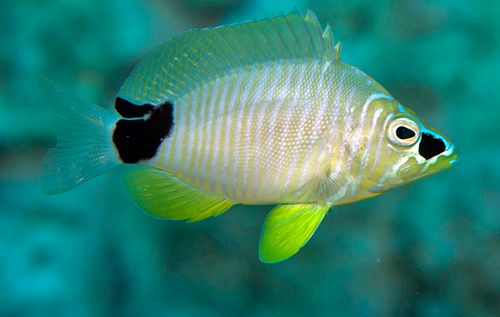
Researchers led by Oscar Puebla have described a new species of fish in the Gulf of Mexico. The brightly patterned creature, Hypoplectrus espinosai,…
What is the role of hydrothermal vents in the cycle of dissolved organic matter in the ocean? Researchers from the Universities of Bremen and…
For the first time, the most prestigious award for early-career researchers goes to an Oldenburg scientist: geoscientist Sinikka Lennartz receives the…
The metabolic strategies of certain sulfur bacteria have been decoded for the first time. A study in the journal Science Advances reports that the…
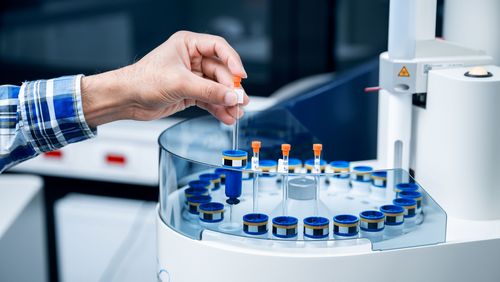
A new piece of large equipment was recently put into operation at the Institute for Chemistry and Biology of the Marine Environment – offering unique…
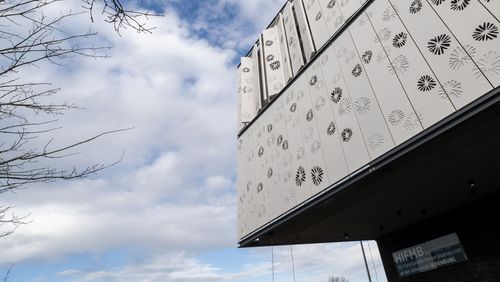
Modern working conditions for marine biodiversity research – that's what the new building of the Helmholtz Institute for Functional Marine…
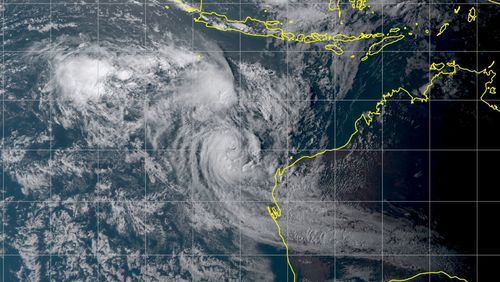
In April 2021, two tropical cyclones, Seroja and Odette, collided in the Indian Ocean northwest of Australia. In a case study, Oliver Wurl and Jens…
Researchers from Oldenburg and Bremen work together on issues important for the future. To further analyse the effects of global warming on marine…
Millions of different organic compounds are dissolved in the world's oceans. These substances bind large amounts of carbon – sometimes for thousands…
Only 359 genes and the amino acid arginine as its sole energy source: The metabolism of the bacterial family Oceanoplasmataceae, newly discovered in…