Green light for DynaCom: the German Research Foundation (DFG) has approved 1.2 million euros in funding over another two years for the Oldenburg-based research project, which was launched in 2019. “We are delighted with this success," said biodiversity expert and spokesperson for the research unit Prof. Dr. Helmut Hillebrand. “With this funding we can start the final evaluation phase and link the data from our experiments and observations with ecological theory.”
DynaCom aims to expand scientific knowledge of island biodiversity. Over the past two funding phases, the 16-member team of scientists has documented and analysed the development of animal and plant communities in highly dynamic landscapes which are subject to constant change. The researchers are focusing on island ecosystems because here they can study colonisation processes and local interactions for a wide variety of organisms in the food web, from microalgae to birds.
Over the last ten years the scientists have investigated the impact of factors such as geography, drift and local environmental conditions on biodiversity. They focused on Germany’s Wadden Sea intertidal zone because marine and terrestrial organisms can be studied together here. The experiments and observations were initially conducted on a group of artificial islands which were constructed in 2014 in the mudflats on the northern coast of the island of Spiekeroog, and which have since been dismantled. Control experiments were then conducted in the salt marshes off Spiekeroog. Data from global island ecosystems and models were integrated into the research.
The team is particularly keen to answer the question whether we can reliably predict ecosystem properties in changing environments. “Our empirical data has already shown that extreme weather events such as storms and heat waves make it difficult to predict how species communities on land and in the water will develop," Hillebrand explains. The results can, however, be used to make predictions about how stable certain ecosystems are when it comes to natural and manmade changes, he adds.
In the final “synthesis phase” , the data from five sub-projects and several models created in the project will be brought together and evaluated. With a focus on the traits of the organisms in the studied ecosystems, the scientists aim to formulate general statements on the functioning of island communities and gain a better understanding of mechanisms such as competition, symbiosis and predator-prey relationships that control them. The five projects draw on data from the Wadden Sea experiments, food web data, genetic material from plant and animal samples and their microbiomes, global databases on island bird and plant biodiversity, and the established models.
In addition to the University of Oldenburg’s Institute for Chemistry and Biology of the Marine Environment (ICBM) and Institute for Biology and Environmental Sciences, researchers from the University of Göttingen, the German Centre for Integrative Biodiversity Research Halle-Jena-Leipzig (iDiv), the Leibniz Institute for the Analysis of Biodiversity Research Museum Koenig Bonn and the University of Würzburg are also involved in the DynaCom project. DynaCom also works closely with the Lower Saxony Wadden Sea National Park Administration (NLPV).
-
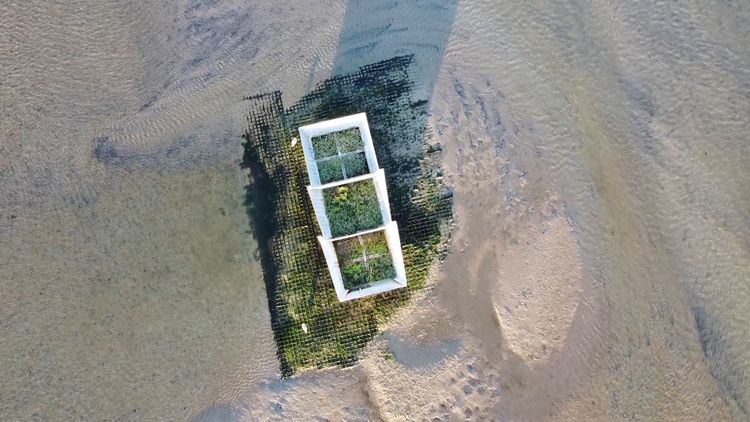
The researchers conducted experiments on artificial islands in the mudflats behind Spiekeroog. Oliver Zielinski/ University of Oldenburg
-
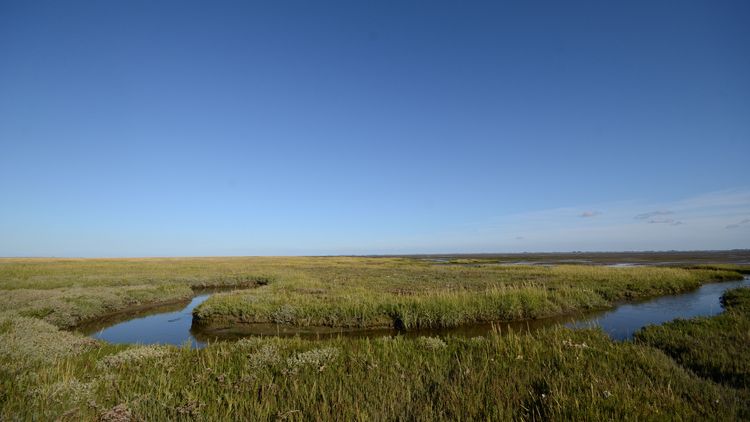
Control experiments were conducted in the salt marshes of Spiekeroog. Thorsten Balke/ University of Oldenburg
Biodiversity in the Wadden Sea: DynaCom project enters final phase


Topics
- Astronomy
- Biology
- Botanical garden
- Chemistry
- Computing Science
- Cooperations
- Covid
- Culture
- Dutch Studies
- Early Career
- Economics
- Educational Sciences
- Energy
- Energy Research
- Environmental Sciences
- Equal opportunities
- German Studies
- Graduate academy
- Health Services Research
- Higher Education Policy
- History
- Human Medicine
- International affairs
- Marine Sciences
- Material Culture
- Medical ethics
- Medical Physics and Acoustics
- Music
- Neuroscience
- People
- Philosophy
- Physics
- Presidential Board
- Psychology
- Research
- Slavic Studies
- Social Sciences
- Special Needs Education
- Sport Science
- Study Affairs
- Sustainability
- Teacher Education
- Theology
- Transfer
- University Medicine
- Ukraine
- Wind Physics