
Sie haben auf faszinierende Weise die Baumwipfel des tropischen Regenwaldes erobert: Epiphyten, sogenannte Aufsitzerpflanzen. Der Oldenburger Ökologe Gerhard Zotz beschreibt, wie sie der extremen Sonneneinstrahlung widerstehen – und warum ihre Aussichten dennoch nicht gut sind.
Regenwald und Tropenwaldzerstörung: Das sind Themen, die die Medien über Jahre ins Bewusstsein der deutschen Öffentlichkeit gerückt haben. Die wiederholte Beschreibung dessen, was wir mit den jährlich abgeholzten zehn Millionen Hektar Tropenwald an biologischen Schätzen verlieren, hat dazu geführt, dass inzwischen jeder Laie über die Artenfülle dieser Ökosysteme weiß. Es ist eine Artenfülle, die fasziniert: So kann man in einem Hektar amazonischen Tieflandwaldes mehr Baumarten finden als in ganz Europa, und ein einziger Urwaldriese beherbergt mehr Ameisenarten als ganz Großbritannien.
Neben der ungeheuren Artenfülle gibt es in den Tropen eine ganze Reihe pflanzlicher Wuchsformen, die in unseren Breiten selten sind oder sogar ganz fehlen. Dazu zählen baumförmige Farne, baumwürgende Feigen, kletternde Lianen oder sogenannte Epiphyten, wörtlich übersetzt Aufsitzerpflanzen. Gerade diese letzte Pflanzengruppe ist überaus artenreich: Zu den Epiphyten zählen weltweit fast zehn Prozent aller Blütenpflanzenarten, darunter mehr als zehntausend Orchideen, tausende von Farnen, aber auch mehr als eintausend Ananasgewächse.
Regelmäßige Reisen in die Tropen
Der gegenwärtige Artenrekord dokumentiert diese lokale Vielfalt eindrucksvoll: Auf einem einzigen Baum in einem Bergregenwald in Costa Rica wurden mehr als 100 solcher Epiphytenarten erfasst. Besonders die Gruppe der Gefäßepiphyten untersuchen wir in meiner Arbeitsgruppe “Funktionelle Ökologie der Pflanzen“. Regelmäßig reisen wir für Freilandforschungen in die Tropen, vor allem nach Panama, wo die Forschungsstationen des Smithsonian Tropical Research Institutes ideale Bedingungen für Wissenschaftler bieten.
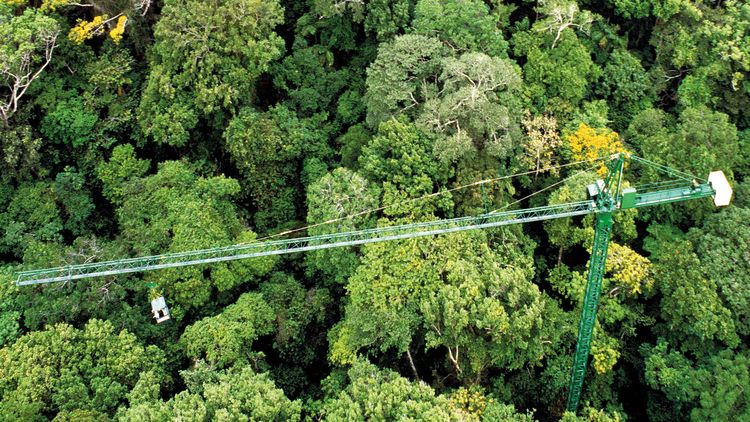
Unsere Untersuchungen decken ein sehr breites Spektrum ab: von der vergleichenden physiologischen Analyse über die Dokumentation der Dynamik ganzer Epiphytengemeinschaften bis hin zur jahrzehntelangen Beobachtung mithilfe eines im Regenwald aufgestellten Baukrans. Die Möglichkeit, Pflanzen vor Ort auch zu sammeln und zu exportieren, erlaubt detaillierte physiologische Experimente in den Oldenburger Klimakammern. Es sind Experimente, die zum Beispiel Antworten auf die Frage liefern können, wie gut Epiphyten mit den vorausgesagten Umweltbedingungen des Jahres 2100 zurecht kommen werden – bei dann wesentlich höheren Temperaturen und CO2-Gehalten.
Obwohl man als Mitteleuropäer bei tropischen Wäldern eher an permanente schwüle Feuchte denkt, sind die in den Baumkronen wachsenden Epiphyten paradoxerweise eher von Trockenstress bedroht. Da sie ja ohne “Boden“ in den Baumkronen direkt auf der Borke oder in Moospolstern wachsen, bedeutet schon weniger als ein Tag ohne Regen bei Temperaturen um die 30 Grad Celsius enorme Wasserknappheit.
Eine Tankbromelie kann bis zu 20 Liter Wasser speichern
Um dieser Trockenheit zu begegnen, haben die Pflanzen eine Vielzahl von Anpassungen entwickelt. Neben dicken, fleischigen Blättern unter anderem die Ausbildung einer Zisterne, die oft auch Tank genannt wird. Die Tankbromelien bilden durch überlappende Blattbasen gewissermaßen ihren eigenen “Blumentopf”, in dem Wasser und Erde gesammelt werden, womit sie leicht einige Tage ohne Regen überdauern können. Im Extremfall kann ein einziger Tank bis zu 20 Liter Wasser speichern. Diese Tanks stellen regelrechte Feuchtbiotope der Baumkronen dar und dienen ihrerseits wieder vielen Tieren als Lebensraum. Am spektakulärsten sind sicher die Baumsteigerfrösche, die ihre Kaulquappen in diesen kleinen „Tümpeln“ ablegen. Doch man findet auch viele andere Tiere, die man nicht unbedingt in einer Baumkrone vermuten würde, von Libellenlarven, Asseln, über Krebstiere bis hin zu Regenwürmern.
Besonderer Photosyntheseweg der Epiphyten
Die beschriebenen Tanks kommen jedoch – mit wenigen Ausnahmen – nur bei Bromelien vor; sie sind also keineswegs typisch für die vielen anderen Epiphyten. Manche der Epiphyten, die keinen Tank besitzen, haben interne Wasserspeicher. Viele Orchideen besitzen zum Beispiel sogenannte Pseudobulben, also verdickte Stängel, die wie die externen Speicher vieler Bromelien die unzuverlässige Versorgung mit Wasser ausgleichen können.
Mindestens so wichtig wie die effiziente Aufnahme und Speicherung ist aber auch die sparsame Verwendung der Ressource Wasser. Im Extremfall werfen manche Arten einfach die Blätter vorübergehend ab, ähnlich vieler Pflanzenarten, die wir aus Gebieten mit lang andauernder Trockenheit kennen, etwa den Ländern um das Mittelmeer. Was vor allem dann sinnvoll ist, wenn Wälder eine regelmäßige regenarme Jahreszeit haben, wie in vielen Ländern Zentralamerikas.
Schließlich nützt ein Großteil der Epiphyten einen besonderen Photosyntheseweg, den Crassulaceensäurestoffwechsel (CAM). Dieser wassersparende Photosyntheseweg wurde ursprünglich für sukkulente Pflanzen der Halbwüsten beschrieben, für Säulenkakteen, Opuntien, Agaven oder Aloen – weshalb die ersten Berichte über das Vorkommen von CAM bei tropischen Epiphyten in den sechziger Jahren des 20. Jahrhunderts noch als Ausnahmebeobachtungen abgetan wurden. Inzwischen ist CAM aber so häufig bei Epiphyten nachgewiesen worden, dass es scheint, als wüchse weltweit gesehen die Mehrzahl aller CAM-Arten epiphytisch auf Bäumen.
Durch unsere Forschungen konnten wir zeigen, dass wir wohl unser bisheriges Bild der „typischen“ CAM-Pflanze, einer terrestrischen Kaktee, ersetzen müssen: durch das einer dickblättrigen Orchidee, die auf einem tropischen Urwaldriesen wächst. Was ist nun der Trick bei CAM-Pflanzen? Normale Pflanzen müssen ihre Blattporen, die „Spaltöffnungen“, tagsüber weit offen halten, um das in der Luft vorhandene Kohlendioxid (CO2) aufnehmen zu können, welches in dem Prozess der Photosynthese mithilfe von Sonnenenergie in Zucker umgewandelt wird.
„Verhungern“ oder „verdursten“? Wie CAM-Pflanzen das Dilemma lösen
Dieser Prozess ist fundamental für pflanzliches Leben und damit auch Grundlage allen anderen Lebens auf unserer Erde. Die Öffnung der Blattporen hat allerdings auch einen Preis: Die Pflanzen verlieren unweigerlich viel Wasser. Wasserverlust könnte natürlich vermieden werden, wenn die Blattporen geschlossen blieben. Dann aber könnten sich die Pflanzen nicht ernähren. Es geht also um die wenig attraktiven Alternativen „Verhungern“ oder „Verdursten“.
CAM-Pflanzen haben nun dieses Dilemma der Pflanzen regenarmer Standorte elegant gelöst. Sie öffnen ihre Poren nachts, wenn wegen der höheren Luftfeuchte wesentlich weniger Wasser verloren geht, speichern CO2 in Form einer organischen Säure, und nutzen diesen Speicher dann tagsüber, um trotz geschlossener Poren ganz normal Photosynthese betreiben zu können. Dies verringert den Wasserverlust um den Faktor 10 bis 100 gegenüber normalen Pflanzen – eine von vielen Anpassungen an Trockenheit, die allein schon die Bezeichnung von der „Wüste im Regenwald“ rechtfertigt.
Klimawandel: Wetterextreme neben selbst in den entferntesten Winkeln der Erde zu
Welche Zukunft haben nun diese an regelmäßige Trockenheit angepassten Pflanzen in einer immer mehr vom Menschen dominierten Welt? Trotz fortschreitender Tropenwaldzerstörung können wir hoffen, dass sich auch in Zukunft ausgedehnte Waldgebiete erhalten lassen. Bieten diese aber auch den geeigneten Lebensraum? Dies ist leider keineswegs sicher, da der Klimawandel dafür sorgt, dass zum Beispiel selbst in den entferntesten Winkeln der Erde Wetterextreme zunehmen.
Für weniger gut an Trockenheit angepasste Arten könnte aber schon eine außergewöhnliche Dürre wie die 2010 im Amazonasgebiet beobachtete das Aus bedeuten. Ob dies eventuell schon passiert ist, weiß jedoch niemand, da entsprechende Langzeituntersuchungen fehlen. Angesichts der großflächigen Umwandlung von Primärwäldern in Agrarflächen stellt sich auch der Wissenschaft immer mehr die Frage, was mit Flora und Fauna in der Sekundärvegetation passiert, also in spontan aufkommenden neuen Wäldern, Baumplantagen oder einzelstehenden Bäumen, die (noch) zahlreich auf den Weiden Lateinamerikas zu finden sind. Lockere Sekundärwälder und, noch ausgeprägter, einzelstehende Bäume bieten wesentlich trockenere Wuchsbedingungen für Epiphyten als natürliche Wälder.
Ein großer Teil der in Baumkronen lebenden Fauna hängt von Epiphyten ab
Eine Reihe von Untersuchungen meiner Arbeitsgruppe wie auch von Kollegen aus der ganzen Welt hat nun gezeigt, dass sich die Epiphytengemeinschaften dort deutlich von denen im ungestörten Wald unterscheiden. So zeigen die Ergebnisse einer vor wenigen Jahren im Tiefland Panamas durchgeführten Diplomarbeit, dass Arten, die an eher feuchten Stellen des Waldes vorkommen, weitgehend ausfallen, während sich normalerweise exponiert wachsende Arten teilweise sogar besser entwickeln als im natürlichen Habitat. Dies gilt in besonderem Maße für die Arten mit CAM. Insgesamt kommt es jedoch zu einer teilweise drastischen Reduzierung des Artenreichtums. Es ist nicht unwahrscheinlich, dass sich diese mit der Zeit noch verschlimmert.
Ob dies wirklich so ist, wird im Moment in Oldenburg in einer vom DAAD geförderten Dissertation untersucht. Angesichts dessen, dass ein bedeutender Teil der in den Baumkronen lebenden Fauna von diesen Epiphyten abhängt, sollte schon der jetzige Verlust kaskadenartig zu entsprechenden Verlusten in der Tierwelt führen. Keine guten Aussichten also für die Bewohner der „Wüste im Regenwald“.
--------------------------------
Der Autor
Prof. Dr. Gerhard Zotz ist seit 2006 Hochschullehrer für „Funktionelle Ökologie“ in Oldenburg. Er studierte Biologie in Würzburg, wo er 1993 promovierte. Nach Forschungsaufenthalten am Smithsonian Tropical Research Institute in Panama und an der State University of Vermont, Burlington, USA, habilitierte er sich 1998 in Würzburg. Derzeit fasst Zotz die Ergebnisse seiner über 20-jährigen Forschungen zu Epiphyten in einer großen Monographie zusammen.