
Die Ozeane werden saurer. Was bedeutet das für das globale Klima? Um das herauszubekommen, haben Forscher vor der Küste Schwedens den Ozean der Zukunft simuliert. Ein Team aus Oldenburg war dabei – und erlebte eine Überraschung.
Der Anstieg von CO2 in der Atmosphäre macht die Ozeane zunehmend saurer. Das gefährdet das Leben vieler Meeresbewohner: Saureres Wasser schädigt zum Beispiel Korallen, auch kleinere Organismen mit Schalen oder Skeletten aus Kalk leiden unter den Veränderungen. Doch die Meere sind nicht nur der Lebensraum von Pflanzen und Tieren. Sie spielen auch eine wichtige Rolle für das globale Klima, denn sie speichern eine Menge Kohlenstoffdioxid (CO2), unter anderem in Form von gelösten organischen Molekülen.
Bisher gingen WissenschaftlerInnen davon aus, dass die Versauerung der Meere diesen natürlichen Prozess ankurbelt. Ein Langzeitexperiment des Instituts für Chemie und Biologie des Meeres (ICBM) der Universität Oldenburg, und des GEOMAR Helmholtz-Zentrums für Ozeanforschung Kiel zeigt jetzt etwas anderes: Offenbar verändern sich die Menge und Zusammensetzung des gelösten organischen Materials nicht. Das Forscherteam um die Oldenburger Wissenschaftlerin Maren Zark aus der Brückengruppe des ICBM mit dem Max-Planck-Institut für Marine Mikrobiologie hat seine überraschenden Ergebnisse in der Zeitschrift „Science Advances“ veröffentlicht.
Das Meer trägt dazu bei, den Treibhauseffekt zu verringern, indem es große Mengen an CO2 bindet. Es speichert den Kohlenstoff unter anderem im gelösten organischen Material, das nach der englischen Übersetzung („dissolved organic matter“) mit DOM abgekürzt wird. Die Menge an Kohlenstoff, die im DOM gebunden ist, ist vergleichbar mit der Menge an CO2 in der Atmosphäre. Ein Großteil des DOM überdauert viele tausend Jahre lang im Meerwasser.
In ihrer Studie wollten die Oldenburger ForscherInnen herausbekommen, was mit dem DOM passiert, wenn der Ozean allmählich versauert. Bereits heute ist zu beobachten, dass der pH-Wert des Wassers sinkt, weil das Meer immer mehr CO2 aus der Atmosphäre aufnimmt. Um zu untersuchen, welche Auswirkungen die Versauerung auf die natürlichen Prozesse im Wasser hat, simulierten die ForscherInnen im Rahmen des mehrjährigen Projekts „BIOACID“ (Biological Impacts of Ocean ACIDification) das Meer der Zukunft.
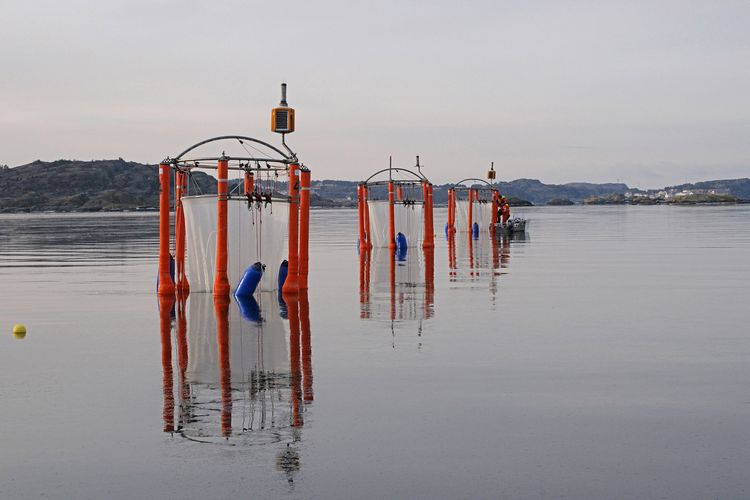
Die erste Langzeitstudie brachte 2013 insgesamt 60 WissenschaftlerInnen mit verschiedenen Fragestellungen zur Ozeanversauerung vor der Küste Schwedens zusammen. Im Gullmarsfjord verankerten sie sogenannte Mesokosmen. Diese senkrecht im Wasser schwimmenden Konstruktionen mit rund 17 Meter langen Plastikschläuchen fassen etwa 55.000 Liter Wasser und stellen eine eigene, vom übrigen Fjordwasser abgeschirmte Lebenswelt dar. In fünf dieser Mesokosmen fügten die WissenschaftlerInnen CO2 hinzu, um so den Ozean des Jahres 2100 zu simulieren, fünf weitere Mesokosmen erhielten kein zusätzliches CO2 und dienten als Kontrolle. Dabei gingen sie davon aus, dass der CO2-Gehalt entsprechend der heutigen Prognosen steigen wird.
An der Universität Oldenburg wurden die Wasserproben dann aufwendig analysiert. Überraschenderweise hatte sich das DOM völlig gleich entwickelt, egal aus welchem Mesokosmos es stammte. Das zusätzliche CO2 im Meerwasser hat offenbar keinen Einfluss auf die Zusammensetzung und Konzentration des DOM. „Das bedeutet aber nicht zwangsläufig, dass das DOM auch in anderen Regionen der Weltmeere ein genauso guter Langzeitspeicher für Kohlenstoff bleibt“, erklärt Zark. Es könnte auch sein, dass sich das DOM in anderen Meeresgebieten in Zukunft ganz anders verhält, so Zark.
Um Fragen wie diese klären zu können, gibt es unter dem Dach von BIOACID derzeit weitere Studien. Die Ergebnisse eines ähnlichen Mesokosmen-Experiments in den Gewässern vor Gran Canaria werden bald vorliegen. Von ihnen erhoffen sich die WissenschaftlerInnen neue Erkenntnisse, beispielsweise ob sich das DOM im offenen Meer anders verhält als in der Nähe der Küste.
Über BIOACID:
Unter dem Dach von BIOACID (Biological Impacts of Ocean Acidification) untersuchen zehn Institute, wie marine Lebensgemeinschaften auf Ozeanversauerung reagieren und welche Konsequenzen dies für das Nahrungsnetz, die Stoff- und Energieumsätze im Meer sowie schließlich auch für Wirtschaft und Gesellschaft hat. Das Projekt wird vom Bundesministerium für Bildung und Forschung (BMBF) unterstützt. Die Koordination liegt beim GEOMAR Helmholtz-Zentrum für Ozeanforschung Kiel. Eine Liste der Mitglieds-Institutionen und weitere Informationen unter www.bioacid.de.