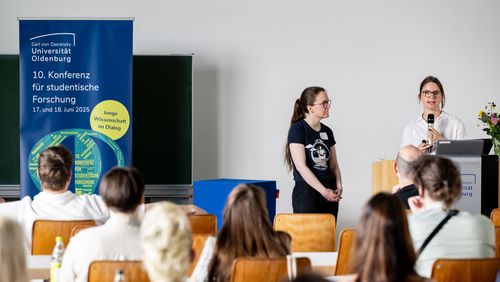
Die Universität Oldenburg widmet studentischer Forschung eine eigene Konferenz: die bundesweite, fächerübergreifende Veranstaltung „forschen@studium“, die am 8. und 9. Juni rund 140 Studierende und mehr als 100 Experten nach Oldenburg holt.
Wie nachhaltig wirtschaften Hotels in Deutschland? Hilft Spiritualität bei Lebenskrisen? Und: Was haben Gene mit Freundschaft zu tun? Zu Fragen wie diesen forschen Studierende an Hochschulen in ganz Deutschland. Ihnen widmet die Universität Oldenburg nun eine eigene Konferenz: die bundesweite, fächerübergreifende Veranstaltung „forschen@studium“ am 8. und 9. Juni. Etwa 140 Studierende präsentieren ihre Arbeiten, insgesamt nehmen 230 Besucher teil – darunter auch Lehrende und Wissenschaftler. Im Anschluss findet eine Fachkonferenz für forschungsnahes Lehren und Lernen statt, zu der sich noch einmal zusätzlich 90 Personen angemeldet haben.
„Mit dem Format, eine studentische Konferenz und eine Fachkonferenz unter einem Dach zu veranstalten, möchten wir den Dialog zwischen Studierenden und Lehrenden intensivieren – ganz unabhängig von Fächern oder regionalen Grenzen“, sagt Prof. Dr. Sabine Kyora, Vizepräsidentin für Studium, Lehre und Gleichstellung. Bereits seit Jahren setze sich die Universität Oldenburg das forschende Lernen als Ziel. „Eine forschende Haltung zu entwickeln und sich eigenverantwortlich und kontinuierlich mit Lerninhalten auseinanderzusetzen – dazu wollen wir unsere Studierenden ermutigen. Sie sollen später sagen können: Ich habe nicht nur einen Abschluss gemacht, sondern das Studium hat mich wirklich weitergebracht“, so Kyora weiter.
An der Konferenz, die erstmals in Oldenburg stattfindet, nehmen Studierende aus 50 Hochschulen teil – von Lörrach bis Hamburg und von Dresden bis Aachen. Die Bandbreite der Fachgebiete reicht von Astrophysik über Meeresenergiesysteme und Fremdsprachendidaktik bis zur Kulturpsychologie. Es gibt Vorträge und Poster-Präsentationen, aber auch Workshops, beispielsweise zum Thema: „Wie publiziere ich meine Arbeit im studentischen Online-Journal „forsch!“?“. Die Studierenden bekommen so die Möglichkeit, ihre Erkenntnisse und Erfolge einem großen Publikum bekannt zu machen und sich fächerübergreifend über ihre wissenschaftliche Arbeit auszutauschen.
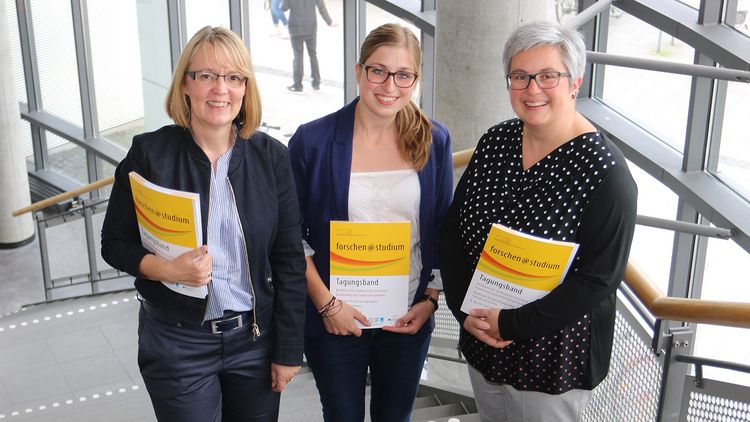
Die Universität Oldenburg will mit der Konferenz „forschen@studium“ den Auftakt setzen für eine bundesweite Veranstaltungsreihe für studentische Forschung nach angelsächsischem Vorbild. Die Konferenz wird von Dr. Susanne Haberstroh, Maren Petersen und weiteren Mitgliedern des Lehr-Lern-Projekts „FLiF“ (Forschungsbasiertes Lernen im Fokus) organisiert. Die Premiere in Oldenburg war nach wenigen Wochen ausgebucht.