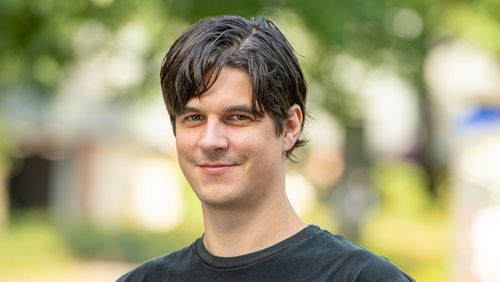
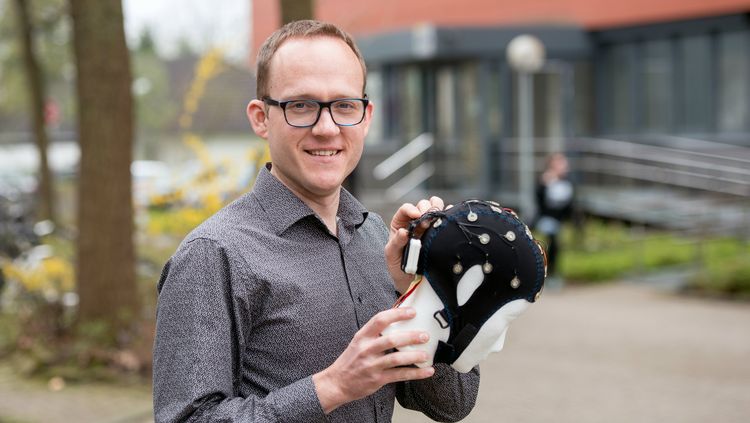
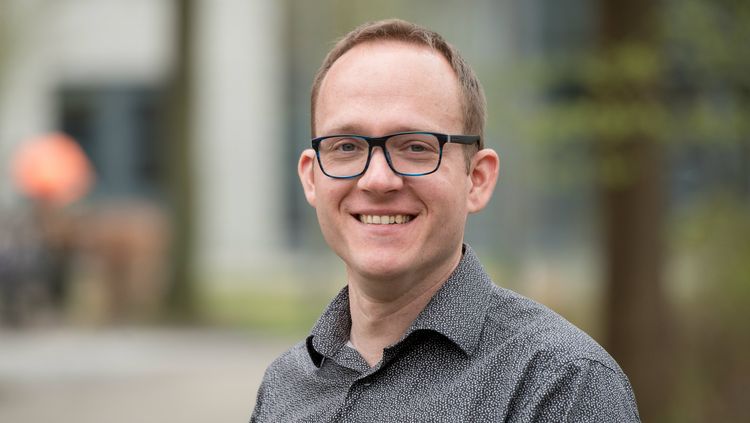

Der Psychologe Josef Meekes untersucht das so genannte Neurofeedback – eine Methode, die gelähmten Schlaganfallpatienten dabei helfen könnte, bestimmte Bewegungen wieder zu erlernen. Im Februar erhielt er ein „Carl von Ossietzky Young Researchers‘ Fellowship“ der Universität.
Die meisten Menschen müssen nicht weiter darüber nachdenken, wenn sie eine Hand zur Faust schließen wollen. Vielen Schlaganfallpatienten fallen solche selbstverständlichen Bewegungen allerdings außerordentlich schwer. Die halbseitige Lähmung der oberen Gliedmaßen zählt zu den häufigsten Beeinträchtigungen, die nach einem Gehirnschlag zurückbleiben. „Besonders diejenigen, die unter einer schweren Lähmung leiden, haben kaum Möglichkeiten, ihre Situation zu verbessern“, sagt Dr. Josef Meekes.
Der Wissenschaftler, der seit 2015 in der Abteilung Neuropsychologie tätig ist, will das ändern. Er arbeitet an einer Methode, bei der Patienten erst einmal ihr Gehirn trainieren, um später auch ihre Gliedmaßen wieder kontrollieren zu können. Sie trägt den komplizierten Namen „Motor Imagery Neurofeedback Training“. Dahinter verbirgt sich die Kombination von zwei Verfahren: „Motor Imagery“ bedeutet übersetzt „Bewegungsvorstellung“. Bei Sportlern ist diese Praktik auch als mentales Training bekannt. Bewegungen werden dabei nur im Geiste ausgeführt – verbessern sich aber auch in Wirklichkeit. „Das liegt daran, dass die Vorstellung einer Bewegung und die tatsächliche Ausführung die gleichen Areale im Gehirn aktivieren“, erläutert Meekes. Er hofft daher, dass mentales Training Gliedmaßen beweglicher machen kann, die aufgrund von Ausfällen im Gehirn gelähmt sind.
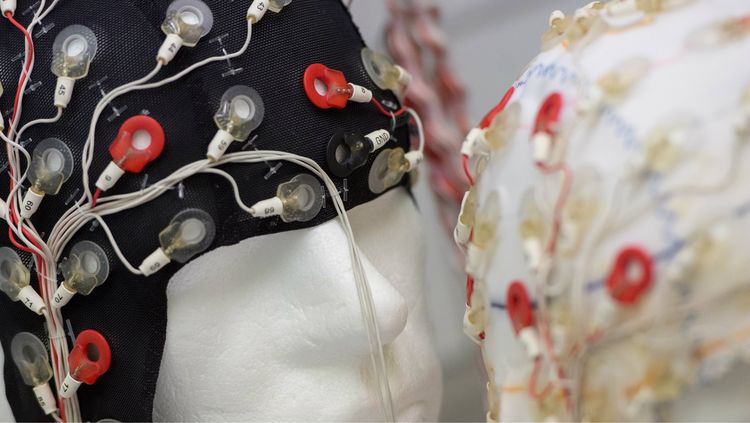
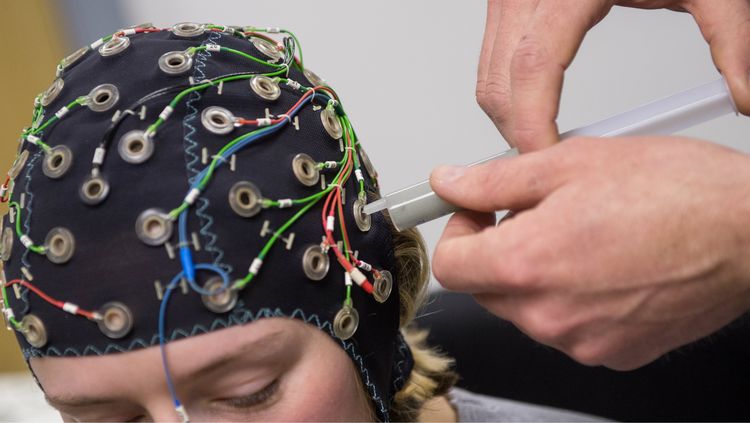
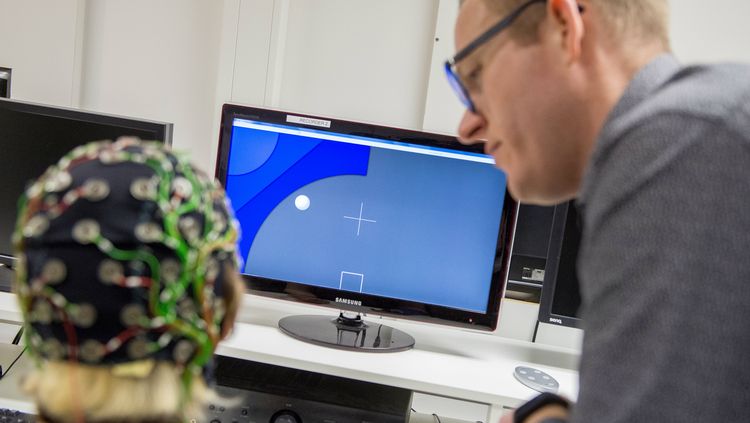
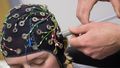
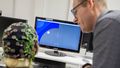
Da es für Außenstehende wie für den Patienten selbst schwierig zu kontrollieren ist, ob er sich die gewünschte Bewegung richtig vorstellt, kombiniert Meekes das mentale Training mit Neurofeedback: Er zeichnet die Gehirnwellen der Patienten mittels eines Elektroenzephalogramms (EEG) auf. Ein Computerprogramm wertet die Daten aus und gibt durch ein Bildsignal eine Rückmeldung dazu, wie gut sie eine vorgegebene Aufgabe erledigt haben. Auf diese Weise will Meekes den Patienten beibringen, Gehirnfunktionen wiederherzustellen, die durch den Schlaganfall beeinträchtigt sind.
Experimente im Neurolabor
Das Versuchsdesign sieht etwa folgendermaßen aus: Die Probanden sitzen vor einem Bildschirm, während 96 Elektroden die elektrische Aktivität ihres Gehirns messen. In regelmäßigen Abständen erscheint auf dem Bildschirm eine blaue Fläche, entweder in der rechten oder in der linken oberen Ecke. Das ist das Signal für die Probanden, die entsprechende Hand im Geiste zur Faust zu ballen. Wenn sie das gut machen – was ein Computerprogramm anhand des EEGs erkennen kann – schwebt ein weißer Ball, der sich anfangs unten in der Mitte des Bildschirms befindet, wie durch Zauberhand in Richtung der blauen Fläche. Je stärker die Vorstellung, desto höher steigt der Ball. Und wenn es dem Patienten gelingt, die richtige Gehirnhälfte zu aktivieren, bewegt sich der Ball außerdem in die richtige Richtung.
Im Prinzip könnte man die Patienten auch bitten, die Bewegung tatsächlich auszuführen. „Aber es kann sehr frustrierend sein, wenn dann gar nichts passiert“, so der Forscher. In Meekes Experiment können die Patienten den Erfolg ihrer Anstrengungen hingegen direkt beobachten – was die Motivation deutlich steigert. Auch für Therapeuten hat die Methode Vorteile: Sie können erkennen, ob ein Patient tatsächlich an der Aufgabe arbeitet.
Neurofeedback funkioniert auch bei Älteren
Meekes konnte bereits bestätigen, dass Bewegungsvorstellung und Neurofeedback, so wie sie im Oldenburger Neuropsychologie-Labor umgesetzt werden, nicht nur bei jungen, gesunden Testpersonen, sondern auch bei gesunden Älteren und Schlaganfallpatienten genügend starke EEG-Signale erzeugen. Im vergangenen Jahr war er außerdem an einer Studie beteiligt, in der gezeigt werden konnte, dass sich das Feedback-Training prinzipiell auch zu Hause durchführen lässt. In einer Machbarkeitsstudie trainierten drei Patienten über vier Wochen jeden zweiten Tag eine halbe Stunde lang. Zumindest bei einer Teilnehmerin verzeichneten die Forscher danach mit Hilfe standardisierter Tests eine deutliche Verbesserung ihrer motorischen Fähigkeiten. Die Ergebnisse stellten sie 2017 in der Zeitschrift Clinical EEG and Neuroscience vor.
Meekes liegt die Arbeit mit den Betroffenen am Herzen. „Ich möchte mit meiner Forschung dazu beitragen, die Situation von Patienten konkret zu verbessern“, sagt er. In Zukunft wird der aus den Niederlanden stammende Psychologe, der zuvor an der Universität Utrecht geforscht hat, allerdings wohl immer seltener selbst im Labor stehen. Denn die Anschubförderung der Universität soll es ihm ermöglichen, eine eigene Arbeitsgruppe aufzubauen. Schon jetzt betreut er zwei Master-Studentinnen, demnächst will er einen Emmy-Noether-Antrag bei der Deutschen Forschungsgemeinschaft (DFG) einreichen und sein Team erweitern.
Der 39-Jährige hat spannende Pläne: Damit das Neurofeedback-Training alltagstauglich wird, setzt er verstärkt auf die Nutzung und Optimierung mobiler EEG-Vorrichtungen. Außerdem untersucht er, durch welche psychologischen Kniffe sich die Motivation der Probanden steigern lässt – insbesondere dann, wenn sich zunächst kein Trainingserfolg einstellt. Ein weiterer wichtiger Aspekt seiner Arbeit ist, das Training möglichst gut auf den jeweiligen Patienten zuschneiden zu können. Im Augenblick kämpfen er und seine Kollegen noch mit dem Problem, dass die EEG-Signale bei jedem Menschen verschieden sind – sie hängen beispielsweise von der Anatomie des Gehirns ab. Die Forscher wollen diese Effekte berücksichtigen, um die Qualität des Feedbacks für die Patienten zu verbessern.
Wieder schreiben oder stricken können
Langfristig will Meekes in einer größeren Studie demonstrieren, dass das Neurofeedback-Training nach einem Schlaganfall tatsächlich dabei hilft, verlorene Bewegungsfähigkeiten wiederzuerlangen. Die Hand zur Faust ballen zu können sei dabei nur ein erster Schritt. „Die Patientinnen und Patienten wollen wieder schreiben, Zähne putzen oder stricken können“, berichtet der Forscher. Das bedeutet harte geistige Arbeit: Sich intensiv vorzustellen, wie sich Muskeln zusammenziehen, die Haut spannt und die Gelenke beugen.