
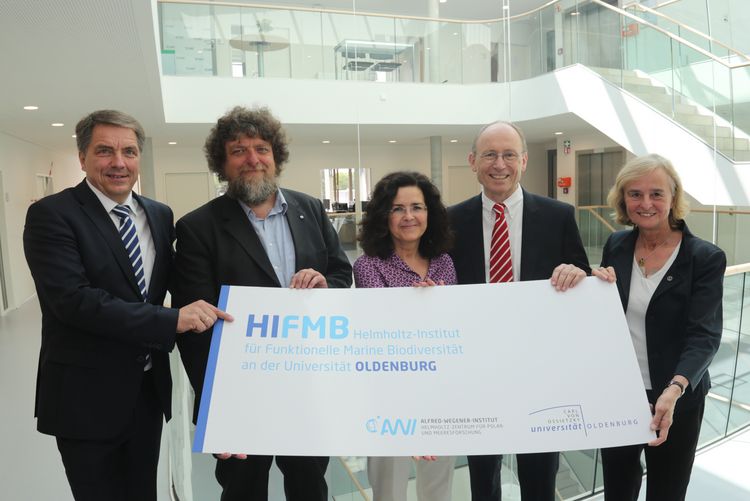

Forschungslücken schließen und eine wissenschaftliche Grundlage für den Meeresschutz schaffen – das sind Ziele des Helmholtz-Instituts für Funktionelle Marine Biodiversität. Am Mittwoch ist das Institut an der Universität Oldenburg offiziell gegründet worden. Die Universität und das Bremerhavener Alfred-Wegener-Institut, Helmholtz-Zentrum für Polar- und Meeresforschung (AWI), bündeln und erweitern damit ihre Forschungsexzellenz auf diesem Feld.
Die Bewohnbarkeit unseres Planeten ist eng mit der Vielfalt der Tier- und Pflanzenwelt verknüpft – nicht nur an Land, sondern auch im Wasser. Wie und warum verändert sich die marine Biodiversität im globalen Wandel? Wie wirkt sich diese Veränderung auf marine Ökosysteme und ihre Funktionen aus? Und wie kann die Gesellschaft sich anpassen oder Folgen mildern? Diesen Fragen gehen künftig Wissenschaftlerinnen und Wissenschaftler am Helmholtz-Institut für Funktionelle Marine Biodiversität (HIFMB) nach.
„Mit der Gründung des Helmholtz-Instituts für Funktionelle Marine Biodiversität entwickelt sich Oldenburg zu einem auch international bedeutenden Zentrum der Meeres- und Klimawissenschaften“, sagte Niedersachsens Wissenschaftsministerin Gabriele Heinen-Kljajić. „Das Institut ist ein Beispiel für die erfolgreiche Verbindung von exzellenter Grundlagenforschung und gesellschaftlicher Relevanz. Meere sind das weltgrößte und wichtigste Ökosystem. Sie haben beispielsweise erheblichen Einfluss auf das Klimageschehen und unterliegen gleichzeitig den Auswirkungen des Klimawandels.“
Das Land Niedersachsen finanziert das neue Institut in der Aufbauphase bis Ende 2020 mit bis zu 23 Millionen Euro, die unter anderem in einen Institutsneubau fließen werden. Die Stadt Oldenburg hat dafür ein campusnahes Grundstück im Technologiepark am Pophankenweg bereitgestellt. Oldenburgs Oberbürgermeister Jürgen Krogmann erklärte dazu: „Wir haben als Stadt den Prozess der Ansiedlung von Beginn an engagiert unterstützt und eng begleitet. Vor allem bei der Grundstücksfrage haben wir schnell klargemacht, dass wir uns in der Verpflichtung sehen, diese Ansiedlung zu ermöglichen. Das ist ein wichtiger Meilenstein für den Wissenschaftsstandort Oldenburg und ein Erfolg der jahrzehntelangen Arbeit der Meeresforscherinnen und -forscher“.
Im Anschluss an die Aufbauphase übernimmt die Helmholtz-Gemeinschaft ab dem Jahr 2021 die Basisfinanzierung des Instituts von rund 5,5 Millionen Euro pro Jahr – davon 90 Prozent aus Mitteln des Bundes und 10 Prozent aus Mitteln des Landes Niedersachsen.
„Wenn wir verstehen wollen, wie ein Ökosystem funktioniert, müssen wir nicht nur die Vielfalt an Arten und deren Funktion untersuchen, sondern auch die Rolle der Menschen in der marinen Umwelt“, betonte AWI-Direktorin Prof. Dr. Karin Lochte. „In vielen Fällen geht es heute nicht mehr um die Frage, ob wir Meere und Ozeane nutzen, sondern wie wir sie nutzen.“ Um Antworten auf diese Frage zu finden, bündele das neue Helmholtz-Institut die Expertise von Natur- und Sozialwissenschaftlern. Nur so könnten moderne Konzepte zur nachhaltigen Nutzung der Meere entwickelt werden, so Lochte.
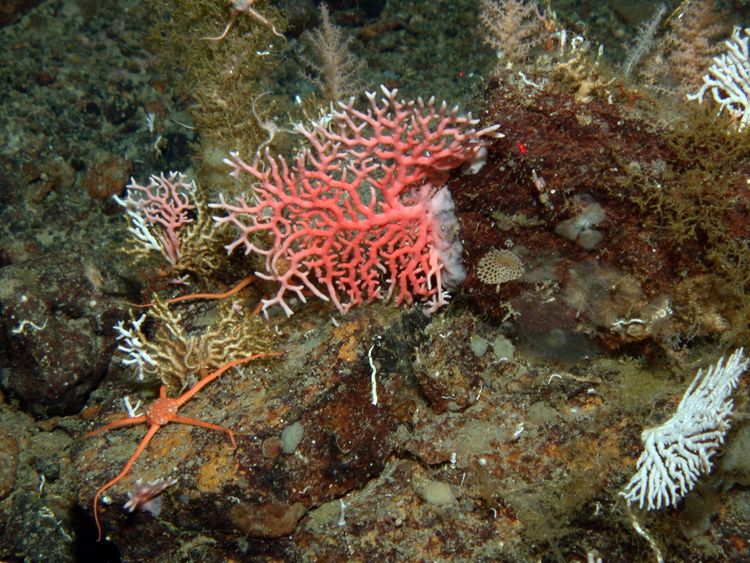
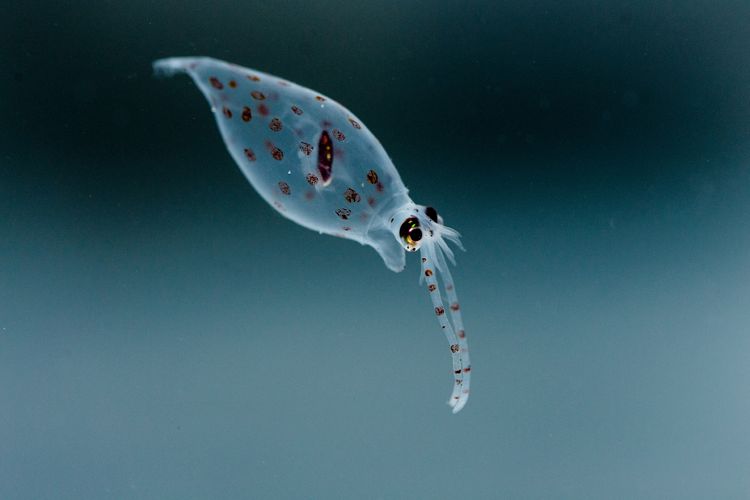
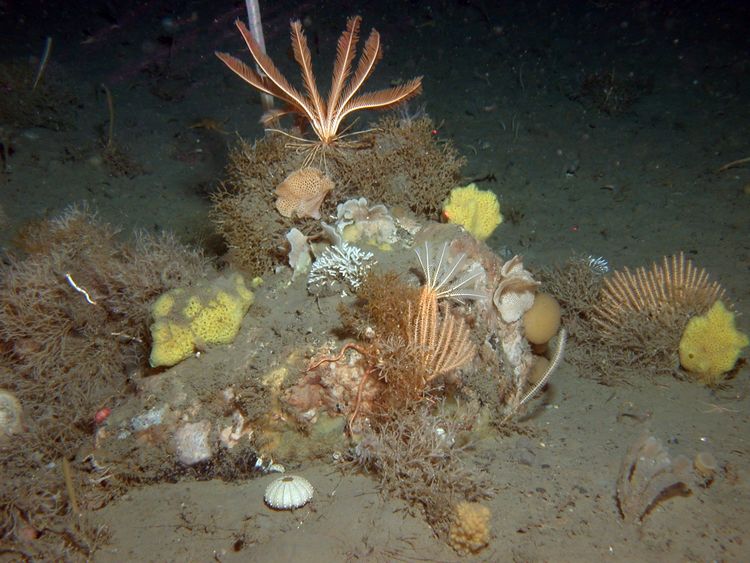
Wissenschaftlerinnen und Wissenschaftler des AWI und der Universität Oldenburg kooperieren schon seit Langem erfolgreich in zahlreichen Projekten. Das neue Institut ermöglicht es ihnen nun, wesentliche Aspekte der biologischen Vielfalt gemeinsam zu erforschen – von der Genetik einzelner Meerestiere, Algen und Bakterien bis hin zur Funktionsanalyse ganzer Ökosysteme.
Jede Veränderung des Meeres habe direkte Konsequenzen für den Menschen: Unter anderem liefere es Nahrung und Rohstoffe, beeinflusse Luftqualität und Weltklima, baue Schadstoffe ab und diene als Ort für Erholung und Tourismus, unterstrich Universitätspräsident Prof. Dr. Dr. Hans Michael Piper und ergänzte: „Eine wissenschaftliche Grundlage für den Meeresschutz und ein marines Ökosystem-Management zu legen, ist eine immens wichtige und drängende Aufgabe – und zugleich ein folgerichtiger Ausbau der international ausgewiesenen Biodiversitäts- und Meeresforschung in Oldenburg.“
Um neuartige Naturschutz- und Managementstrategien zu entwickeln, setzt das HIFMB auf einen integrativen Forschungsansatz. Dieser soll eine naturwissenschaftliche Basis für Schutzkonzepte verbinden mit sozialwissenschaftlicher Expertise in der Analyse gesellschaftlicher und politischer Prozesse. Vor diesem Hintergrund entstehen am Helmholtz-Institut neue wissenschaftliche Arbeitsgruppen zu „Marine Conservation“ und „Marine Governance“. Eine weitere neue Professur für Biodiversitätsinformatik wird die Integration von „Big Data“ in den Meeresschutz verfolgen, also die steigende Menge an verfügbaren Daten zur biologischen Vielfalt zum Wohle der marinen Ökosysteme besser nutzbar machen. Um Einflüsse auf die Artenvielfalt besser erklären zu können, zielt schließlich die neue Professur für Biodiversitätstheorie darauf, klassische theoretische Modelle der Ökologie mit räumlichen, evolutionären und biogeochemischen Ansätzen zu verknüpfen.
„Diese vier neuen Professuren schließen einerseits Forschungslücken und bilden andererseits wichtige Scharniere zwischen den vorhandenen Expertisen in der marinen Biodiversitätsforschung“, so HIFMB-Gründungsdirektor Prof. Dr. Helmut Hillebrand. „Daher streben wir in allen Arbeitsgruppen die Berufung ausgezeichneter internationaler Experten an.“ Die Stellen sollen bereits im Herbst ausgeschrieben werden.
Vorerst kooperieren in dem Institut insgesamt elf bestehende Arbeitsgruppen der Universität Oldenburg und des AWI, davon sechs aus dem Institut für Chemie und Biologie des Meeres (ICBM) und dem Institut für Biologie und Umweltwissenschaften (IBU) der Universität und fünf aus dem AWI. Derzeit rekrutiert das Helmholtz-Institut das wissenschaftliche Personal für erste integrative Forschungsprojekte in Oldenburg. Unter der Ägide von HIFMB-Direktor Hillebrand arbeiten die Meeresforscher zunächst in angemieteten Räumen in unmittelbarer Nähe zum naturwissenschaftlich geprägten Campus Wechloy, ehe voraussichtlich 2022 der geplante Institutsneubau am Pophankenweg realisiert ist.