
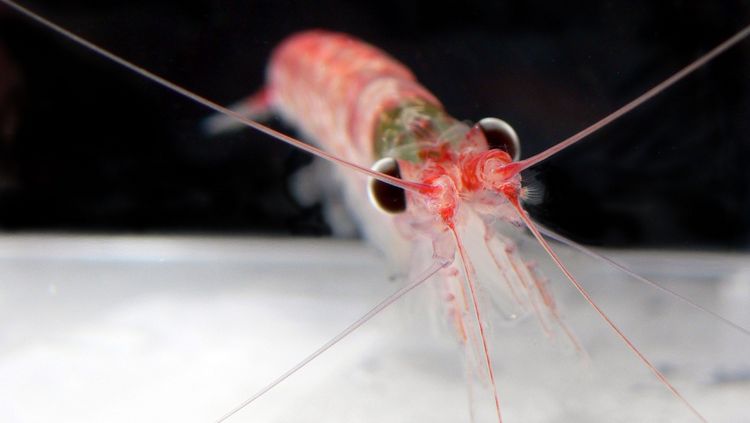
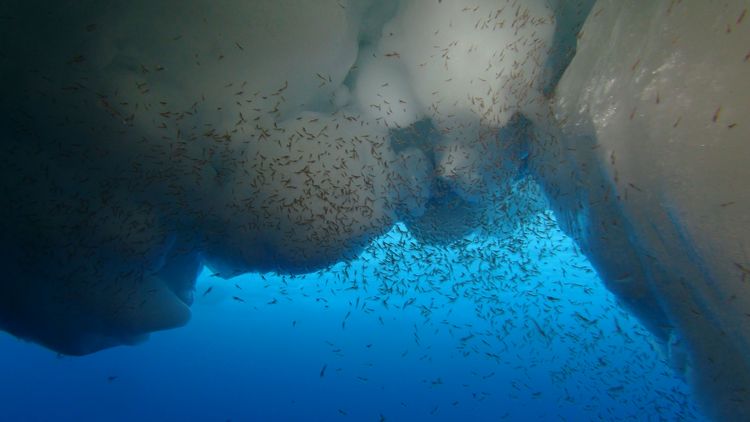

Der Kleinkrebs Euphausia superba (Antarktischer Krill) ist Nahrungsgrundlage für viele Tiere im Südpolarmeer – und eine der am häufigsten vorkommenden Arten der Welt. Neue Ergebnisse von Oldenburger Forschern zeigen nun: Vor allem Konkurrenz um Nahrung lässt die Bestände des Krills im Südpolarmeer regelmäßig schwanken.
Riesige Schwärme des knapp sechs Zentimeter langen Krills tummeln sich in den Gewässern rund um die Antarktis. Wale, Robben, Pinguine – sie alle machen Jagd auf den kleinen Krebs, der eine große Rolle im antarktischen Ökosystem spielt. Doch die Bestände des Antarktischen Krills schwanken regelmäßig über einen Zeitraum von fünf bis sechs Jahren. Dabei verändert sich die Biomasse um mehr als das Zehnfache. Experten vermuteten bislang, dass klimatische Faktoren, wie das stark jahreszeitlich geprägte Polarklima, den sogenannten Krillzyklus auslösen. Wirkliche Belege dafür fehlen jedoch.
Ein internationales Team um den Physiker Prof. Dr. Bernd Blasius und die Meeresbiologin Prof. Dr. Bettina Meyer hat sich genauer mit den Populationsschwankungen des Krill beschäftigt – und ist zu überraschenden Ergebnissen gekommen: Vor allem Rückkopplungen innerhalb der Population, wie die Konkurrenz um Nahrung, verursachen demnach den Zyklus. Dies schließen die Forscher aus Analysen von Langzeitdaten und aus Berechnungen eines mathematischen Modells, mit dem sie die Veränderungen der Bestände untersuchten. Ihre Ergebnisse haben die Meereswissenschaftler im renommierten Fachmagazin „Nature Ecology and Evolution“ veröffentlicht.
Gerade im antarktischen Herbst konkurrieren die Kleinkrebse innerhalb des Schwarms vermehrt um Nahrung. Denn in dieser Zeit müssen Larven und ausgewachsene Tiere ausreichende Fettreserven für den nahenden Winter anlegen. Gleichzeitig nimmt die Nahrung des Krills, die mikroskopisch kleinen Algen des Phytoplanktons, aufgrund der kürzer werdenden Tage stark ab. Größere Krillbestände müssen längere Zeit hungern, überwintern und sich fortpflanzen. All dies lässt die Populationsgröße schwanken.
„Wir können zeigen, dass vor allem Konkurrenz innerhalb der Krill-Population im Herbst für die Schwankungen sorgt“, sagt Dr. Alexey Ryabov, der ebenfalls am Institut für Chemie und Biologie des Meeres forscht. Bisher hatten Wissenschaftler angenommen, dass eher der Winter kritisch für das Überleben der Krill-Larven ist. Denn wenn weite Teile des südlichen Ozeans von Eis bedeckt sind, gibt es für die Kleinkrebse nur wenig Nahrung. „Unsere Ergebnisse werfen jedoch ein neues Licht auf diese Annahme“, sagt Meyer.
Nachvollziehen konnten die Wissenschaftler die Prozesse mit einem eigens entwickelten sogenannten bioenergetischen Modell, das unter anderem das Wachstum des Krills vom Ei bis zum ausgewachsenen Tier abbildet und mit der Nahrungsverfügbarkeit koppelt. „Die Ergebnisse dieser Simulationen stimmten gut mit den über einen Zeitraum von 18 Jahren tatsächlich beobachteten Zyklen überein“, sagt Blasius.
Nach Ansicht der Forscher helfen ihre Simulationen auch, das Nahrungsnetz im Südpolarmeer insgesamt besser zu verstehen. Denn die Modellergebnisse zeigen, dass eine Abnahme großer Räuber, wie beispielsweise Wale, wahrscheinlich die Schwankungen der Krillbestände verstärkt. „Dies könnte das Nahrungsnetz in der Region destabilisieren und die Zahl der großen Räuber weiter senken“, sagt Meyer. Umgekehrt könnte ein erhöhter Jagddruck auf den Krill dessen Bestände sogar stabilisieren. „Jeder Faktor, der dieses empfindliche Gleichgewicht ändert, kann drastische Auswirkungen auf das gesamte antarktische Ökosystem haben“, schlussfolgert Blasius.