Sechs Jahre nach seiner Gründung hat der humanmedizinische Studiengang seine ersten Absolventen. Zu ihnen gehört Johannes Grone. Der junge Arzt macht derzeit seine Facharztausbildung in Oldenburg. Er fühlt sich durch das Studium gut auf den medizinischen Alltag vorbereitet.
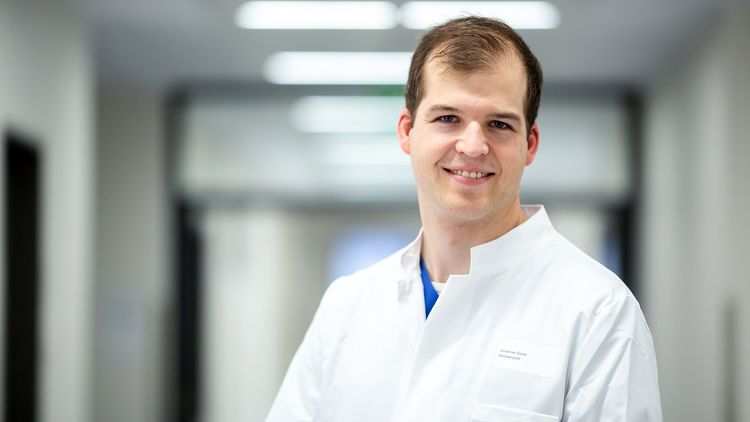
Er kommt auf dem Krankenhausflur auf uns zu: groß, offener Blick, sympathisches Lächeln. Johannes Grone fühlt sich in seinem neuen Arbeitsumfeld am Klinikum Oldenburg sichtlich wohl. Noch vor wenigen Monaten war er Medizinstudent „der ersten Stunde“ der European Medical School Oldenburg-Groningen (EMS), er ist einer der ersten vier Absolventen. „Ich bin erleichtert und froh, dass ich das Studium so gut geschafft habe – und jetzt bin ich noch etwas aufgeregt, was der ärztliche Alltag wirklich mit sich bringt“, beschreibt der 29-jährige gebürtige Göttinger seine derzeitige Gefühlslage.
Dass Grone sich entschieden hat, seine Facharztausbildung in der Universitätsklinik für Anästhesiologie, Intensivmedizin, Notfallmedizin und Schmerztherapie (AINS) des Klinikums zu machen und damit Oldenburg erhalten bleibt, freut Klinikdirektor Prof. Dr. Andreas Weyland: „Er wird bei uns in den nächsten fünf Jahren mit vielen Kolleginnen und Kollegen zusammenarbeiten und dabei alle Facetten unseres Fachgebiets kennenlernen.“ Weyland ist sich sicher, dass der junge Arzt durch sein Studium bestens vorbereitet ist. „Johannes Grone hat bereits bewiesen, dass er belastbar, lernbereit und ein Teamplayer ist. Außerdem hat an der EMS eine patientenorientierte Sichtweise verinnerlicht. Das alles sind wesentliche Voraussetzungen für die Arbeit bei uns in der Klinik.“
„Wir hatten im Studium früh die Gelegenheit, aktiv mitzuarbeiten.“
Grone kam 2012 an die Uni Oldenburg und sicherte sich ohne Einser-Abitur – den letzten zu vergebenen Medizin-Studienplatz an der Fakultät VI Medizin und Gesundheitswissenschaften. Im Gepäck hatte er jede Menge Erfahrungen – gesammelt als Zivildienstleistender im Rettungsdienst und während seiner Tätigkeit als Rettungsassistent. Aufgrund seiner hervorragenden Studienleistungen erhielt er sechs Mal ein Deutschlandstipendium, zählte immer zu den Besten. Dabei sah sich Grone gemeinsam mit seinen 39 Kommilitoninnen und Kommilitonen immer als Teil des großen Ganzen: „Wir hatten die Chance, den Studiengang mitzuprägen. Das ist schon einmalig“, erzählt er, und seine Begeisterung ist spürbar. „In den nächsten Jahren können wir zeigen, dass aus uns gute Ärzte geworden sind.“ Besonders geschätzt an seinem Studium hat der Jungmediziner die persönliche Betreuung und Anleitung durch die erfahrenen Ärzte in den Kliniken. Auch das für die Oldenburger Unimedizin typische praxisorientierte Lehrkonzept war für ihn wichtig. „Schon in den ersten Jahren des Studiums wurden wir manchmal im Praktischen Jahr wie Ärzte behandelt. Das war sehr wertschätzend. Außerdem hatten wir sehr früh die Gelegenheit, aktiv mitzuarbeiten, hatten direkten Kontakt zu Patienten.“
Für Andreas Weyland fußen diese besonderen „Oldenburg-Vorteile“ auf der guten Verbindung von theoretischen Grundlagen und praktischen sowie kommunikativen Fähigkeiten in dem Modellstudiengang. Das zu entwickeln, brauchte allerdings Zeit. So verwundert es nicht, dass Grone und seine Kommilitonen der ersten Kohorte das Studium und das obligatorische Jahr am Universitätsklinikum Groningen (UMCG) in mehrfacher Hinsicht als echte Herausforderung empfanden. „Viele Strukturen mussten sich erst noch herausbilden, Abläufe waren anfangs noch nicht eingespielt.“ Heute kann er auch dieser Pionierrolle etwas abgewinnen: „Ich gehörte zu den ersten, die auch in Groningen praktische Erfahrungen sammeln konnten. Das hat mich auf meinem Weg definitiv gestärkt.“ Hier wie dort habe er sich schrittweise an das Arzt-Sein herantasten können, was er als großen Vorteil erlebt habe.
Mit dem Herantasten ist es für den frisch gebackenen Arzt nun vorbei, das Pensum bleibt hoch. Neben der Ausbildung zum Facharzt sitzt Grone derzeit an seiner Doktorarbeit, die er an der Universitätsklinik für Allgemein- und Viszeralchirurgie am Pius-Hospital Oldenburg schreibt.
Außerdem engagiert er sich nach wie vor ehrenamtlich: etwa bei der Freiwilligen Feuerwehr oder als Arzt beim Roten Kreuz in einer Bereitschaft. Oldenburg nennt er nun seine Heimat, auch der Fakultät fühlt er sich weiter sehr verbunden. „Ich kann mir vorstellen, irgendwann in der Lehre mitzuwirken. Außerdem würde ich eines Tages gerne zu anästhesiologischen oder notfallmedizinischen Themen forschen“, so Grone. Das Studium, das viele forschungsbasierte Lerninhalte aufweist, wird ihn auch darauf gut vorbereitet haben.