
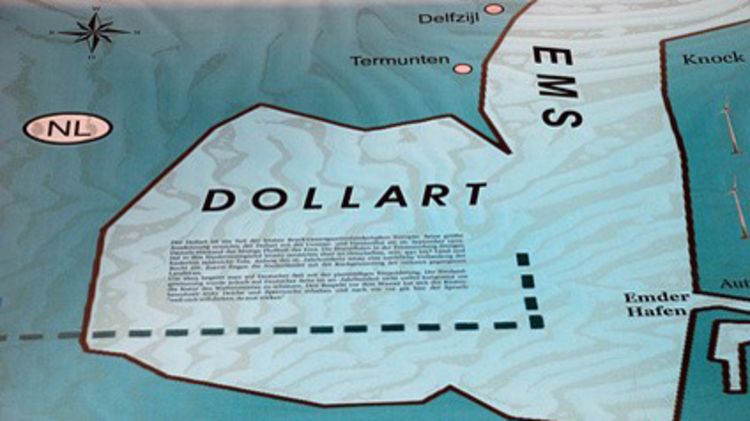

Ein höheres Sturmflutrisiko, verschlickte Häfen und ein geringerer ökologischer Wert – das ist die heutige Situation im Ems-Dollart. Das deutsch-niederländische Forschungsprojekt „Future-Ems“ soll helfen, die Umweltprobleme der Grenzregion zu lösen.
In den vergangenen Jahrzehnten haben sich die Umweltbedingungen in dem Gebiet deutlich verschlechtert. So sind beispielsweise Schwebstofffracht und Tidenhub gestiegen. "Future-Ems" soll das Wissen über den Ems-Dollart wesentlich erweitern und neue Werkzeuge für die Lösung praktischer Probleme entwickeln.
„Impact of climate change and human intervention on hydrodynamics and environmental conditions in the Ems-Dollart estuary: an integrated data-modelling approach“, so nennen die WissenschaftlerInnen in voller Länge ihr multidisziplinäres Forschungsprojekt. Das Bundesministerium für Bildung und Forschung (BMBF) und die Niederländische Organisation für wissenschaftliche Untersuchungen/Forschung (NWO) fördern es vier Jahre lang mit 500.000 Euro.
Der Startschuss ist im März gefallen: Mit einem Kick-off-Meeting im Hanse-Wissenschaftskolleg in Delmenhorst. Koordiniert wird das Projekt von Prof. Dr. Emil Stanev vom Helmholtz-Zentrum Geesthacht (HZG) und Dr. Thomas Badewien vom Institut für Chemie und Biologie des Meeres (ICBM) an der Universität Oldenburg. Beteiligt sind WissenschaftlerInnen verschiedener Fachrichtungen wie Ozeanographie, Mathematik, Geologie und Biologie.
Die Ems-Dollart-Mündung ist für die benachbarten Regionen in den Niederlanden und in Deutschland von großer ökologischer und wirtschaftlicher Bedeutung. Ziel des „Future-Ems”-Projekts ist ein Computermodell, das das Verhalten der Ems im Detail simulieren kann. „Das Modell soll die Grundlage für Gespräche zwischen Wissenschaftlern und Entscheidungsträgern bilden – etwa darüber, wie geeignete, günstige und umweltfreundliche Maßnahmen ergriffen werden können, um den ökologischen Wert des Systems zu verbessern und gleichzeitig die wichtige wirtschaftliche Rolle für die Region zu erhalten“, erklärt Stanev.
„Zunächst werden wir neue Umweltdaten erheben und die bestehenden Datensätze ergänzen“, sagt Badewien. Die Oldenburger WissenschaftlerInnen führen dazu gemeinsam koordinierte Messkampagnen mit dem Forschungsschiff Otzum durch. Dabei integrieren die WissenschaftlerInnen bestehende Datensätze, verbessern und erweitern ein numerisches Modell des Systems. Das neue Modell soll helfen abzuschätzen, wie sich Klimawandel und menschliche Eingriffe unter anderem auf die Strömungsdynamik oder den Sauerstoff- und Phytoplanktongehalt des Ems-Dollart-Systems auswirken.
Neben der Universität Oldenburg und dem Helmholtz-Zentrum Geesthacht sind die Universität Utrecht, die Technische Universität Delft, die Universität Kiel, die Universität Twente, Senckenberg am Meer (Wilhelmshaven) und die Bundesanstalt für Gewässerkunde (Koblenz) an dem Projekt beteiligt.