


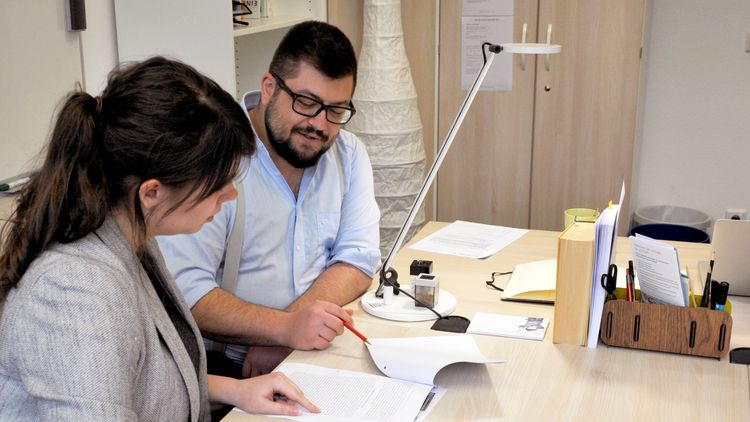

Eine Seminar-, Bachelor- oder Masterarbeit zu schreiben, kann ganz schön herausfordernd sein. Unterstützung finden Studierende der Geistes- und Gesellschaftswissenschaften bei der „Schreibbegleitung für Haus- und Abschlussarbeiten“ durch Promovierende.
Themen eingrenzen, Methoden auswählen, Literatur recherchieren, Inhalte strukturieren – wer eine Seminar- oder Abschlussarbeit vor sich hat, muss viele Fragen beantworten und Entscheidungen treffen. Dabei den Überblick zu behalten, ist bisweilen gar nicht so einfach.
Um Studierenden die Möglichkeit zu geben, in einem lockeren Rahmen mit einer schreiberfahrenen Person über etwaige Hürden, Probleme und Fragen des wissenschaftlichen Schreibens zu sprechen, gibt es seit einem Jahr die „Schreibbegleitung für Haus- und Abschlussarbeiten“. Die Idee der Initiatorinnen Rea Kodalle, Anke Görres und Dr. Maxi Berger: Studierende und Promovierende als Schreibtandem miteinander ins Gespräch zu bringen. Das Programm ist eine Kooperation der Graduiertenschule 3GO und der Lernwerkstatt der Zentralen Studien- und Karriereberatung (ZSKB). Es richtet sich an Studierende der Geistes- und Gesellschaftswissenschaften und wird durch Studienqualitätsmittel finanziert.
Häufig falsche Vorstellung vom Schreibprozess
Alexander Max Bauer ist seit Herbst 2018 Teil eines Schreibtandems. Der ehemalige Student der Politik, Wirtschaft und Philosophie promoviert seit April 2017 „Ich kenne aus meinen eigenen Schreibprojekten genug Hindernisse und Stolpersteine, auf die ich reingefallen bin. Außerdem konnte ich als Tutor und Lehrender einen Eindruck gewinnen, wo häufige Defizite und Probleme liegen“, beschreibt Bauer seine Motivation. Eines der folgenschwersten Missverständnisse ist seiner Erfahrung nach eine falsche Vorstellung vom Schreibprozess. Ihm ist es wichtig, bei den Studierenden ein Bewusstsein dafür zu schaffen, dass das Schreiben an sich nur ein Teil der Arbeit ist und dass eine sorgfältige Vorarbeit und die anschließende Überarbeitung ebenso wichtig sind.
Seine eigenen Vorstellungen eines idealen Schreibprozesses stellt er bei der Beratung jedoch zurück: „Ein Schreibprozess ist hochgradig individuell. Deswegen ist niemandem geholfen, wenn man von oben herab seine Erfahrungen weitergibt.“ Vielmehr sollen die Studierenden durch gezieltes Nachfragen des jeweiligen Tandempartners selbst auf die richtige Spur kommen und Optionen erkennen, wie sie mit der Arbeit weiterkommen. „Die Problemlösungskompetenz liegt eigentlich bei den Studierenden selbst, nicht bei uns“, sagt Bauer. Hilfe zur Selbsthilfe lautet das Credo.
Bauers Tandempartnerin Janina Schmid*, schreibt aktuell ihre Masterarbeit im Fach Sozialwissenschaften. Den Tipp, sich für die Schreibbegleitung zu bewerben, gab ihr die Betreuerin. „Ich war am Anfang ziemlich überfordert mit dem Umfang der Arbeit. Es hätte schon irgendwie funktioniert – hat es ja bei Hausarbeiten und der Bachelorarbeit auch. Aber ich bin froh, dass ich jetzt die Möglichkeit habe, in einem lockeren Rahmen über meine Bedenken und Probleme mit der Arbeit zu sprechen“, erzählt sie. Das Feedback der Betreuerin sei positiv: Nach den ersten Wochen sehe man die Fortschritte, beispielsweise an der Gliederung.
Promovierende entwickeln Beratungskompetenzen
Zwölf Stunden stehen jedem Tandem für gemeinsame Treffen zur Verfügung – bezogen auf ein konkretes Projekt und einen Zeitraum von sechs Monaten. Um im Vorfeld schon einen Eindruck von den Wünschen und Erwartungen der Studierenden zu bekommen, müssen diese sich mit einem maximal einseitigen Motivationsschreiben für das Programm bewerben. Die Promovierenden erhalten für ihre Tätigkeit ein Honorar.
Für sie ist das Projekt außerdem eine tolle Gelegenheit, den eigenen Schreibprozess zu reflektieren und Beratungskompetenzen – nicht nur für den universitären Kontext – zu erwerben. So sieht das Programm für die Teilnehmenden regelmäßige Workshops und Coachings vor, in denen Mitarbeiterinnen der Lernwerkstatt und ein professioneller Coach ihnen Schreib- und Beratungstechniken vermitteln. „Auch für uns ist es ein Prozess, in dem wir viel lernen“, sagt Bauer.
Studierende, die im Sommersemester an der Schreibbegleitung teilnehmen möchten, finden auf der Seite der 3GO weitere Informationen. Die Plätze für Promovierende sind derzeit alle vergeben.
*Name von der Redaktion geändert